


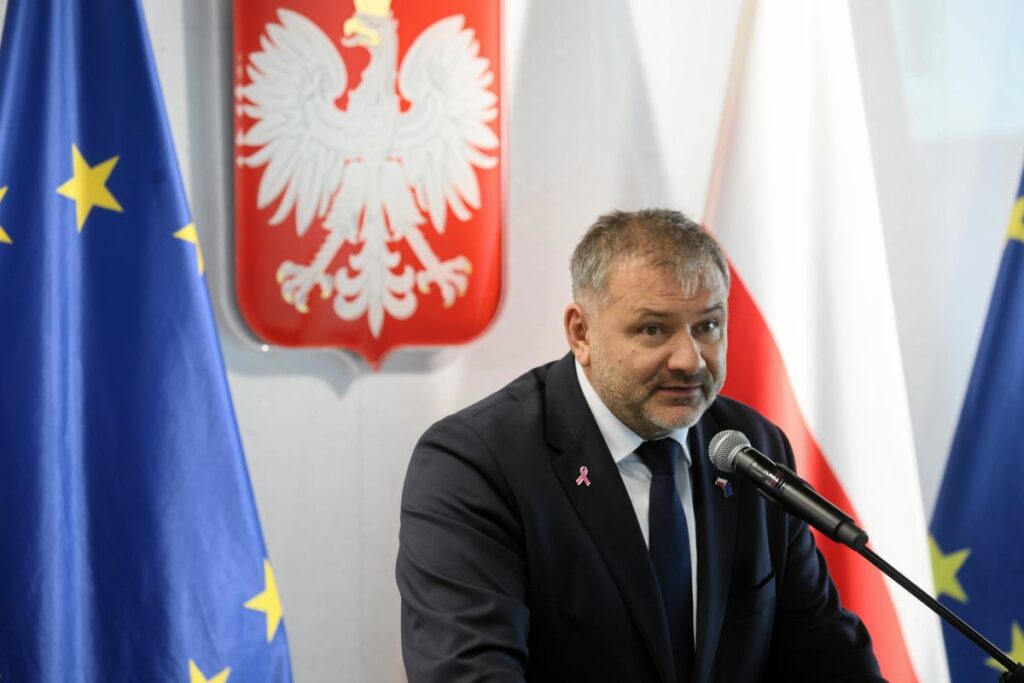
Polish Justice Minister Waldemar Żurek denounced the coalition government as the epicenter of chaos, rating its rule‑of‑law efforts low and unveiling a new law aimed at restoring judicial order.
Żurek Rates Judicial Reforms
Two years after the parliamentary elections that left Law and Justice out of power, Minister Waldemar Żurek assessed the coalition’s rule‑of‑law restoration as a 3‑plus. He said he wished to raise this rating to 4 or even 5 minus, citing the stark differences between his predecessor’s approach and the current administration’s direction.
He highlighted that the previous administration had begun addressing prosecutor office issues, but the institution remains large and hierarchically complex. Żurek also pointed out that the government’s belief that presidential elections would broaden their power base was misleading.
Żurek on Prosecutorial Reforms
On RMF FM, Żurek noted that he still has five deputies appointed by Prosecutor General Zbigniew Ziobro and that a commission is working intensively to amend the prosecutor law. He expressed a desire to oversee the regulation of the prosecutor institution directly.
The minister agreed that chaos persists in the justice sector, describing the current environment as the “epicenter” and emphasized that a comprehensive law, drafted within two months, aims to alleviate this turmoil. He warned that if the president does not sign the act, he will need to inform voters of the proposal’s details.
Draft Rule‑of‑Law Act Provisions
On 9 October, Żurek introduced a draft “rule‑of‑law law” designed to bring order to the legal chaos within the National Judicial Council. He confirmed that the proposal complies with the Polish Constitution, EU law, and incorporates the stance of the Venice Commission.
The act categorizes new judges into three groups: a green group for young judges who stay in their current roles; a yellow group for those promoted by the neo‑National Judicial Council within two years who may return to previous positions and contest for current ones; and a red group that excludes judges from sitting in the Supreme Court or the Supreme Administrative Court, as well as prosecutors and legal advisors appointed to judicial posts.