


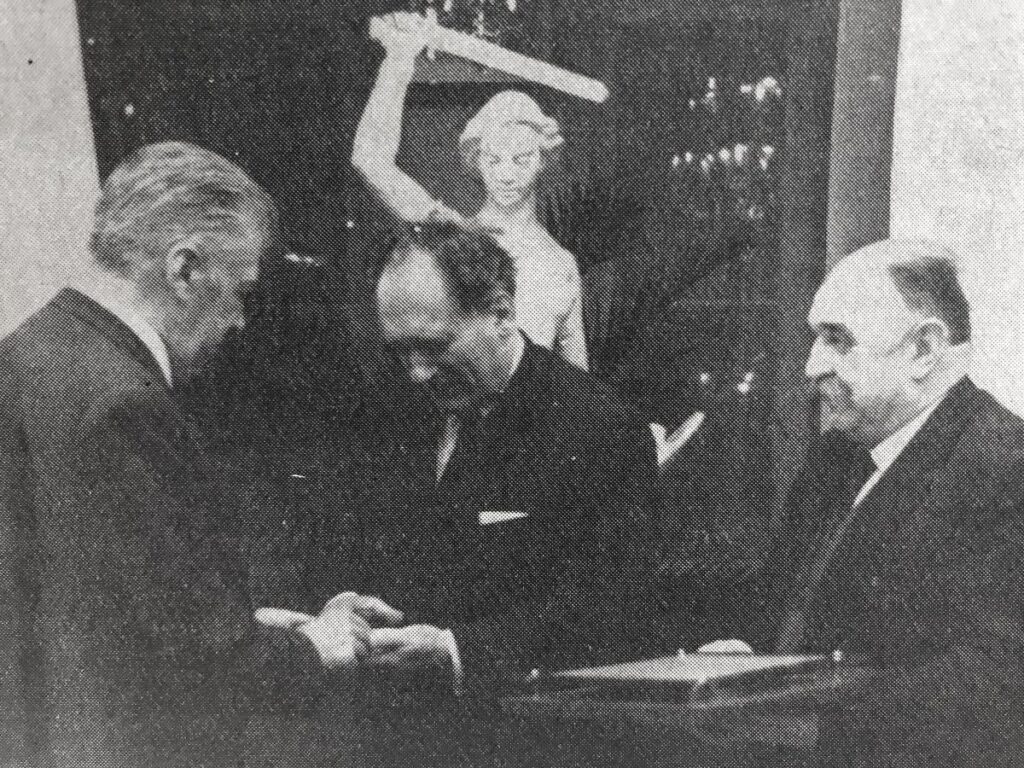
In a televised interview, former Minister of Interior Mieczysław Moczar portrayed himself as the embodiment of national pride, lambasting Jews and Soviet‑backed communists while recalling wartime heroism.
Mieczysław Moczar’s Nationalist Narrative
During a lengthy interview aired in April 2025, Moczar drew parallels between his political career and the mythic struggle of wartime “partisans.” He portrayed himself as a guardian of Polish history, using heroic tales of the Warsaw Uprising and battles in Narvik and Tobruk to underscore national resilience.
He framed the 1939–1945 period as a time of “great heroism” and suggested that Poland had fought on many fronts, implying that this served as a rallying point for contemporary politics.
Anti‑Zionist Accusations and Historical Revision
Moczar condemned what he called “Stalinists” as the greatest danger to Poland, accusing them of promoting a “Zionist” agenda. He spoke of certain personalities—Zambrowski, Radkiewicz, Berman—who, in his view, claimed exclusive rights to lead Poland’s future.
The interview cited the 1968 student protests as a consequence of “slavishly following the ‘Zionist’ line,” claiming the campaigns were orchestrated by anti‑Polish forces allied with the Soviet bloc.
The 1968 Crisis Revisited
Moczar reflected on the wave of purges that began after the protests, accusing Soviet‑backed communist circles of persecuting real “patriots” while praising the “anti‑Zionist” campaign that targeted Jewish‑born communists.
He suggested that the so‑called “cleanup” in 1968 was aimed at eliminating those who opposed the Soviet‑aligned government, emphasizing the need to “nationalize” Poland’s political structures.
Public Reaction and Legacy
Responses to Moczar’s remarks were mixed. Some former AK officers and members of the National Defence Forces expressed satisfaction, noting ties to the Polish legacies of resistance against foreign occupation.
Others, including the former Minister of Interior, criticized the interview for appealing to outdated anti‑communist and anti‑Jewish sentiments, arguing that it obscured Poland’s contemporary democratic values.