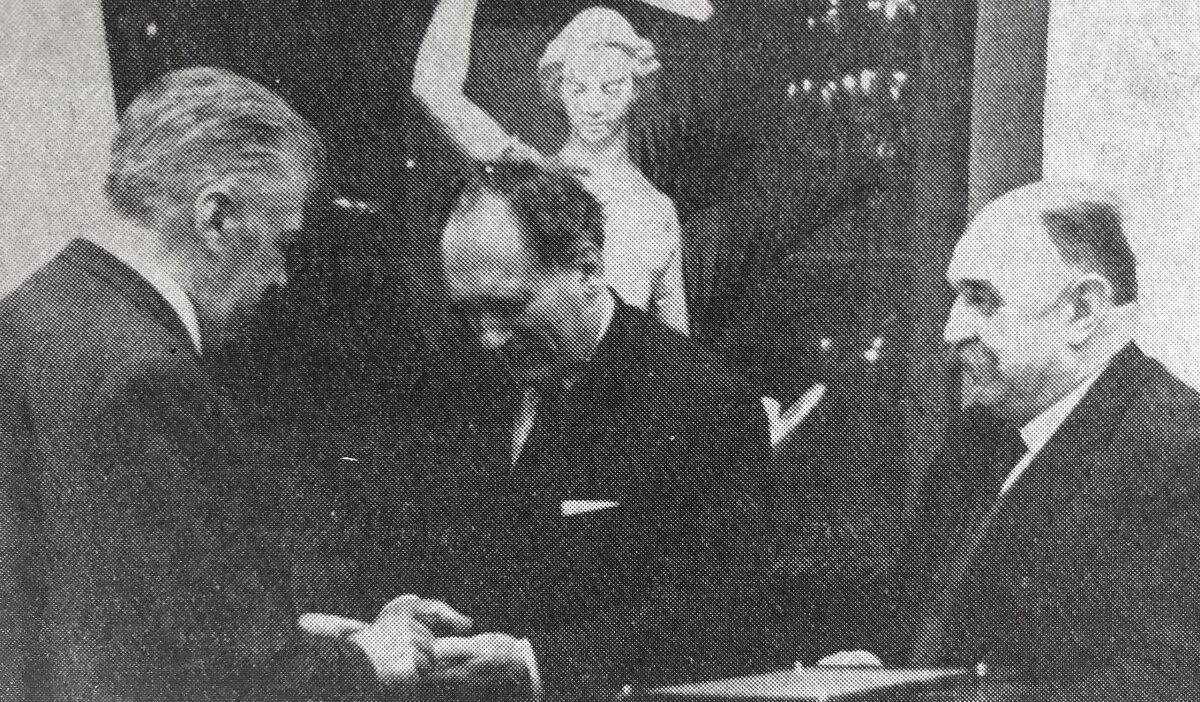
In a March 1968 interview, former minister Mieczysław Moczar portrayed himself as Poland’s national champion, lacing patriotism with anti‑Jewish communist rhetoric.
Moczar’s Delayed Speech After March 1968
After the outbreak of student protests and the beginning of the March crisis, Moczar took more than a month to publicly speak. His statement dealt with history and patriotism.
The interview, circulated widely during April’s “Month of National Memory,” encompassed a wide range of topics that together formed a clear political message.
WWII Heroism and Polish Identity
Moczar depicted World War II as an era of great Polish heroism and martyrdom, emphasizing the September campaign and the Polish army’s resistance against German superiority.
He listed battles—Narwik, Tobruk, Monte Cassino, Lenino, Berlin—as collective memories that unite combatants, including AK, AL, BCH, all former prisoners of German concentration camps, fighting for the homeland against those who defamed Poland.
Targeting Stalinists and Jewish Communists
Moczar denounced Stalinists as the greatest threat to Poland, accusing certain politicians and “officers” who claimed exclusive leadership rights and undermining trust in Poles.
He referenced the “Bagno” operation that investigated his supporters, portraying ongoing personal grievances from the 1950s and labeling Jewish communists as responsible for stifling nationalist tradition.
Reception by Critics and Supporters
The Ministry of Internal Affairs criticized the interview as misguiding youth with anti‑Polish Communist narratives, while left‑wing Poles and readers praised it as patriotic and a defense against anti‑Polish sentiment.
Letters from veterans and civilians, including a reserve major and a veterinary doctor from Gliwice, expressed strong approval, citing the interview as a simple, soldierly, and Polish declaration.
Supporters noted the interview’s impact on reinforcing national hope and curbing distortions of history.
Legacy and Scholarly Reflection
Contemporary analyses, such as the fragment from Paweł Machcewicz’s book “National Communism in Poland – Moczar’s Partisans” published by Krytyka Polityczna in September 2025, frame the interview within the context of national communism and its anti‑Jewish undertones.