


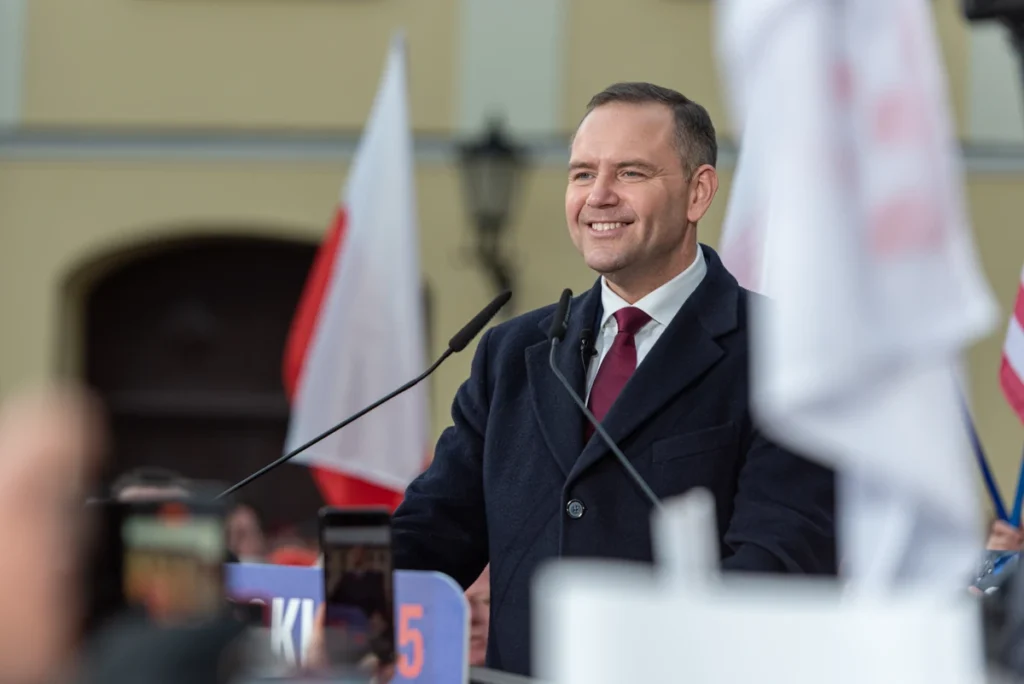
A survey shows 58.4% of Poles want President Karol Nawrocki to sign the SAFE Act, while 29.8% oppose it.
Survey Results
The IBRiS survey for “Rzeczpospolita,” conducted in mid-February, showed clear support for the SAFE Act taking effect. Support at 58.4% means most respondents want the president to enable the program’s implementation. Opponents of the signature constitute 29.8% of those surveyed, with the rest having no opinion.
The differences are particularly visible among electorates. As many as 92% of ruling coalition voters support signing the act, while 59% of opposition voters expect the president not to accept it.
SAFE Program Overview
The SAFE program is part of the European security architecture, adopted by EU member states in January. Poland has presented a list of 139 projects to be financed under the mechanism. The total amount of support is 43.7 billion euros in low-interest loans.
The funds will be used primarily for military modernization – including military equipment purchases, development of defense industry production capabilities, and infrastructure investments. Some projects will be implemented in cooperation with European partners and Ukraine.
Presidential Dilemma
President Karol Nawrocki is under strong political pressure. On one hand, the majority of the public – according to the IBRiS poll – expects the act to be signed. On the other hand, a significant part of the opposition electorate expresses opposition to accepting the document in its current form.
Information from the president’s entourage indicates that the key element of his position is the issue of control over the implementation of the SAFE program. The possibility of establishing a Steering Committee, which would include representatives of the Presidential Palace, is being considered.
Broader Context
The debate around SAFE fits into the broader context of disputes about the scope of defense integration in the European Union. In recent months, work has accelerated on joint equipment procurement and increasing production capabilities of the European defense industry.
According to the European Defense Agency, in 2023 EU countries allocated a record 279 billion euros for defense, with forecasts predicting further growth in expenditures. In Poland, the discussion concerns not only funding scale but also supervision mechanisms and transparency in managing the funds.