


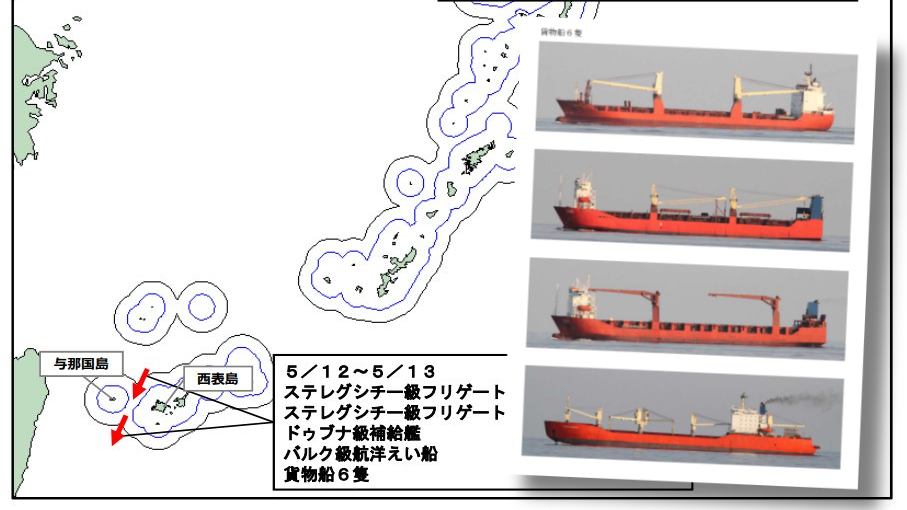
A fleet of ten Russian vessels, including cargo ships and naval escorts, was tracked by Japan moving southwest from the Pacific, likely heading toward Russian ports in Europe.
A Strategic Movement Detected
The Japanese Ministry of Defense has been monitoring a Russian naval formation since May 8, when it was spotted 140 kilometers from the Tsushima Strait. The convoy is believed to have originated from Vladivostok or nearby ports in the Primorsky Krai region.
After being tracked for a week by Japanese patrol aircraft and vessels, the formation cleared the Japanese islands near Taiwan and entered the Philippine Sea, moving westward at a significant distance from its original discovery point.
Composition of the Russian Fleet
The convoy comprises six cargo ships, two escort corvettes, a fleet supply ship, and an ocean-going tug. Among the identified vessels are the Maia 1, Lady D, Lady Mariia, Lady R, and Kapitan Danilkin, many of which are under Western sanctions for transporting military supplies from North Korea to support Russia’s operations in Ukraine.
The two Steregushchiy-class corvettes, Sovershennyy and Rezkiy, provide combat capabilities but lack the range for transoceanic travel, necessitating the inclusion of a Dubna-class supply tanker and a large tug, the Andrey Stepanov, to ensure self-sufficiency during the long transit.
Security and Intentions
While the cargo ships appear partially laden, their specific contents remain undisclosed. The convoy’s likely destination is Europe, requiring a 25,000-kilometer journey around Africa, the British Isles, and Ireland.
The decision to deploy a formal escort suggests Moscow’s growing concern over the interdiction of its “shadow fleet” and potential sabotage. Similar to the mysterious 2024 sinking of the Ursa Major, Russia appears to be taking unprecedented precautions to protect vessels deemed essential to its ongoing war effort.