


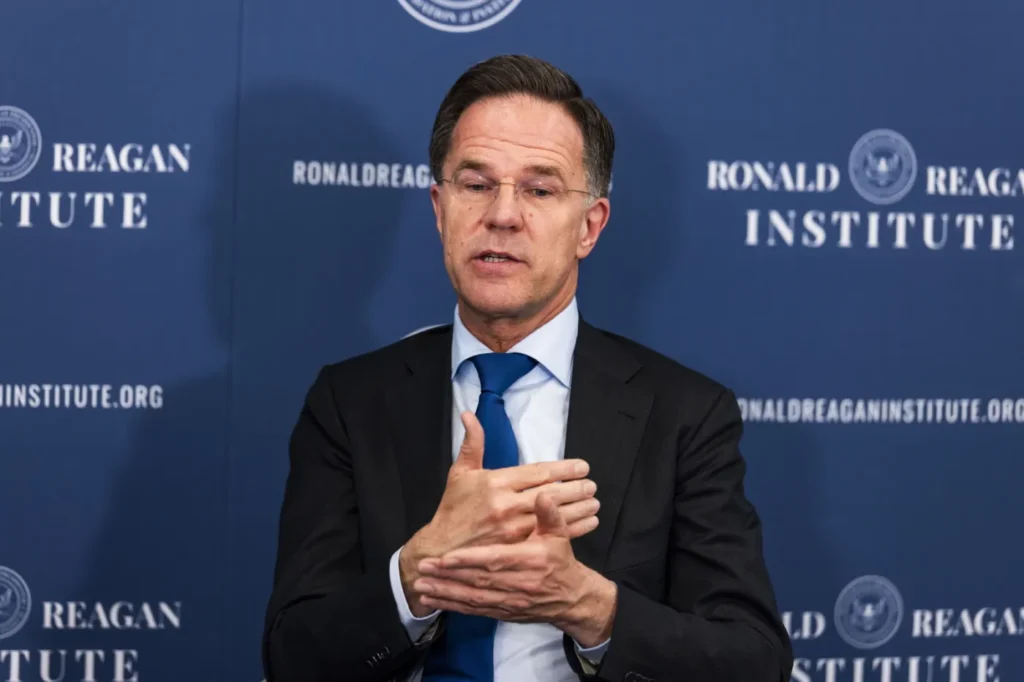
NATO is prepared to act concerning the Strait of Hormuz, with Secretary General Mark Rutte stating allies largely support U.S. requests and may contribute to securing the waterway.
Rutte Details Allied Support for U.S. Actions
NATO allies are largely providing support to the United States, almost universally complying with U.S. requests and potentially playing a role in opening the Strait of Hormuz, according to NATO Secretary General Mark Rutte, speaking at the Reagan Institute in Washington on Thursday.
Rutte declined to answer questions regarding a potential U.S. withdrawal from the alliance.
European Engagement and Military Assistance
Following a meeting with U.S. President Donald Trump, Rutte emphasized both existing NATO support for the U.S. concerning Iran and a commitment to further action.
Trump’s Surprise Tactics and European Response
Rutte acknowledged some allies were initially slow to respond, partly due to being surprised by President Trump’s decision not to provide advance notice of initial attacks to maintain the element of surprise. He stated he understood this decision.
However, Rutte asserted that Europe is now providing substantial assistance, including logistical support, to ensure the success of U.S. armed forces in preventing Iran from acquiring nuclear weapons and curbing its ability to export instability.
International Coalition Efforts and Dutch Contribution
Rutte pointed to the United Kingdom’s efforts to build an international coalition to ensure free passage through the Strait of Hormuz, noting that the Netherlands could deploy mine countermeasures vessels, frigates, and other assets to the region.
He characterized this as evidence of a shift in thinking, with each nation seeking ways to contribute.
NATO’s Potential Role and Speed of Action
Rutte stated NATO itself could play a role, arguing there is no reason not to assist. While acknowledging the need for political agreement, he stressed the importance of speed over perfection.
Avoiding Direct Answers on U.S. Withdrawal
Similar to a previous CNN interview, Rutte evaded direct answers regarding whether President Trump discussed the possibility of the U.S. leaving NATO during their White House meeting. He reiterated that Trump feels let down by allies and that he understands this sentiment, describing the conversation as “honest and direct,” like between friends.
Greenland and Transatlantic Relations
Regarding Greenland, a topic recently raised by Trump, Rutte stated the main discussion occurred during the Davos summit and that trilateral U.S.-Danish-Greenlandic talks are ongoing.
He noted NATO has increased cooperation on Arctic security in response to Trump’s concerns.
Secession and Resource Control Concerns
The trilateral discussions focus on scenarios, including potential future Greenlandic secession. Rutte also highlighted the need to prevent Russia and China from gaining access to Greenland’s resources and economy.
Shifting Transatlantic Alliance and European Responsibility
Rutte acknowledged that Europe had long taken U.S. leadership for granted and pledged this would no longer be the case. He stated that allies recognize a fundamental shift in the transatlantic alliance.
He emphasized that Europe is assuming a greater and fairer share of the responsibility for conventional defense, a trend he believes is irreversible.
Source Attribution
Reported by Oskar Górzyński (PAP) from Washington.