


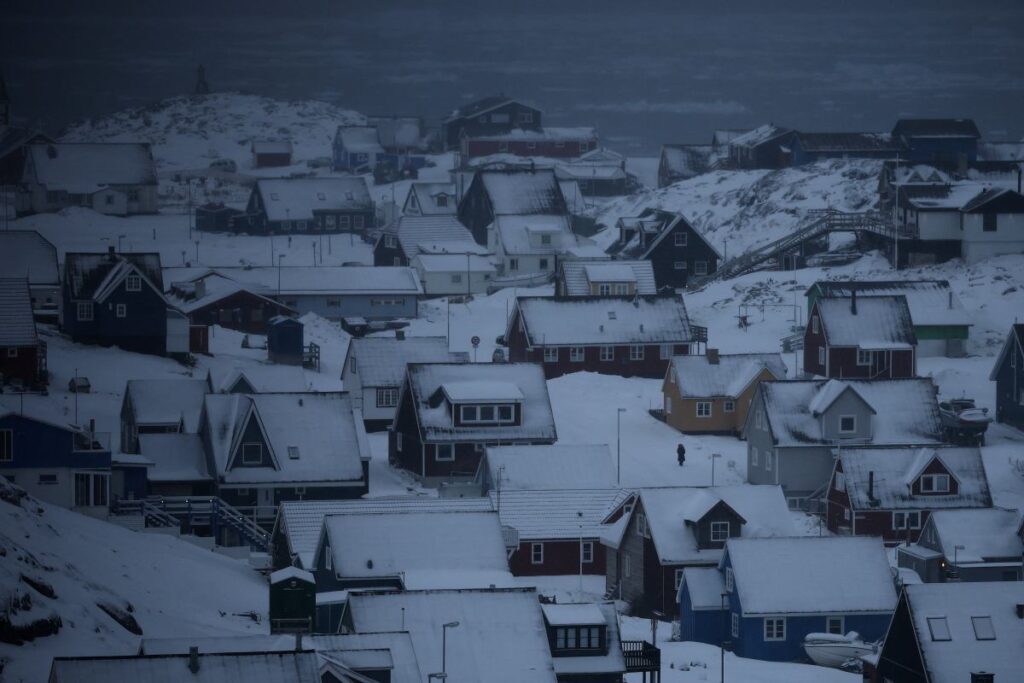
NATO is set to launch the Arctic Sentry mission this week, aiming to boost its Arctic role and ease tensions over Greenland.
Arctic Sentry Mission
NATO is expected to begin the Arctic Sentry mission within days, according to five Reuters sources. The goal is to increase NATO’s presence in the region and mitigate tensions between U.S. President Donald Trump and European allies over Greenland. Poland’s Institute of International Affairs (PISM) noted that operational responsibility would likely fall on European states, supported by Canada, with adequate naval and air capabilities.
Countries including the UK, Germany, France, Norway, Sweden, and Canada have signaled readiness to deploy troops to Greenland. The U.S. may also participate, given its Pituffik Space Force base on the island.
Eastern Sentry and Baltic Sentry
Last September, NATO launched the Eastern Sentry mission to protect alliance territory along the eastern flank, following a Russian drone incident in Poland. Allies have announced deployments: Denmark is contributing two F-16 fighters and a frigate, France three Rafale jets, and Germany four Eurofighter jets. The UK has also expressed willingness to support, reinforcing NATO’s deterrent and defensive posture.
Months earlier, NATO initiated the Baltic Sentry mission to enhance its presence in the Baltic Sea.
Donald Trump’s Position
In January, U.S. President Donald Trump told *The New York Post* that the U.S. would assert sovereignty over areas with its bases in Greenland. “We’ll have everything we want,” he stated. Earlier, in Davos, Trump ruled out military force to seize Greenland, arguing control would counter Russian or Chinese influence. On Monday, he shared an AI-generated map on Truth Social showing Canada, Greenland, and Venezuela as part of the U.S.
NATO’s Arctic Engagement
NATO Secretary-General Mark Rutte emphasized in January that all allies agree on the Arctic’s security importance due to new sea routes and heightened Russian and Chinese activity. Seven Arctic nations are NATO members, including the U.S. and Canada, with five in Europe. Russia is the only non-NATO Arctic state. Rutte noted China’s near-status as an Arctic power and stressed NATO’s duty to protect the region from 2025, responding to requests from northern allies.