Germany accelerates deployment of 4,800 troops to Lithuania as NATO responds to Russia’s military buildup on eastern flank.
German Military Expansion in Lithuania
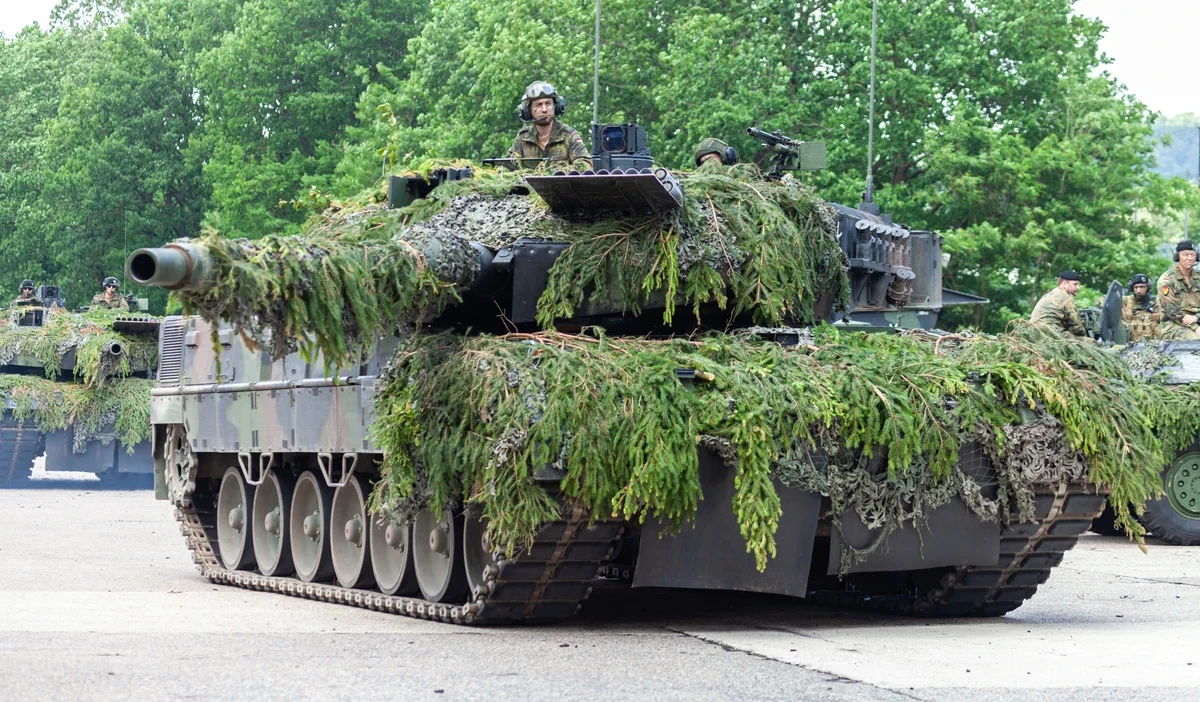
Germany has decided to accelerate the expansion of its 45th armored brigade stationed in Lithuania. On Wednesday, it was announced that German troops will deploy to additional locations, including Rudniki near Vilnius and Rukla near Kaunas. The brigade, which currently has only 500 soldiers established since 2023, will expand to 1,800 within a year and reach 4,800 personnel by the end of 2027.
The brigade will include two battalions: armored grenadiers from Bavaria and an armored battalion from North Rhine-Westphalia. The deployment will occur once necessary infrastructure is completed, in the meantime, NATO battalions from 8 European countries will be incorporated to expand the unit’s capabilities.
Russian Military Buildup Triggers Response
The expanding construction of Russian military bases along NATO’s eastern borders has prompted Germany’s military response. Moscow’s increasing combat potential in Belarus and investment in military infrastructure along borders with Finland has alarmed NATO planners.
German military analysts assess that Russia could test NATO’s defensive capabilities on the eastern flank within two years. The worst-case scenario, according to Gerald Funke of the Bundeswehr Support Command, would be a large-scale Russian attack on Baltic states, which would immediately draw Germany into conflict through its Lithuanian-based brigade.
Lithuania Builds New Military Training Ground
Lithuania is preparing for potential security threats by constructing a new training ground in the Łoździeje region, bordering both Poland and Belarus. The 14,600-hectare facility is designed to host continuous presence of allied troops and hold larger exercises involving brigade-level units five times yearly.
The project aims to strengthen the defense of the Suwałki Gap, a strategic corridor identified by planners as a potential direction of attack. Lithuanian President Gitanas Nausėda has proposed extending this investment to the Polish side to enhance cooperation between both nations’ armed forces.
The Polish Ministry of National Defense has welcomed the initiative, with Deputy Prime Minister and Defense Minister Władysław Kosiniak-Kamysz declaring that Polish engineering troops can assist in construction and that the Polish army will use the facility once completed.