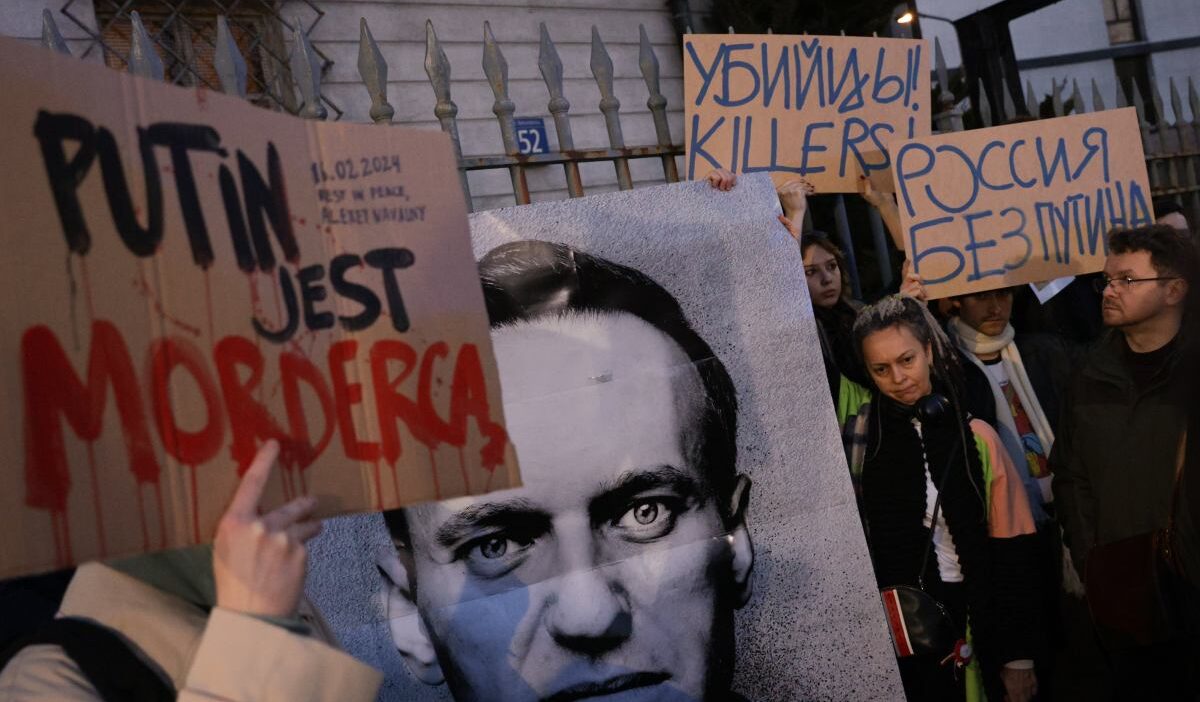
Russian opposition leader Alexei Navalny died in a penal colony in February 2024, with five nations confirming he was poisoned with a rare toxin from poison dart frogs not found in Russia.
Navalny’s Death and Poison Confirmation
Russian opposition leader Alexei Navalny died in a penal colony on February 16, 2024. His relatives and associates managed to obtain material for testing. Two days before the anniversary of the politician’s death, services of five countries confirmed that the Russian opposition leader was poisoned – a potent poison, epibatidine, was found in his body.
The toxin is secreted by poison dart frogs and does not occur naturally in Russia, according to the statement. The Kremlin maintains that Alexei Navalny died of natural causes.
International Demand for Investigation
“We emphasize that the Russian authorities bear exclusive responsibility for this death. The European Court of Human Rights in its February 3, 2024 ruling also noted that Russia is responsible for the inhumane and degrading treatment of Navalny during his detention and for failing to respond adequately to his requests,” reads a statement from Poland, Australia, the Czech Republic, Denmark, Estonia, Finland, the Netherlands, Canada, Lithuania, Latvia, Germany, Norway, New Zealand, Sweden, and the United Kingdom.
“In light of recent findings made public by the United Kingdom, Sweden, France, Germany, and the Netherlands, we reiterate the demand for a thorough and transparent investigation into the circumstances of Navalny’s death,” the statement continued.
Russia’s Human Rights Situation
“The human rights situation in Russia has deteriorated sharply both before and after this tragic event. This is indicated by reports from the UN Special Rapporteur,” the statement said. It added that the Kremlin is increasingly repressing its own citizens, abusing national security provisions, particularly targeting human rights defenders, journalists, lawyers, and doctors.
Kremlin’s Response
“Navalny’s legacy is still alive. In his spirit, we stand with courageous Russian human rights defenders and independent civil society representatives who have not ceased actions despite the increasing risks they face,” the statement read. It also noted that over 1,700 political prisoners remain in Russian penal institutions, many of whom are tortured, and that Russian authorities “must fully meet all international obligations and release all political prisoners.”
The Kremlin dismissed the reports as “Western propaganda fraud.” Secretary of State Marco Rubio, who is in Europe, confirmed that the US administration is aware of the report on Navalny’s poisoning. “It’s concerning. We know the Navalny case and have no reason to doubt it,” the secretary of state said, emphasizing that the report was not initiated by the United States.
Opposition Figure’s Claim
“Putin murdered Navalny because without his approval, the use of poison would not have been possible,” Russian opposition figure Gennady Gudkow told Polish Radio. The dissident, formerly a State Duma deputy, added: “We know that long before Navalny’s death, a meeting was held at the Kremlin where what to do with the Russian opposition, including Navalny, was discussed. As we learned, Krasnov and Bastrykin told Putin that Navalny would never leave prison. We didn’t realize then that they were preparing a murder.”
At that time, Igor Krasnov was Prosecutor General of Russia, and today he is Chairman of the Supreme Court. Alexander Bastrykin is head of the Russian Investigative Committee. According to Gennady Gudkow, European political leaders, possessing knowledge of Alexei Navalny’s poisoning, should follow the principle of not shaking hands with a person proven to have participated in the intentional murder of a political opponent.