


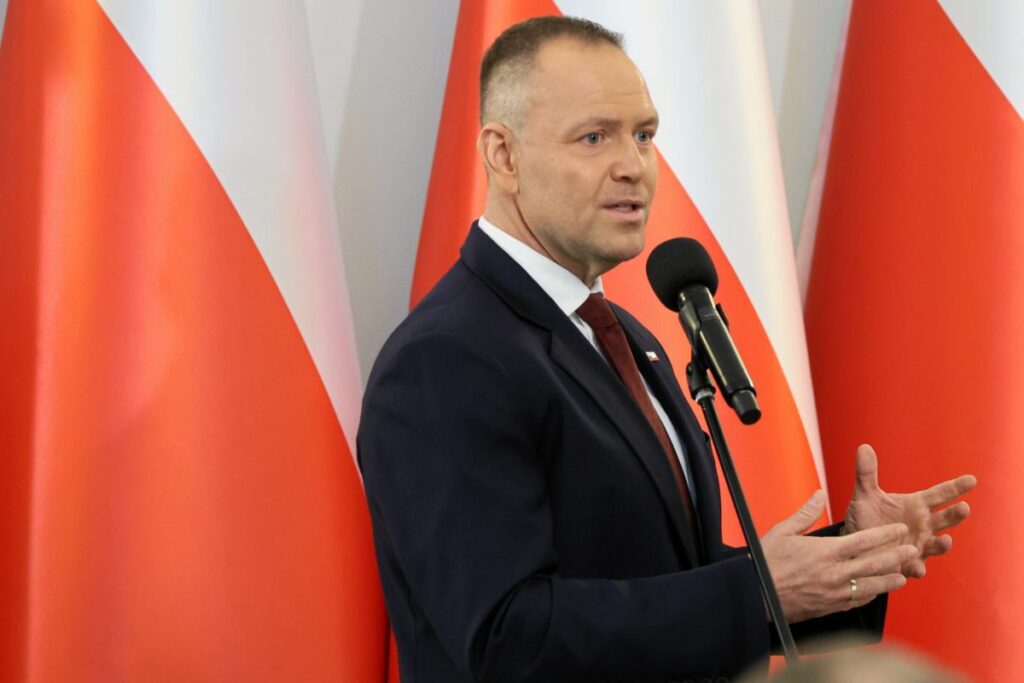
President Karol Nawrocki has floated the idea of constitutional reform, suggesting the current document is outdated, though his proposal faces significant procedural hurdles and accusations of political theater ahead of future elections.
The President’s Constitutional Ambitions
During his May 3rd address, President Nawrocki floated the idea of revising the Polish Constitution. Drawing a historical parallel, he noted that the Third of May Constitution provided for revisions every twenty-five years, while the 1997 document is already twenty-nine years old. Critics, however, have compared his initiative to whimsical pop-culture quotes, questioning the timing and the seriousness of the proposal.
Nawrocki insists that change is necessary, though he remains vague on what specific system of government he would prefer. His rhetoric mirrors a lecturer testing a student’s commitment, yet the underlying message suggests he may favor a model where the head of state bears a higher, perhaps moral, level of accountability, akin to the 1935 constitution.
Structural Weaknesses and the Political Climate
The core issue with Poland’s current system may not be the constitution itself, but a profound lack of political culture and an inability to conduct meaningful dialogue between opposing sides. Strengthening the Prime Minister’s authority or adopting a chancellor-style system might increase efficiency, yet such reforms require a consensus that currently does not exist in a polarized society.
Meaningful constitutional reform would need to address the dualism of the executive branch, the status of institutions like the Supreme Court and the National Council of the Judiciary, and perhaps even European integration. However, in the current political environment, these remain distant aspirations rather than actionable policy goals.
The Procedural Impasse
The President’s proposal is currently hindered by the lack of a “constitutional moment”—a state of genuine, broad-based agreement among major political forces. Without such alignment, the project risks being treated as a political tool for future parliamentary elections rather than a serious effort to modernize the state.
Furthermore, legal experts are divided on the procedure for such a total change. Article 235 requires a two-thirds majority in the Sejm and an absolute majority in the Senate, with both chambers voting on identical language. The necessity of gaining this level of political consensus is, as the President noted, akin to asking both parents for permission—a difficult task in any political climate.