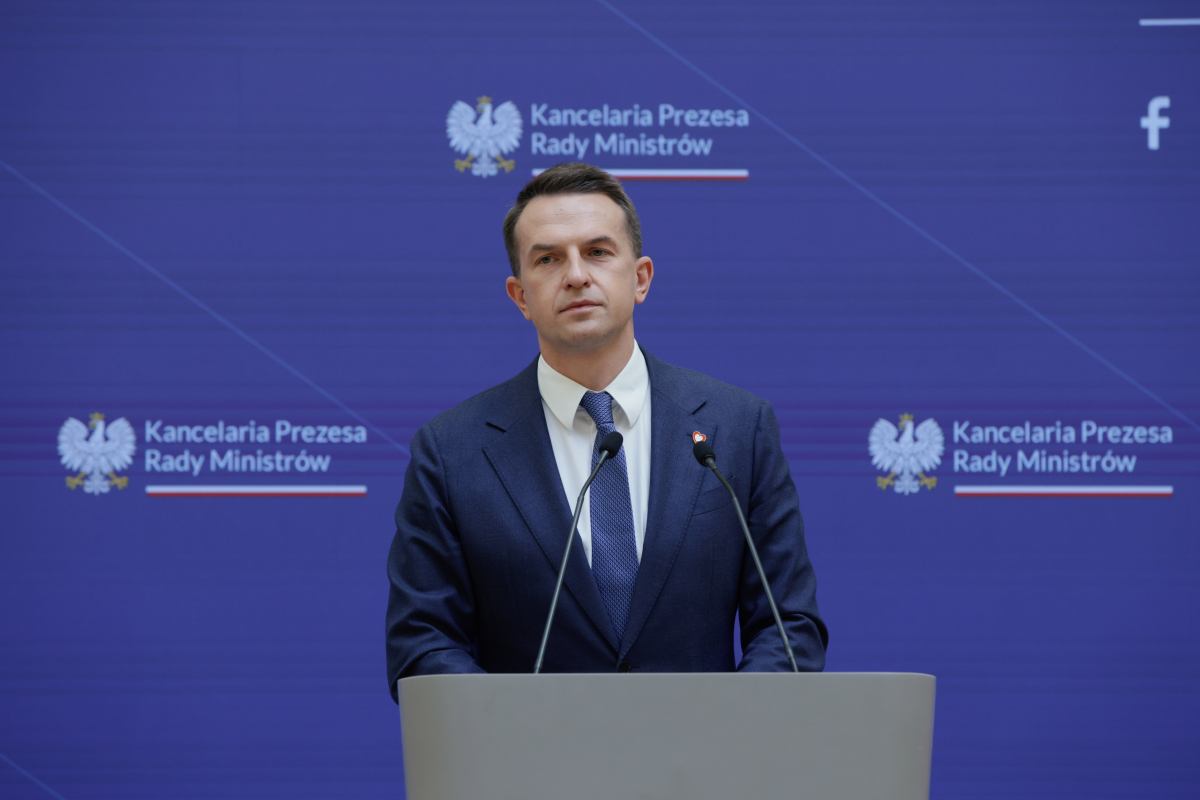
President Nawrocki vetoed a bill eliminating political KRS selection, continuing PiS’s judicial course and limiting government options.
Veto Expected
President Karol Nawrocki’s veto of the bill abolishing the political selection of judges to the National Council of the Judiciary (KRS) was unsurprising. He never concealed continuing PiS’s judicial policy. Minister Waldemar Żurek and the parliamentary majority knew this from the start.
Regardless of how many projects were prepared and passed, the outcome would be the same.
Żurek’s Short Stint
Waldemar Żurek was expected to act decisively, satisfying the electorate’s impatience for uncompromising rule-of-law restoration. Adam Bodnar lost his position due to perceived inaction, criticized by legal circles.
Political Maneuvering
After the veto, Żurek announced a vague “Plan B.” KRS elections are in spring, and without a solution, the current contentious council will continue. The ruling coalition could use the existing law for a politically fraught selection process.
A proposal emerged for “primaries”: law-abiding judicial bodies would nominate candidates approved by coalition MPs, while opposition-backed candidates would have no chance. This could cleanse the KRS of PiS appointees.
Legal Deadlock
Explaining this path to voters—criticized for a decade as undermining constitutional order—remains feasible. Nawrocki aims to cement the system, so using a flawed solution in good faith to bring in reform-minded judges is framed as necessary.
The problem arises when a council elected via political procedure inherits rulings from the EU Court of Justice and Strasbourg questioning judges’ independence under a politically shaped KRS. Even the most “law-abiding” selection won’t change this.
Every judge approved by the renewed KRS will bear the same “neo-judge” stigma as those since 2018. This is a dead end. Nawrocki might withhold appointments for purely political reasons.
Unlikely Solutions
Two exits exist but are unrealistic: a political shift altering the judiciary dispute’s balance, or a compromise—discussed academically but never politically attempted. Compromises require concessions, difficult amid the Kaczyński-Tusk duopoly.
The judiciary conflict is foundational for both leaders, and their monopoly ensures it continues. Resolving it benefits Poland but ends political profits.
Nawrocki’s New Proposal
Post-veto, Nawrocki introduced radical judicial reforms, exceeding even PiS’s or Zbigniew Ziobro’s ideas. It’s confrontational, aiming to reverse the judicial narrative, though currently unenforceable—a preview of possible PiS actions if they return to power.
Continuing Conflict
No calm in justice is imminent. Poland enters a higher level of this destructive conflict, leaving behind numerous defeated steps.