Polish President Karol Nawrocki faces mounting criticism over frequent vetoes, a controversial meeting with Viktor Orbán, and a public dispute with a TVN24 reporter, even losing support from his base.
Nawrocki’s Increasingly Confrontational Presidency
Karol Nawrocki has quickly adopted a political style marked by frequent vetoes, a contentious decision to block criminal procedure legislation, a dispute over the SAFE Act, a trip to Budapest to meet Viktor Orbán amid concerns about Hungary’s ties to Moscow, and a public clash with a TVN24 journalist.
These actions are creating an image of a confrontational, nervous, and increasingly difficult-to-defend presidency.
Erosion of Presidential Authority
The core of Nawrocki’s problem isn’t just conflict with the government, but his perceived weakening of the presidential office itself, rather than building its authority.
A Record of Vetoes
Nawrocki has vetoed 29 bills to date, a number that has rapidly increased in recent months, according to Wetomat. A previous United Surveys poll for Wirtualna Polska indicated 28 vetoes.
President as Obstructionist
This high volume of vetoes fosters the perception of a president who acts as a central instrument for blocking legislation passed by the parliamentary majority, rather than an impartial arbiter.
The vetoes cover a wide range of issues, including the SAFE fund, criminal procedure code amendments, changes to the KRS, digital services, insurance markets, education, animal protection, energy, crypto-assets, the Silesian language, and tax regulations.
Public Perception of Political Motivation
A United Surveys poll for Wirtualna Polska found that 48.6% of respondents believe Nawrocki’s motivation is solely to block government actions, while 32.5% see the vetoes as concern for the state and the quality of law, and 18.9% were undecided.
Within the ruling coalition’s electorate, 93% interpret the president’s actions as political, while among opposition supporters, 65% see merit-based motivations.
The SAFE Act Veto and National Security
The veto of the SAFE Act (Financial Instrument for Increasing Security) drew strong criticism, touching on the sensitive issue of national security, particularly given the war on Poland’s eastern border.
The president found himself in a communication trap, as the simple message that he blocked a solution associated with strengthening security resonated strongly.
Context and Cumulative Effect
The timing of the SAFE Act veto was particularly unfavorable, coinciding with renewed questions about Nawrocki’s relationship with the legacy of PiS, the Budapest trip, and the incident with the journalist, even drawing criticism from previously supportive fans.
Fan Backlash and Eroding Support
A significant development was the criticism from football fans, who had previously been a strong base of support for the president, with banners appearing at stadiums displaying slogans like “You are not one of us” and accusations of betrayal.
The fans opposed the veto of the criminal procedure code amendments, viewing it as siding with a harsher legal system.
Budapest and the Orbán Meeting
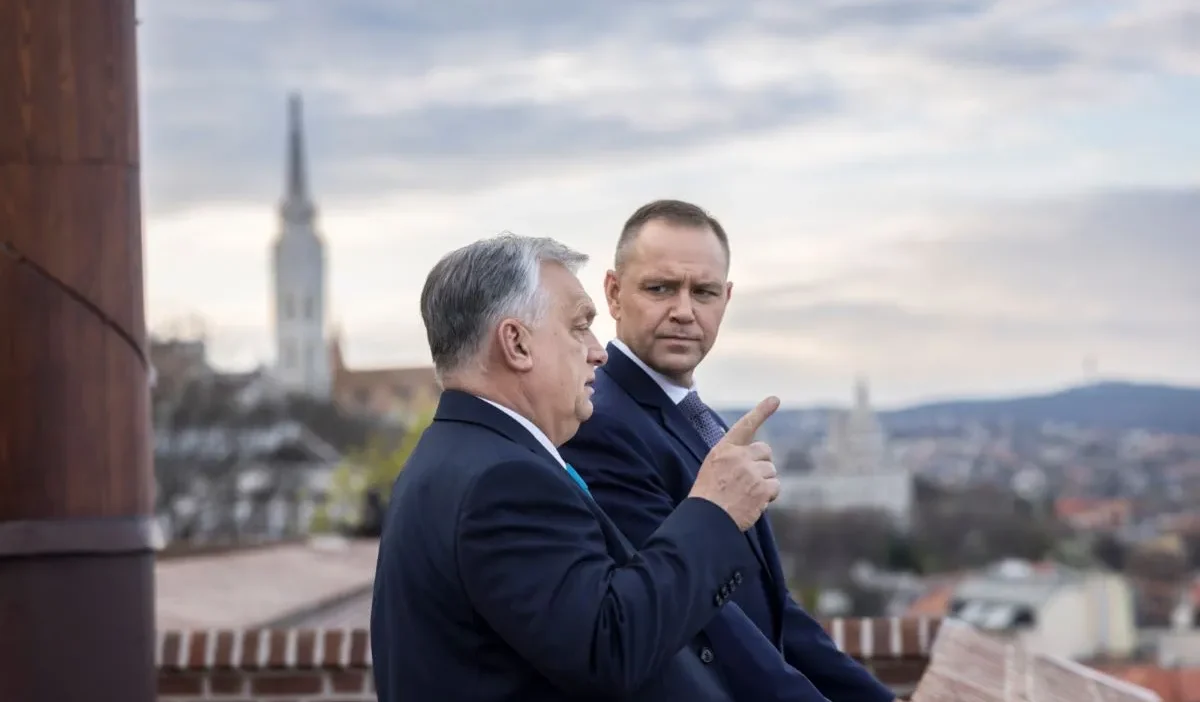
The visit to Budapest and the meeting with Viktor Orbán proved risky, especially given Nawrocki’s previous cancellation of a meeting with Orbán after his visit to Moscow.
The Presidential Chancellery reportedly did not request briefing materials from the Ministry of Foreign Affairs for the visit, limiting diplomatic support.
Confrontation with a Journalist
The most significant controversy arose from Nawrocki’s heated exchange with a TVN24 journalist during a press conference in Przemyśl, regarding Orbán’s relationship with Putin.
Nawrocki told the reporter to “get your act together and listen to the President of Poland” and called Putin a “criminal.”
The recording of the incident went viral, generating around 9 million views, with 58% of comments being critical of the president’s behavior.
A Presidency Under Pressure
The accumulation of political decisions, controversial gestures, and communication tensions places President Nawrocki’s administration under significant social and political pressure.
Separating the merits of decisions from public perception is becoming increasingly difficult, as emotions, simplifications, and polarization dominate the discourse.