


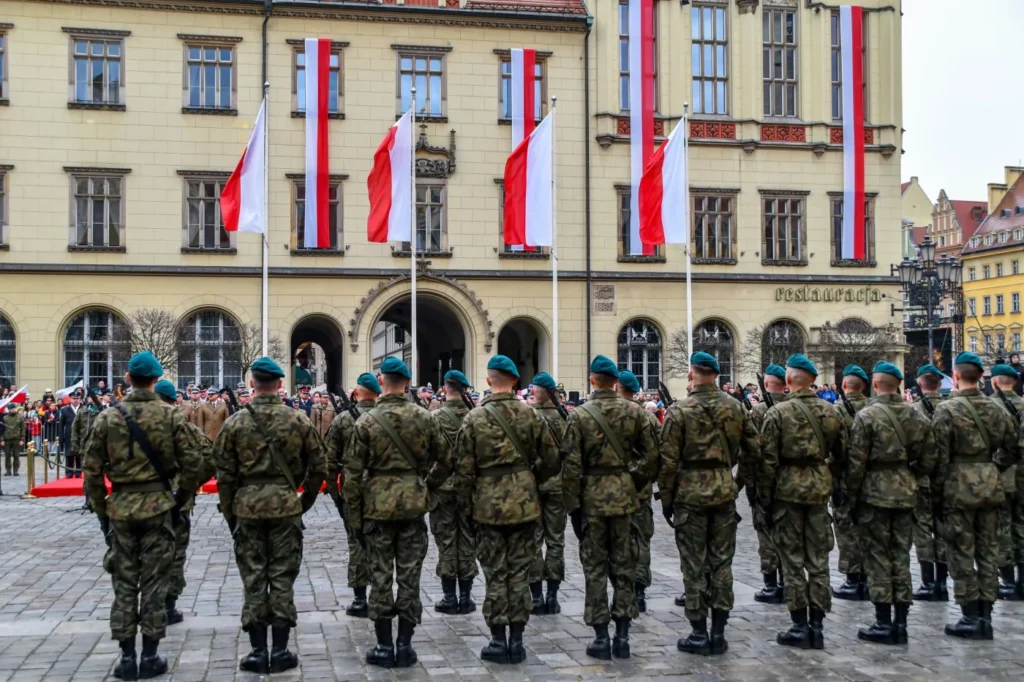
Professional soldiers are raising concerns over whether recent labor law changes, which allow civil service periods to count toward seniority, will apply to them or leave them behind.
The Scope of the 2026 Seniority Reform
The Act of September 26, 2025, amended the Labor Code to include periods of self-employment and civil law contracts in seniority calculations. These changes, effective January 1, 2026, for the public sector and May 1, 2026, for the private sector, aim to provide faster access to tenure bonuses and longer leave.
While the law explicitly mentions police and various state security agencies, it remains silent on the status of professional soldiers in the Polish Armed Forces. This omission has created significant uncertainty within the military community.
Concerns Over Professional Inequity
Soldiers who worked as entrepreneurs or under non-standard contracts before joining the military worry they will be excluded from these benefits. Member of Parliament Magdalena Sroka has submitted an interpellation to the Ministry of National Defense, noting that this disparity creates an unfair divide between soldiers and other uniformed officers.
Ministry of National Defense Response
The Ministry clarified that the new law amends the Labor Code rather than military-specific regulations. It noted that the armed forces operate under a distinct legal regime defined by the 2022 Homeland Defense Act.
Although the Ministry stated it sees no formal obstacle to recognizing these work periods for jubilee awards, it confirmed that no legislative changes to the military service rules are currently planned. This leaves room for varied interpretations regarding how units should process such claims.
Potential Financial Discrepancies
The uncertainty impacts real financial entitlements, specifically jubilee awards based on years of service. As the military continues to scale up, personnel who joined later in life after pursuing private careers feel increasingly left behind by the current regulatory gaps.