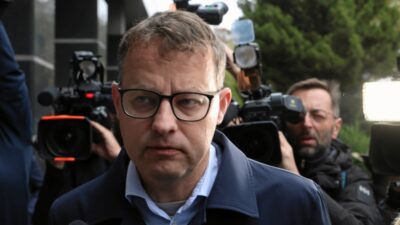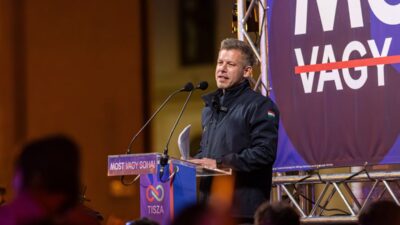
Hungary’s parliamentary elections, slated for April 12th, present a formidable challenge to Viktor Orbán from Péter Magyar, a former insider now leading the Tisza movement.
The Rise of Péter Magyar
Péter Magyar, a lawyer, former diplomat, and ex-member of Orbán’s inner circle, has emerged as a serious contender in the upcoming Hungarian parliamentary elections. He leads the Tisza movement, campaigning on issues of corruption, clientelism, deteriorating public services, and Hungary’s increasing isolation within the European Union.
Recent polls indicate Tisza is gaining momentum, with some projections even suggesting a potential constitutional majority in the 199-seat parliament. This has led to an increasingly aggressive campaign from both sides.
Brutal Campaign Tactics
Orbán’s campaign portrays Magyar as being influenced by Brussels and Ukraine, while Magyar accuses Orbán’s camp of disinformation, abuse of power, and attempts to manipulate the election results. Reports also suggest a coordinated effort by pro-government narratives on social media, including channels linked to Russian messaging.
The election is no longer simply a contest between two politicians, but a test of whether Orbán’s system can maintain support or relies primarily on institutional advantages.
Magyar’s Path From Within the System
Born in Budapest in 1981, Péter Magyar studied law and spent time studying in Berlin. He held various positions within the Hungarian government after 2010, focusing on EU law in the Ministry of Foreign Affairs and Trade, and later at Hungary’s Permanent Representation to the European Union, as well as state-owned financial institutions.
He served as a Member of the European Parliament for Tisza and is a vice-chair of the AFCO constitutional affairs committee.
A Divorce and a Political Shift
Magyar’s career was closely linked to Judit Varga, a prominent figure in Orbán’s government, whom he married in 2006. Their marriage symbolized the loyalty and conservatism of Fidesz’s elite. Their divorce in 2023 marked a turning point, as Magyar began to distance himself from the ruling camp.
This background lends credibility to Magyar’s claims that he can dismantle the system, as he was once a beneficiary of it.
The Scandal That Sparked Change
A political turning point came in early 2024 with the pardon of a man convicted of covering up sexual abuse of minors at a children’s home in Bicske. This led to the resignation of President Katalin Novák and Judit Varga, who as Minister of Justice co-signed the pardon.
Magyar seized the opportunity to distance himself from Fidesz, resigning from his positions and publicly criticizing the state as being subservient to loyalty networks and wealth concentration.
The Völner-Schadl Affair and Its Fallout
Further controversy erupted in March 2024 when Magyar released a recording of a conversation with his former wife regarding the Völner-Schadl scandal. The recording suggested potential interference in sensitive investigations by high-ranking officials.
Varga responded with accusations of violence and blackmail, which Magyar denied, claiming they were an attempt to discredit him. This scandal further solidified his image as a rebel against the system.
Tisza’s Transformation
The Respect and Freedom Party (Tisza) existed prior to Magyar’s involvement, but his entry transformed it into a national political force. In the June 2024 European Parliament elections, Tisza won approximately 30% of the vote and 7 seats, the best result for a non-Fidesz party in years.
Tisza has been attracting voters from the center-right, conservative, and provincial demographics, previously largely untouched by the traditional opposition.
A Distinct Political Approach
Magyar rejected the idea of a broad coalition with the traditional opposition, building his movement on a simple message: accountability for corruption, state reform, restoration of public services, and a predictable relationship with the West. He campaigned extensively in smaller towns and even undertook a walking tour to Romania.
Tisza’s Platform: A Western Course with Nuance
Tisza’s platform includes fighting corruption, increasing transparency in public procurement, joining the European Public Prosecutor’s Office, strengthening judicial independence, and limiting the prime minister to two terms. The party also aims to unlock frozen EU funds and increase spending on healthcare, education, and business support.
However, Tisza does not advocate for a complete reversal of Orbán’s policies, particularly regarding migration and Ukraine, maintaining a cautious approach.
Orbán vs. Magyar: Key Differences and Similarities
The clash is not a simple “Brussels vs. Budapest” scenario. Both politicians appeal to national sentiments, but in different ways.
Regarding the European Union, Orbán frames the relationship as a conflict over Hungarian sovereignty, while Magyar seeks to rebuild trust and unlock funds without unconditionally accepting all EU projects. On Russia and Ukraine, both express caution, opposing rapid EU membership for Kyiv and avoiding direct military involvement. Both parties also share a restrictive approach to migration.
A Campaign of Fear and Perception
Fidesz is mobilizing its base with a campaign emphasizing peace versus war, suggesting that a victory for the opposition could draw Hungary into conflict. Pro-government messaging has linked Magyar to EU and Ukrainian leaders, portraying his victory as a threat to national security.
Magyar, in contrast, focuses on everyday concerns like prices, healthcare, education, youth emigration, and blocked EU funds.
Controversial Recordings and Allegations
Late in the campaign, Magyar faced allegations involving compromising recordings, which he claims were part of a “kompromat” operation designed to discredit him. The recordings allegedly depicted him in a compromising situation.
The authenticity and context of these recordings remain disputed, but the incident highlights the intensity and dirty tactics employed during the campaign.
Concerns About Electoral Integrity
Concerns exist regarding potential electoral fraud and systemic mechanisms that favor Fidesz. OSCE reports indicate that recommendations regarding the use of state resources in the campaign have not been implemented, and there is a media imbalance favoring the ruling party.
The electoral system itself, with its gerrymandered districts and provisions for postal voting, raises concerns about potential manipulation.
Possible Outcomes and Their Implications
A Tisza victory with a constitutional majority would allow for significant institutional reforms and unlocking of EU funds. A victory without a majority would be more challenging, as Orbán’s safeguards would remain in place. A contested victory could lead to prolonged tension and protests.
Regardless of the outcome, Magyar is likely to improve relations with the EU, NATO, and Poland, while maintaining a cautious stance on certain issues.
Why Orbán Should Be Concerned
Orbán’s biggest challenge is not facing another opposition coalition, but a politician speaking the language of his former voters and addressing previously taboo subjects like corruption and oligarchic control. Magyar’s credibility as a former insider makes him a more dangerous opponent than previous rivals.