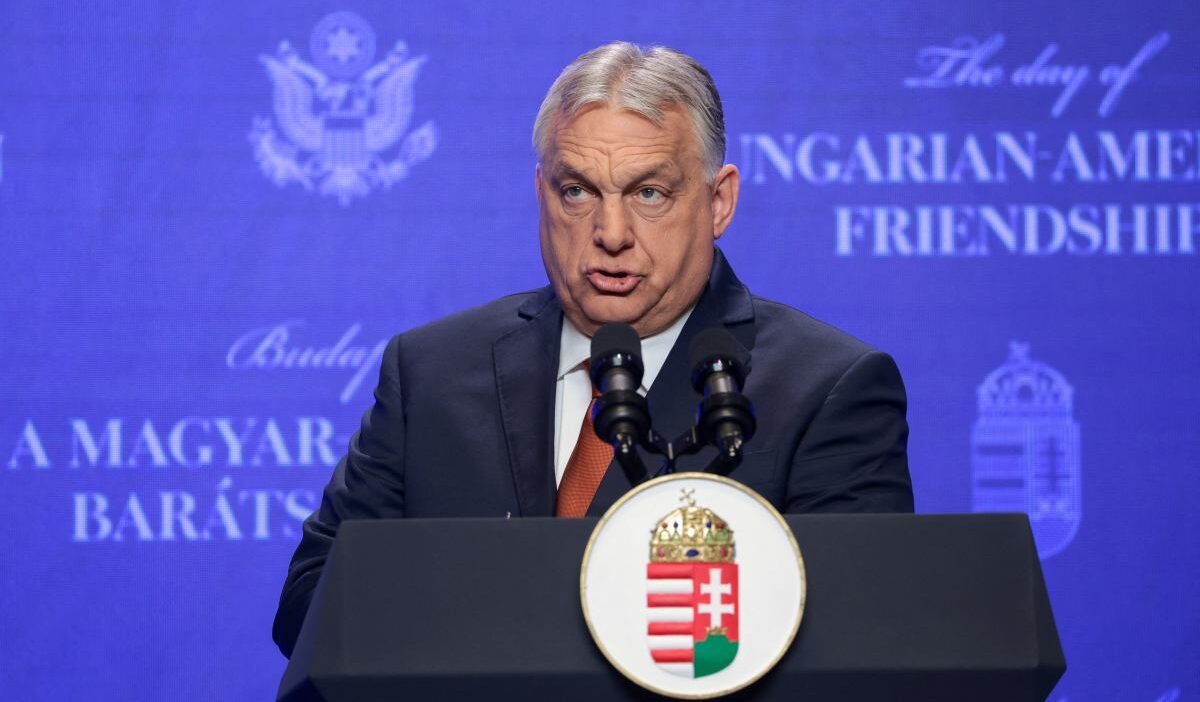
Recent polls in Hungary show a surge in support for the opposition TISZA party, increasingly threatening the dominance of Prime Minister Viktor Orbán’s Fidesz.
Political Landscape Shifts in Hungary
Recent opinion polls in Hungary indicate a near-complete political alignment around two main groups: the ruling Fidesz and the opposition TISZA. Most independent surveys show TISZA garnering support from 49 to 58 percent among decided voters.
Fidesz’s support fluctuates between 35 and 38 percent. Data reveals a growing trend of increasing support for the opposition alongside a decline in the popularity of the governing party.
Recent Poll Results Show TISZA Gaining Ground
A 21 Research Center poll in early April showed TISZA with 56 percent support among decided voters, up from 53 percent in early March. Fidesz received 37 percent, a decrease from 39 percent three weeks prior. Among the general population, TISZA had 40 percent support, while Orbán’s party had 28 percent.
A Zavecz Research poll from late March/early April indicated TISZA increased its lead to 13 percentage points among decided voters, up from 12 percentage points in February. 51 percent supported TISZA, and 38 percent supported Fidesz.
Median Poll Confirms Opposition Momentum
A Median poll published in late March showed TISZA with 58 percent support among decided voters, compared to 55 percent the previous month. Fidesz received 35 percent, unchanged from the prior month. Among the general population, TISZA had 46 percent support, and Fidesz had 30 percent.
Government-Linked Institutes Show Varying Results
The government-affiliated Nezopont Institute, in mid-March, showed Fidesz at 46 percent and TISZA at 40 percent. The Institute of the 21st Century, headed by Maria Schmidt, a government representative for commemorating the 1956 revolution, also gave Fidesz 46 percent and TISZA 41 percent.
Significant Undecided Voter Bloc Remains
Across surveys, between 20 and 26 percent of respondents remained undecided as of April 12th. The only other party consistently exceeding the 5-percent electoral threshold is the far-right Mi Hazank (Our Homeland Movement).
Generational Divide in Voting Preferences
A key trend identified in the research is generational polarization. Younger voters, particularly those under 30, overwhelmingly favor the opposition. The latest 21 Research Center poll showed 65 percent of voters under 30 supporting TISZA, while 14 percent support Fidesz.
Voters over 65 are more likely to choose Orbán’s party. In this demographic, Fidesz enjoys 49 percent support, while TISZA has 24 percent, according to polls from the Republikon Institute and Zavecz.
Shifting Expectations for Election Outcome
Beliefs about who will win the upcoming elections have also shifted in favor of the opposition. In January, 44 percent of respondents believed Fidesz would win, compared to 37 percent for TISZA. By March, 47 percent believed TISZA would win, and 35 percent believed Fidesz would.
Concerns Over Electoral Fraud Persist
An April study by the Publicus Institute revealed that over half of Hungarians fear electoral fraud. Among those concerned, two-thirds suspect the ruling Fidesz, while 15 percent suspect TISZA. The study also addressed potential foreign interference, with 79 percent believing other countries could secretly influence the elections, and 18 percent disagreeing.
Peter Magyar raised concerns about foreign interference in relation to the visit of J.D. Vance, U.S. Deputy President, to Budapest.
Election Details
Hungarians will elect 199 deputies to the unicameral National Assembly (Orszaggyules) on Sunday, with 106 elected in single-member districts and 93 from national party lists. Parliamentary terms last four years.