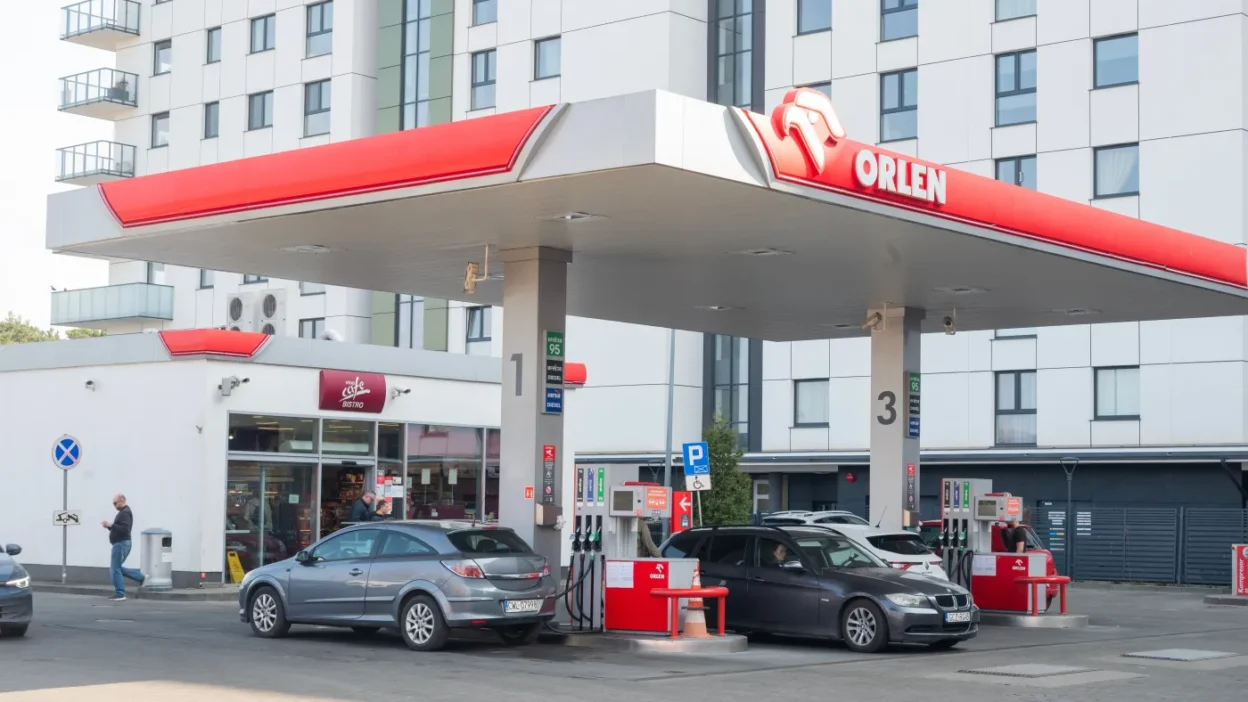
Orlen reduced wholesale prices for Ekodiesel and Eurosuper 95 gasoline in Poland on Saturday, following earlier price fluctuations and government regulations.
Orlen Adjusts Wholesale Fuel Prices
Orlen lowered wholesale fuel prices on Saturday, decreasing Ekodiesel by 90 zł and Eurosuper 95 gasoline by 21 zł per cubic meter, according to company data. Previously, Ekodiesel prices had increased by 7 zł, while Eurosuper 95 had decreased by 29 zł per cubic meter.
Currently, Ekodiesel costs 6,720 zł per cubic meter, a decrease of 90 zł from the previous day, and Eurosuper 95 costs 5,365 zł per cubic meter, down 21 zł.
Recent Price Changes
On Friday, Orlen had increased the wholesale price of Ekodiesel by 7 zł to 6,810 zł per cubic meter, while reducing the price of Eurosuper 95 by 29 zł to 5,386 zł per cubic meter.
Government Price Controls
Since March 31st, maximum fuel prices have been in effect across Poland as part of the government’s “Lower Fuel Prices” package, aimed at limiting price increases. These prices are based on the average wholesale price, plus excise duty, fuel surcharge, a sales margin of 0.30 zł per liter, and VAT.
Current Maximum Fuel Prices
According to an announcement from the Minister of Energy published on Friday, the maximum price including VAT for 95-octane unleaded gasoline will be 6.14 zł, 98-octane unleaded gasoline will be 6.73 zł per liter, and diesel fuel will be 7.68 zł per liter from Saturday to Monday.
For comparison, on Friday, the maximum prices including VAT were 6.17 zł for 95-octane gasoline, 6.77 zł for 98-octane gasoline, and 7.66 zł for diesel fuel. On March 31st, the first day of maximum price regulations, prices were 6.16 zł, 6.76 zł, and 7.60 zł respectively.
Price Regulation Procedures
The Ministry of Energy announces daily maximum fuel prices, which take effect the day after publication in the Official Gazette (Monitor Polski), or until the next working day in the case of announcements before non-working days and holidays.
Geopolitical Impact on Fuel Prices
The war in the Middle East, following the US and Israeli attack on Iran on February 28th, caused an increase in global oil prices and refined fuel prices, which impacted retail prices at gas stations in Poland.
On Tuesday, the US and Iran agreed to a two-week ceasefire. However, Gulf News reported on Friday that 325 tankers remain in the Persian Gulf, unable to leave due to a de facto blockade of the Strait of Hormuz, a strategic route for oil transport. Shipowners are suspending further voyages due to concerns about mines potentially placed in the Strait by Iran.
Analyst Outlook
Reflex analysts assessed on Friday that the direction of future fuel price changes will largely depend on the outcome of direct talks between the US and Iran starting on April 11th. They noted that if the terms of the agreement are not broken during the talks, fuel price reductions at stations should continue in the following week.
According to data collected by Reflex, average fuel prices at stations have been slightly below the maximum levels set daily by the Minister of Energy since the introduction of the “Lower Fuel Prices” package – gasoline is, on average, 4 gr cheaper, and diesel fuel is 8 gr cheaper per liter.