A Polish parliamentary inquiry into the use of the Pegasus spyware system has completed its report, but access to the most sensitive findings is restricted to a small group with high-level security clearances.
Pegasus Inquiry Report Completed, Access Limited
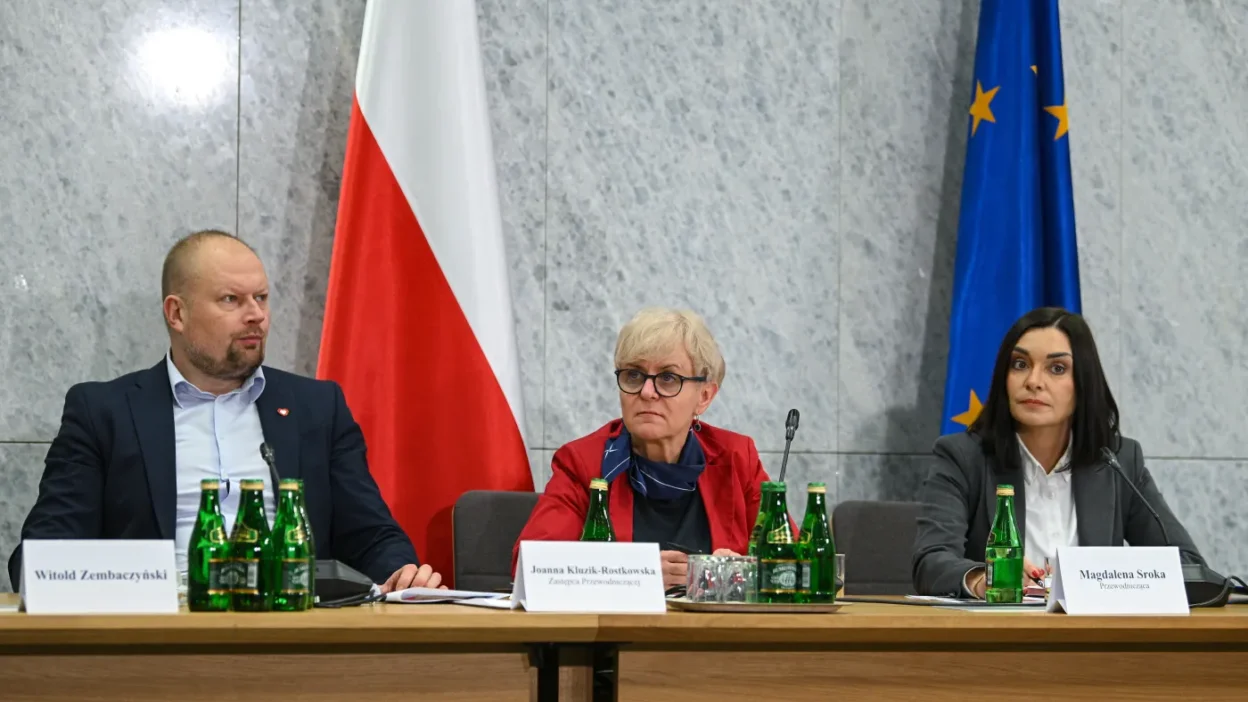
After over two years of work, the Polish parliamentary investigative committee examining the use of the Pegasus system in Poland has prepared its final report. The document will be divided into three parts – public, confidential, and top secret.
However, the most sensitive findings regarding the operation of the spyware, court decisions, and specific operations of security services will not be available to the public. Access will be granted only to a small group of parliamentarians with the highest security clearances.
Investigation Scope and Mandate
The parliamentary investigative committee was established to investigate the legality, correctness, and purposefulness of operational control using the Pegasus system by state services, including the Central Anti-Corruption Bureau, the Internal Security Agency, and the Military Counterintelligence Service.
Three Levels of Report Transparency
The final report will be divided into three levels of publicity. The first part will be public and made available to the public. The second – marked “confidential” – will be made available to all members of parliament.
The most sensitive information will be in the “top secret” section, covering details of the Pegasus system’s operation, procedures for initiating operational control, and documentation regarding court approvals.
Restricted Access to Sensitive Materials
Only a dozen or so people in the Polish parliament have access to such protected materials. This includes parliamentarians with security clearance allowing access to documents with the highest level of secrecy, such as the Prime Minister, the Minister coordinating special services, and members of the parliamentary committee on special services.
Security Clearances Within the Committee
However, even some members of the investigative committee itself do not have such a certificate. Only five out of ten members have ABW security clearance, meaning the rest cannot access the most sensitive part of the report.
Protecting Classified Information
The restrictions on access to materials stem from regulations regarding the protection of classified information. Documents marked with the highest level of secrecy can only be declassified by the institution that granted them that status.
Rare Declassification Decisions
Former intelligence officials emphasize that such decisions are rarely made. According to Norbert Loby, a former deputy head of the Internal Security Agency, lifting the “top secret” classification requires very serious legal grounds.
Authority Over Classified Information
As Loby indicates, the head of the organizational unit – in practice, the head of the service – is the “host” of classified information and decides on any lowering of the document’s secrecy level. This decision must be preceded by a risk analysis and an assessment of whether declassification would endanger state security.
Potential for Limited Public Disclosure
In practice, this means that the full picture of the committee’s findings may never be made public. Services rarely agree to disclose documents concerning operational methods, as this could create a precedent and reveal techniques used in intelligence activities.
Political Controversy Surrounding the Inquiry
The committee’s work has been politically charged from the beginning. During hearings, disputes arose regarding the scope of materials provided by the services and the interpretation of regulations concerning operational control.
Criticism of Committee Procedures
Some parliamentarians also criticize the committee’s conduct. MP Przemysław Wipler announced that he would not sign the final report and would present his own separate opinion, accusing the committee of, among other things, omitting some witnesses.
Omitted Witness Testimony
One example is the lack of a hearing for Judge Przemysław Radzik, who served as Vice-President of the Warsaw District Court in criminal matters from 2020–2022. According to Wipler, it was this judge who issued authorizations for operational control using Pegasus.
Controversial Sanctions Against Former Minister
The committee’s decision to sanction former Justice Minister Zbigniew Ziobro for failing to appear at a hearing also sparked controversy. Some MPs believe that the procedure for delivering the summons may not have met all formal requirements.
Pegasus Use in Poland: Scale of Surveillance
The debate surrounding the investigative committee does not change the fact that in recent years, the first official data on the scale of Pegasus use in Poland has been revealed.
Data on Pegasus Usage from 2017-2022
Information provided to parliament by Prosecutor General Adam Bodnar shows that operational control using the system covered a total of 578 people between 2017 and 2022. The largest number of such actions was recorded in 2021 – concerning 162 people. In 2020, there were 161 cases, in 2019 – 140, in 2018 – 100, and in 2017 – only six. In 2022 – when Poland lost its license to use the system – only nine such operations were recorded.
Legal Basis for Pegasus Use
Each use of Pegasus was reportedly carried out on the basis of a court order within the framework of so-called end-device operational control. However, it is not clear how many of these actions may have been later considered abuse.
Pegasus Capabilities
The Pegasus system is one of the most advanced surveillance tools in the world. The software produced by the Israeli company NSO Group enables full control over a smartphone – access to messages, call history, saved passwords, and device location, as well as remote activation of the microphone and camera.
Ongoing Prosecution and Allegations Against Services
In parallel with the committee’s work, the National Prosecutor’s Office is conducting an investigation into the circumstances of Pegasus use in Poland, analyzing the introduction of the system into the services and issues of teleinformatic security.
Investigation Findings to Date
So far, the findings have not unequivocally indicated cases of illegal wiretapping. However, prosecutors are investigating the responsibility of individuals who allowed the system to be used without the required teleinformatic security accreditation and without verifying that it meets all classified information protection standards.
Calls for Reform of Oversight of Special Services
The Pegasus affair has also led to a broader debate about the need to reform oversight of special services. Work is underway at the Ministry of Justice on the creation of a so-called Operational Work Code, which would introduce more transparent rules for controlling operational activities.