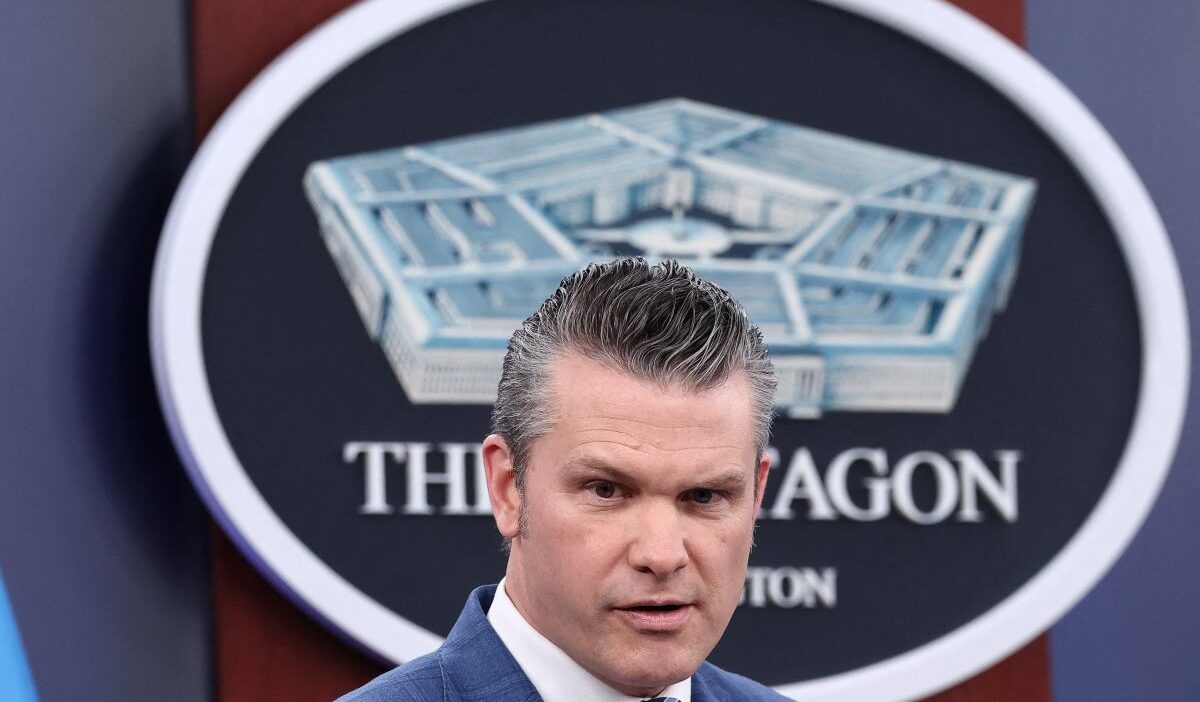
U.S. Defense Secretary Pete Hegseth and Chairman of the Joint Chiefs of Staff General Dan Caine warned Thursday that the U.S. is prepared to use force if Iran continues to block the Strait of Hormuz.
U.S. Threatens Force Over Strait of Hormuz Blockade
U.S. Defense Secretary Pete Hegseth and Chairman of the Joint Chiefs of Staff General Dan Caine stated on Thursday, April 16th, during a press conference that U.S. forces remain ready to respond if any vessel attempts to enforce a blockade of the Strait of Hormuz, according to CBS News.
“If you do not comply with the blockade, we will use force,” Caine stated, clarifying that this applies to all ships traveling to and from Iranian ports, regardless of their flag. Caine noted that 13 ships have so far made the “wise decision to turn around.”
Economic and Military Pressure on Iran
Hegseth stated that Iran should make a wise choice and accept a deal, warning that if Iran chooses poorly, it will face a blockade and strikes on its infrastructure and energy facilities. He made this statement during a press conference at the Pentagon.
Simultaneously, the U.S. Treasury Department is implementing “Economic Fury,” an operation designed to increase economic pressure on Iran, Hegseth added. As part of this effort, further sanctions against entities linked to Iran were announced on Wednesday.
Appeal to Tehran and Concerns Over Iranian Arms
“I pray that you choose an agreement that is within your reach, for the good of your people, for the good of the world,” Hegseth addressed Iranian authorities, urging them to “choose wisely.” Hegseth acknowledged that the U.S. is observing Iran “digging up” missiles and launchers, but emphasized that Iran lacks the capability to produce new weaponry.
Recent History of Blockades and Current Situation
Iran previously blocked the Strait of Hormuz in retaliation for a U.S. and Israeli attack on February 28th. A two-week ceasefire was announced between April 7th and 8th, but following unsuccessful negotiations, the U.S. declared its own blockade of the strait. BBC Verify analysis indicates that at least four vessels, including two departing from Iranian ports, have transited the strait since the blockade began, while some vessels have halted or turned back due to U.S. forces preventing their passage.
Criticism of European Allies
Hegseth announced that the U.S. will maintain the blockade of Iranian ports for as long as necessary. He condemned the threats of launching rockets and drones towards commercial vessels legally navigating international waters as “piracy and terrorism.”
Hegseth criticized U.S. allies, stating they “talk a lot but do nothing” regarding unblocking the Strait of Hormuz. He emphasized that while the U.S. does not rely on the strait, Asia, Europe, and much of the rest of the world do, and their collective defense or opening of the strait would be beneficial.
He added that allies must invest in their capabilities to demonstrate strength and perform essential tasks like securing the strait, stating that while the U.S. doesn’t expect it, it would be welcome to see it happen.