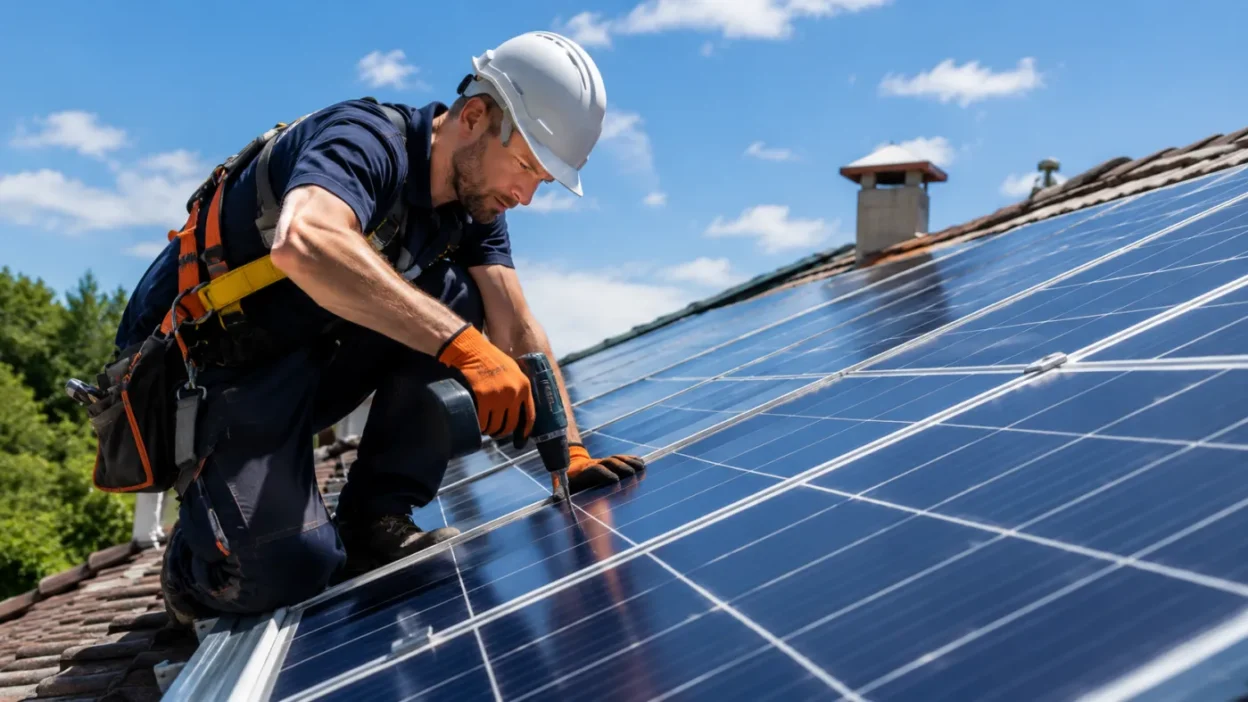
Recent amendments to Polish local tax laws have redefined solar power plant components as structures, sparking concerns among property owners regarding their potential tax liabilities and the scope of new fiscal assessments.
The Scope of the New Regulations
Recent amendments to the Act on Local Taxes and Fees have introduced photovoltaic power plants into the legal definition of structures for property tax purposes. However, this reclassification does not apply to the entire installation, but only to specific construction elements.
The law explicitly targets parts resulting from construction work, such as foundations, poles, support structures, anchors, and other ground-mounted components. Conversely, technical devices like panels, inverters, cables, and electrical equipment remain exempt from this taxation.
Private vs. Commercial Installations
The core principle of property tax remains unchanged: structures are subject to taxation only if they are tied to business operations. Consequently, most private residential owners who use installations solely for personal household power will not be liable for this tax.
The situation changes significantly for entrepreneurs and companies. If the energy produced is used for business purposes or is part of a larger commercial investment, authorities may categorize the infrastructure as a taxable structure.
Interpretation Challenges and Legal Precedent
The lack of a detailed legal definition for “construction parts” has created significant uncertainty. Tax authorities are now left to interpret how modern mounting systems, particularly large ground-mounted arrays requiring earthworks, align with existing tax requirements.
Legal experts frequently cite a 2008 Supreme Administrative Court ruling, which established that construction work encompasses not only traditional erection of objects but also the installation or assembly of equipment on the ground. This precedent serves as a primary reference point for tax offices currently evaluating new solar investments.
Risk Assessment for Property Owners
Owners of solar farms and businesses utilizing photovoltaic installations face the highest tax risk, as their projects typically involve the foundations and support structures identified by the new regulations. Roof-mounted systems on private homes remain at minimal risk of falling under these new tax obligations.