


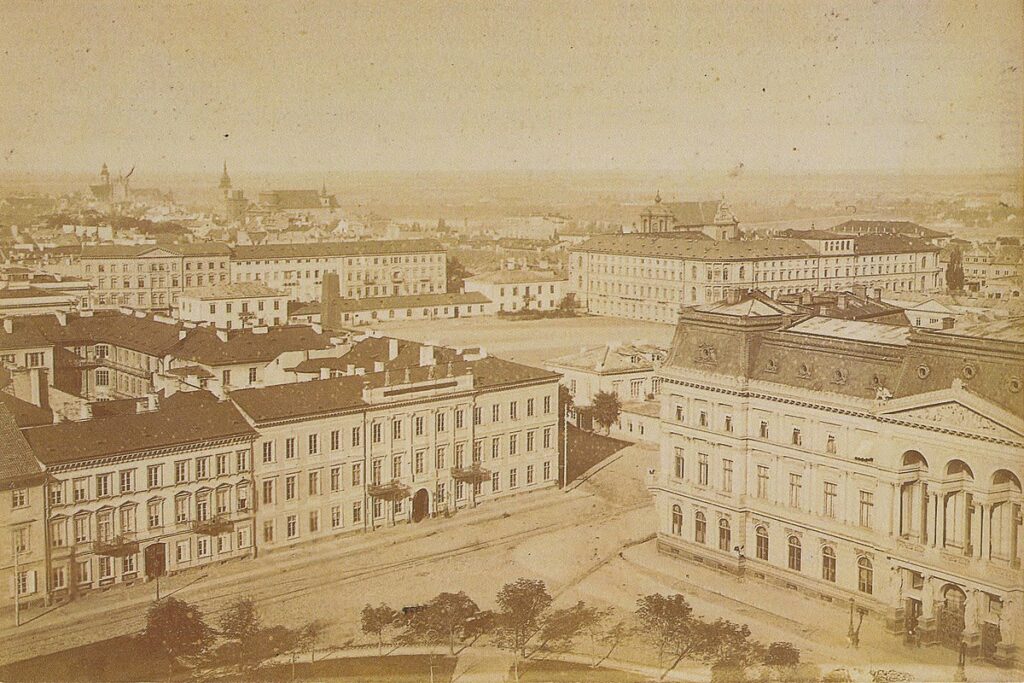
From an old court courtyard to a national symbol, Piłsudski Square has been the focal point of Warsaw’s state rituals and military honors since the 18th century.
From the Palace Courtyard to a National Symbol
Today’s square evolved from the courtyard of the Saxon Palace, transformed between 1712 and 1727 from the former Morsztyn residence incorporated into the Saxon Axis. In the 18th century the space was organized with buildings that created a representative urban layout for the capital. After Poland regained independence, the square hosted significant ceremonies, including 3 May Constitution Day parades.
Names of the Square and Their Political Significance
In 1928 the square was named after Marshal Józef Piłsudski. During the German occupation it was called Sachsenplatz, then Adolf‑Hitler‑Platz. From 1946 to 1990 it bore the name Plac Zwycięstwa, after which it returned to honoring Piłsudski. In 2012 the city adopted the formal title „plac marsz. Józefa Piłsudskiego.”
The Tomb of the Unknown Soldier – Square’s Heart
On 2 November 1925 the Tomb of the Unknown Soldier was unveiled in the central colonnade arches of the Saxon Palace. Remains of an unnamed defender of Lwów were interred there, creating a pantheon and permanent military ceremonial site. The guard changes every Sunday noon and on major state holidays.
Damage to the Palace in WWII and Surviving Arches
In late December 1944 Germans demolished the Saxon Palace. After two weeks of preparation, detonations from 27 to 29 December left only a fragment of the colonnade above the tomb. The tomb was restored and rededicated in May 1946; today three arches remain the only surviving parts of the palace on the square.
1979 Victory Square Speech
On 2 June 1979, Pope John Paul II spoke from Victory Square during Mass, declaring: “Let Your Spirit come down! And renew the face of this land.” His words were recorded by church services and later histories, becoming a symbol of Poland’s transformation.
Contemporary State Ceremonies
Piłsudski Square remains the venue for major national events: Constitution Day on 3 May, Armed Forces Day on 15 August, and Independence Day on 11 November. The Honor Guard serves 24 / 7, with a ceremonial Sunday change aided by ceremonial assistants. Memorial rallies, honor volleys, and presidential appointments take place on the square before and on the days of these key holidays.