


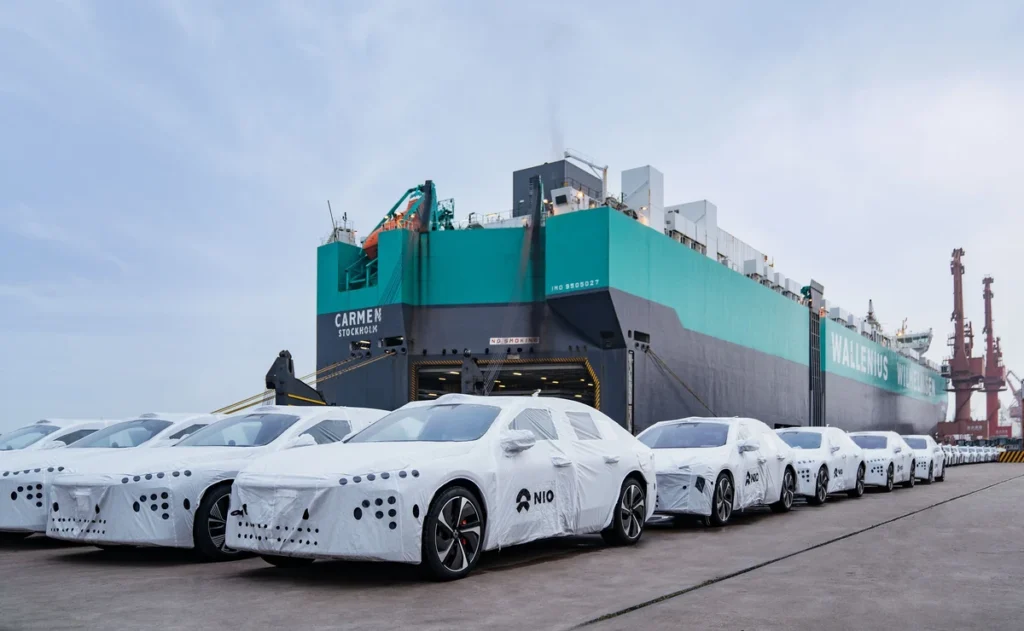
Poland has implemented a ban on Chinese-made vehicles entering all protected military facilities, with police considering similar measures.
New Military Regulations
New regulations now apply across all protected military objects in Poland. Cars manufactured in China are prohibited from entering the territory of units, depots, logistical bases, and other facilities of strategic importance. The restriction applies to soldiers, civilian employees, and third parties alike.
Unit commanders have been instructed to arrange parking areas outside protected territories where possible. In practice, this means physically separating such vehicles from military infrastructure.
Phone Connection Ban
Restrictions also include prohibiting the connection of work phones to multimedia systems in Chinese vehicles. This aims to limit the risk of intercepting data from mobile devices via Bluetooth or USB interfaces.
Modern vehicles are equipped with extensive telematic systems that connect to manufacturer servers. They collect data on routes, locations, and connected devices, posing a potential information security risk for work phones.
Vehicle Recording Restrictions
Limitations also apply to other vehicles equipped with integral or additional devices enabling image, sound, or location recording. Such vehicles may enter a facility only after disabling specific functions and applying preventive measures according to protection protocols.
Four Key Threats Identified
Security analyses identify four key risk areas associated with Chinese-produced vehicles. First is infrastructure mapping, where sensor systems can create precise models of military objects, ports, and logistics nodes.
Second is geolocation, allowing tracking of travel routes and operational patterns at key transport points. Third is data interception from phones connected to multimedia systems, including contacts and messages. Fourth is “bricking” – the ability to remotely disable vehicles.
Gen. Maciej Materka, former head of Military Counterintelligence Service, notes the consequences: in a crisis, thousands of blocked vehicles could paralyze key transportation and logistics arteries.
International Context
Poland’s actions fit within a broader international context. The Czech National Cyber and Information Security Office (NUKIB) has assigned a high status to the threat from Chinese vehicles. Analysis showed that despite claims of data storage in Europe, some information was transferred to Tencent servers in China.
Czech analysts estimate the probability of using such vehicles for intelligence purposes at 75-85%. They also warned against “backdoors” – hidden mechanisms enabling remote vehicle system access. Czech experts emphasized that Chinese legal regulations allow the state to require cooperation from security agencies, further increasing risk.
Strategic Response
The drastic restrictions imposed by the Polish military on Chinese-produced vehicles are part of a strategy to protect critical infrastructure and respond to growing cybersecurity importance in defense.
Warsaw’s decision has parallels in Beijing’s actions. China began restricting Tesla vehicle access to military sites in 2021, citing espionage concerns and data transfer to the United States.