Polish authorities issue first-level frost warnings as temperatures across northeastern Poland are forecast to plummet to between -25°C and -30°C this week.
Severe Frost Warning Issued
The Institute of Meteorology and Water Management has issued first-level frost warnings that will be in effect until 9:00 AM on Wednesday, February 4th, in several counties including Braniewo, Lidzbark, Bartoszyce, Kętrzyn, Giżycko, Węgorzewo, Olecko, Gołdap, Ełk (Warmian-Masurian Voivodeship) as well as Suwałki County, Suwałki city, Sejny County, and Augustów County (Podlaskie Voivodeship).
Forecasters predict minimum temperatures initially around -15°C, later dropping to between -18°C and -25°C. Daytime maximum temperatures will range from -12°C to -8°C. Wind speeds of 15-25 km/h are expected, with gusts initially reaching around 40 km/h.
Extreme Temperatures Possible
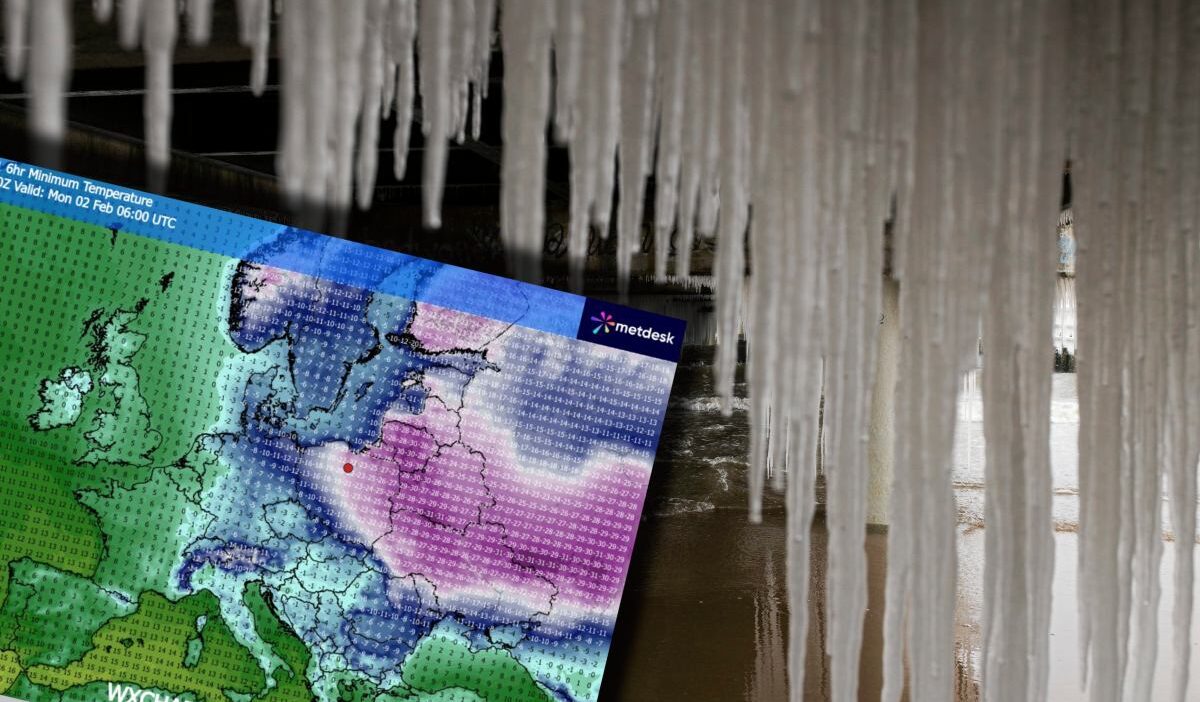
According to TVN24 reports, temperatures could potentially drop as low as -30°C. “The temperature may fall during the night from Sunday to Monday and from Monday to Tuesday to -25°C, and in the east it could approach -30°C,” said TVN Meteo presenter and forecaster Tomasz Wasilewski.
He also pointed to the ECMWF HRES meteorological model, which indicates that early morning on February 2nd, temperatures in northeastern Poland could reach -27°C, while in the afternoon in Podlasie they could even drop to -29°C.
Freezing Rain Expected
Forecasters have also warned about freezing rain that will occur in the Łódź Voivodeship and in some counties of the Masovian, Opole, Silesian, Świętokrzyskie, and Greater Poland Voivodeships.
“Weak freezing drizzle is currently being observed and further occurrence is forecast in some areas, which may cause black ice,” stated the forecasters.
Government Safety Instructions
“Attention to difficult weather conditions,” wrote the Ministry of Internal Affairs and Administration. It then informed about the mentioned frosts as well as rainfall in central Poland, which will cause black ice.
The ministry also provided several tips on what to do when difficult atmospheric conditions prevail outside. “Ensure appropriate clothing and react when you see people or animals exposed to hypothermia. Exercise caution on roads, slow down and increase your following distance. Watch out for slippery sidewalks and stairs. Plan your journey with extra time,” informed MSWiA.