


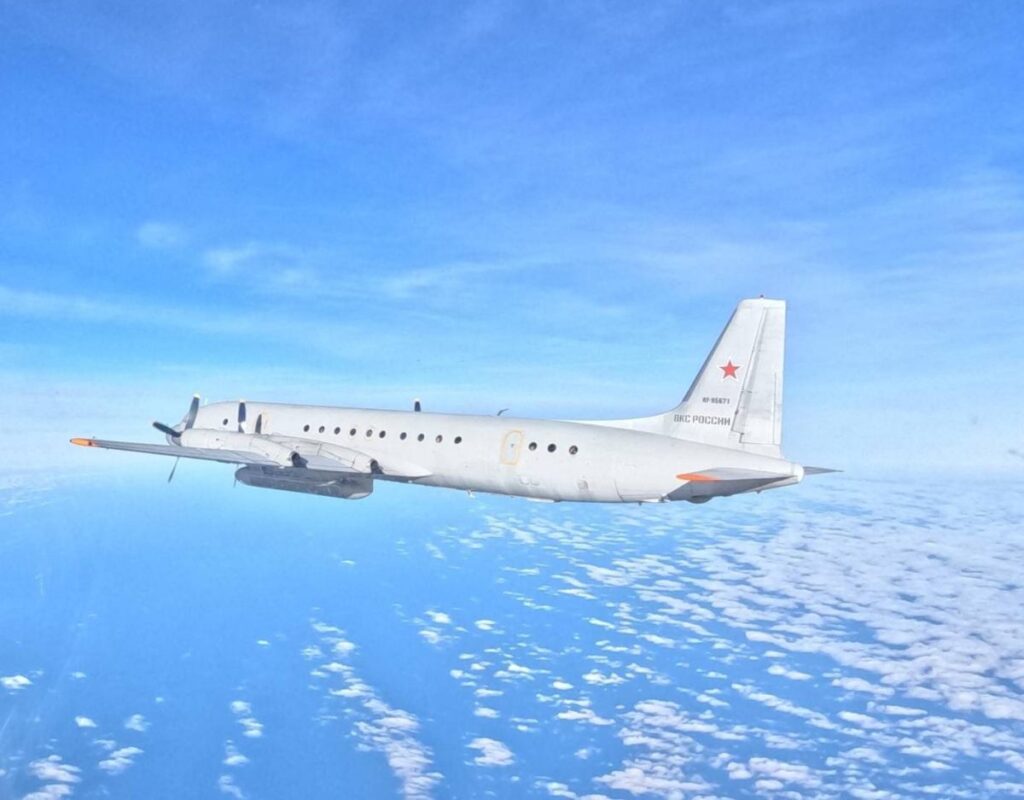
On October 31, Polish MiG‑29 fighters intercepted a Russian Il‑20 reconnaissance aircraft that had its transponder off while flying over the Baltic Sea.
Russian aircraft with transponder off
Operational Command of the Armed Forces announced that on Friday, October 31, before 9:00 a.m., a pair of Polish MiG‑29 fighter pilots were deployed for an operation over the Baltic. The mission’s goal was to intercept a Russian Il‑20 reconnaissance aircraft that was flying without a completed flight plan and with its transponder turned off. Such behaviour, highlighted in the DORSZ statement, poses a serious threat to civilian and military air traffic safety in the region. Polish pilots seized and identified the Russian aircraft, then escorted it in accordance with NATO procedures.
No breach of Polish airspace
Dorsz Operational Command confirmed that the Russian aircraft did not violate Polish airspace. The operation proceeded without incidents, and the actions of our pilots were fully in line with the international procedures applicable in the alliance framework. This is already the third such incident this week. In recent days, there has been increased activity of Russian aircraft over the Baltic. Similar incidents have also been faced by the air forces of other regional states, including Lithuania and Estonia.
Full readiness of the Polish Armed Forces
Operational Command stresses that the Polish Armed Forces remain in full combat readiness and respond to any provocative actions by the Russian Federation. All operations are carried out in cooperation with allied forces under NATO. “We thank the Air Forces for their professionalism, vigilance and exemplary execution of the task, once again demonstrating the high level of training and determination in defending the security of the Republic of Poland,” reads a DORSZ communiqué published on X.
Tense situation over the Baltic
The Russian Il‑20 is a reconnaissance aircraft used for electronic data collection and radio surveillance. It is equipped on board with advanced radar equipment, camera systems and antennas for capturing radio signals. In recent months similar incidents have occurred repeatedly, which experts describe as part of provocative actions and testing of NATO states’ responses.