


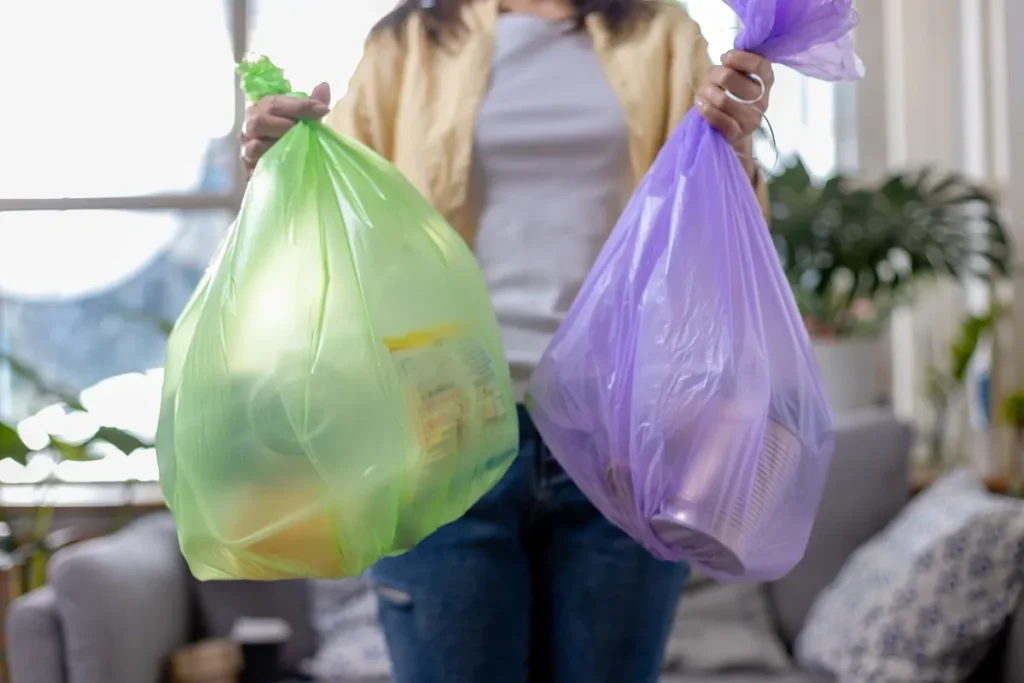
Poland’s Climate Ministry has abandoned plans to base municipal waste collection fees on the volume of waste generated, following widespread criticism during public consultations.
Ministry Backs Down on Controversial Waste Fee Proposal
The Ministry of Climate and Environment (MKiŚ) has withdrawn from work on provisions within the draft “Cleanliness Act” that would have allowed municipalities to differentiate waste collection fees based on volume, according to a response to a parliamentary interpellation.
The draft amendment to the Act on Maintaining Cleanliness and Order in Municipalities was published in the Legislative Centre in October 2025 and is currently undergoing review.
Public Feedback Drove the Decision
In response to an interpellation from MP Michał Połuboczek (Konfederacja), Deputy Minister of Climate and Environment Anita Sowińska indicated that during inter-ministerial coordination, opinion-seeking, and public consultations, “numerous comments were received regarding the proposed solutions in the area of introducing a fee model partially based on the amount of waste generated.”
Specifically, 130 comments called for the removal of the proposed provisions, while only 11 supported the solution. Consequently, the ministry decided to abandon the proposed articles 6j para. 2c–2d, Sowińska wrote, adding that the decision was made after analyzing the comments and holding working talks with representatives of nationwide organizations of local government units.
How the Proposed System Would Have Worked
Under the draft, municipalities could have introduced a waste management fee consisting of a fixed and a variable component. The fixed component would cover the fixed costs of operating the municipal waste management system. The variable component would be dependent on the weight of waste generated by residents of a given property and determined “based on unit rates resulting from the resolution of a public procurement procedure for the collection or collection and disposal of individual fractions of municipal waste.”
The draft also stipulated that the resolution could apply to all or some properties, depending on the technical feasibility of identifying the generated waste.
Concerns Over Premature Implementation and Unintended Consequences
Sowińska explained in response to the interpellation that during consultations, concerns were raised that introducing a system of “direct linkage of the fee to the amount of waste submitted may be premature,” as “Polish society is still in the process of gradually adapting to the obligation of selective waste collection.”
Furthermore, the introduction of such mechanisms could lead to “undesirable social consequences,” including the risk of illegal waste disposal by some residents.
Focus Shifts to Improving Existing Recycling Incentives
“In view of the above, it was decided that at the current stage of the functioning of the municipal waste management system, it is advisable to focus on further improving existing mechanisms motivating proper waste segregation, rather than introducing new, more complex payment instruments,” Sowińska wrote. She added that the draft law also proposed changes aimed at “increasing residents’ motivation” to segregate waste correctly.
Enhanced Segregation Enforcement and Infrastructure Improvements
The letter states that this includes clarifying the mechanism for reporting violations of waste segregation rules, so that the municipality receives a more unambiguous notification of cases of improper segregation. The project also provides for the possibility of initiating proceedings to determine the amount of the fee also on the basis of findings made during inspections carried out by authorized employees of the municipal office or the municipal guard, to increase the effectiveness of enforcing the obligation of selective collection.
The project also foresees the introduction of additional, mobile selective waste collection points (PSZOKs), to improve the availability of waste acceptance infrastructure and strengthen residents’ motivation to segregate waste.
The “Cleanliness Act” Aims for EU Compliance
The aim of the “Cleanliness Act” is to increase the effectiveness of selective waste collection, tighten the payment system, and adapt Polish legislation to EU requirements. The EU requires that by 2030, the level of preparation for reuse and recycling reaches at least 60 percent, while Poland reached 34 percent in 2023.
The Regulatory Impact Assessment indicated that the project also assumes, among other things, that municipalities will be able to obtain data on water consumption from water companies, to support the verification of the correctness of declarations on the amount of the waste management fee.
Municipalities will also be required to define the conditions that must be met to recognize that waste is being collected selectively. Currently, defining such standards is voluntary, which is why few municipalities have introduced them. According to the Ministry of Climate, this results in difficulties in enforcing proper segregation.
Under the project, entities conducting unprofessional waste collection (e.g. waste electrical equipment) will also have to inform municipalities of the amount of waste collected from the territory of a given municipality, to obtain complete data on waste management.
The Ministry also wants to differentiate the amount of the penalty for late submission of a report on municipal waste management, which could range from 50 to 300 PLN per day of delay, but not more than 365 days, depending on the circumstances of the violation, such as the degree of harm caused.