


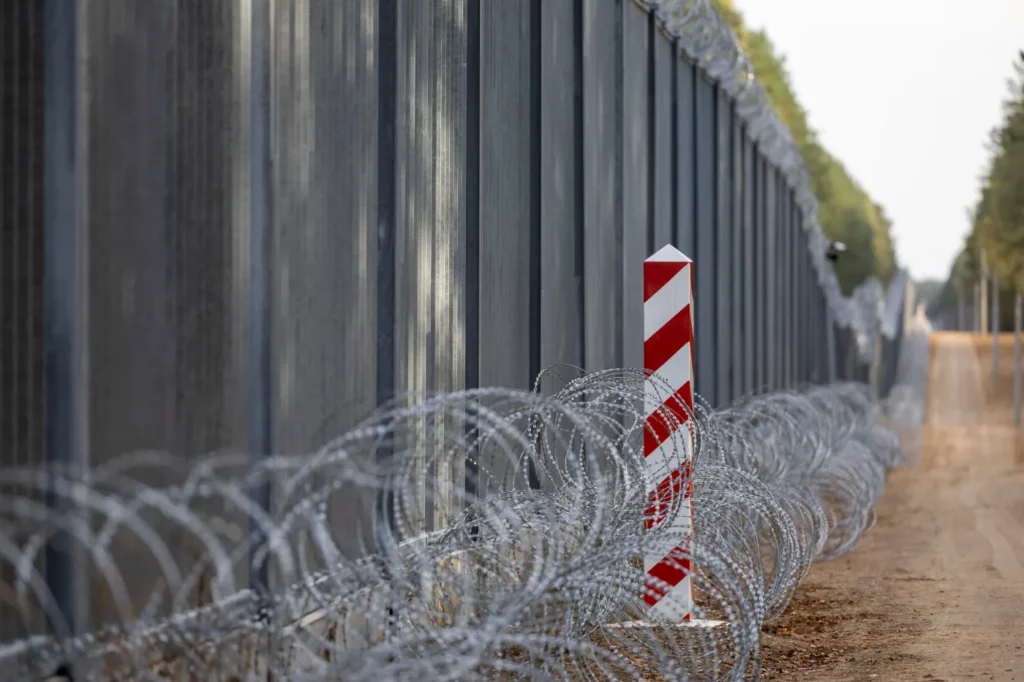
The Polish government has extended the suspension of international protection applications at the Belarus border for another 60 days, drawing renewed criticism from Ombudsman Marcin Wiącek regarding the measure’s necessity.
Ombudsman Challenges Continued Restrictions
For the seventh time since March 2025, Poland has extended the temporary suspension of the right to file for international protection at the Belarus border. Ombudsman Marcin Wiącek has formally challenged the decision, questioning whether this restrictive instrument remains an appropriate solution after more than a year of continuous application.
Wiącek argues that the term “temporary” implies an emergency measure meant for exceptional situations. He expressed concern that no efforts have been made to develop alternative, less intrusive regulations to manage the situation while respecting the constitutional rights of individuals.
Government Rationale and Security Concerns
The Ministry of Interior maintains that suspending the right to asylum is a necessary legal tool to combat illegal migration and ensure national security. The government asserts that Belarusian authorities continue to orchestrate migration as a form of hybrid warfare, posing a serious threat to the state.
According to the government’s justification, migrants and Belarusian services have engaged in aggressive tactics, including attacks on Polish patrols with stones, lasers, and improvised weapons. Border guards have also reported attempts to sabotage electronic barriers and the use of tunnels to bypass border security.
Parliamentary Support and Statistical Context
The extension, effective from May 21, was backed by 399 members of the Sejm. Despite the ongoing restrictions, the Border Guard retains the authority to process applications from unaccompanied minors, pregnant women, and individuals facing a direct, substantiated risk of serious harm.
Data from the Border Guard indicates a significant shift in activity, with 158 attempted illegal crossings recorded between January 1 and April 12, 2026, compared to 5,170 attempts during the same period in 2025. Critics, including humanitarian organizations, continue to argue that these measures conflict with the Polish Constitution and the 1951 Refugee Convention.