


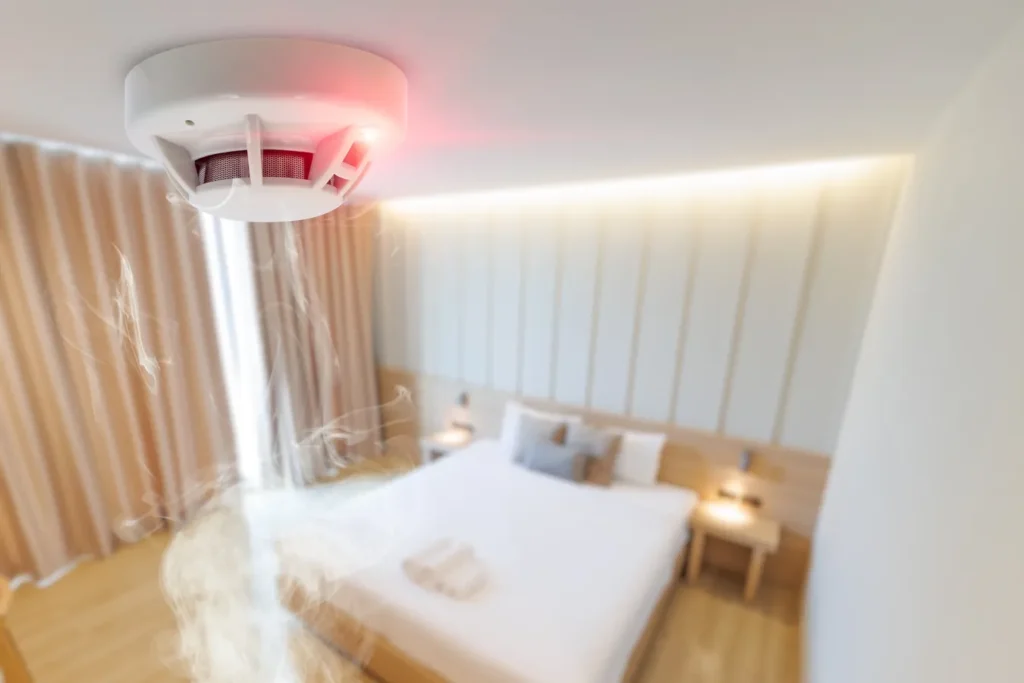
Landlords in Poland offering short-term rentals will be required to install smoke and carbon monoxide detectors by June 30, 2026, facing fines for non-compliance.
New Obligations for Landlords from June 30, 2026 – Key Changes and Deadlines
From June 30, 2026, properties intended for short-term rental must be equipped with smoke and carbon monoxide detectors. Failure to comply may result in fines, as well as issues with insurance and financial liability in the event of damage.
A key change for the rental market will take effect on June 30, 2026.
Short-Term Rental Sector Undergoing Changes – Who Will the Regulations Affect?
From June 30, 2026, the obligation to install detectors will cover broadly understood short-term rentals, including those managed through booking platforms and private advertisements.
What Equipment is Required?
Each such property must be equipped with smoke and carbon monoxide detectors. Technical exceptions apply only to facilities already equipped with an equivalent fire alarm system.
Phased Implementation of Regulations – Changes Already from January 1, 2026
The reform does not begin mid-year. Newly constructed residential premises have been required to be equipped with smoke and carbon monoxide detectors since December 23, 2024. From January 1, 2026, the new regulations will cover existing commercial buildings, production facilities, and warehouses.
Owners of single-family homes and existing apartments for personal use will be subject to the new regulations in the final stage of implementation. The obligation to install detectors will apply to them from January 1, 2030.
Short-Term Rental – Technical Obligation or Legal Risk?
For apartment and flat owners, the key is not just the purchase of devices, but the responsibility for the lack of smoke and carbon monoxide detectors. Failure to comply may lead to various consequences.
Insurance and Lack of Smoke and Carbon Monoxide Detectors
One of the most significant consequences may be the loss of insurance coverage. In the event of damage, such as a fire or carbon monoxide poisoning, the insurance company may consider the lack of required devices as a reason to refuse compensation.
Inspection and Enforcement of Regulations – The Role of the State Fire Service
The State Fire Service and other control bodies with the authority to inspect safety in facilities used by people will oversee compliance with the new obligations. The lack of required smoke and carbon monoxide detectors may result in negative fire safety inspection results, the need for immediate adaptation of the premises, or problems with technical acceptance or further use of the property.
Legal Basis
Regulation of the Minister of Internal Affairs and Administration of November 21, 2024, amending the regulation on fire protection of buildings, other construction objects and areas (Journal of Laws 2024, item 1716).