


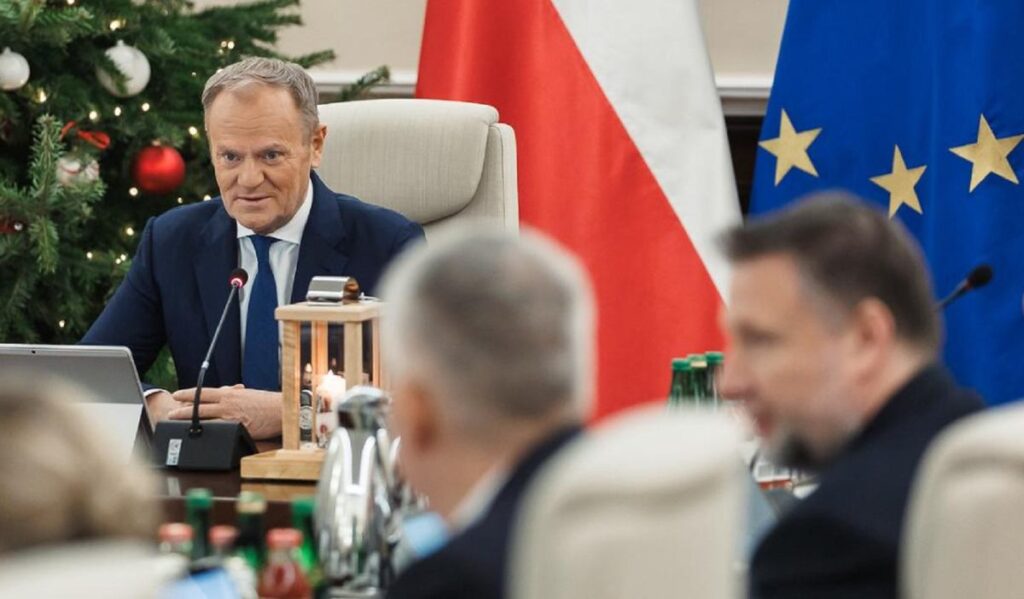
Poland’s cabinet approved a new rule‑of‑law bill on Thursday, aiming to end courtroom chaos and restore judicial independence, while Prime Minister Donald Tusk called it a decisive move.
Government Passes Two Rule‑of‑Law Bills
The Polish cabinet approved two rule‑of‑law bills on Thursday. The first seeks to end the chaos caused by “neosędziów,” judges appointed without proper procedures since 2018. The second aims to restore the independence of the National Judicial Council by introducing new, constitutionally compliant criteria for electing its members.
Prime Minister Calls It a Serious Step
Prime Minister Donald Tusk said that everyone should finally have access to an impartial court that operates swiftly and is not subject to political interference, describing the bill as a very serious step forward.
Key Provisions of the Rule‑of‑Law Law
Justice Minister Waldemar Żurek explained that the law is designed to restore citizens’ confidence in the judiciary, ensuring that those seated at the bench are legitimately appointed.
Three Categories of Judges Defined
The bill establishes three categories of judges for ordinary courts. The first category consists of young judges who would retain their legal status as‑is. The second includes former judges who served at least once under proper procedures but later advanced to higher posts. The third comprises individuals who have never been appointed by a proper procedure before the National Judicial Council or the president, necessitating a re‑tendering of their positions.
Impact on EU Funds and Human Rights Cases
The rule‑of‑law procedure has cost Poland several billions of euros in EU funds and resulted in adverse rulings by the European Court of Human Rights. Over 5.5 million zlotys have already been paid, with thousands of cases still pending before the court.
Rebuilding the National Judicial Council
The bill intends to reconstruct the National Judicial Council in line with the constitution. It proposes elections for all judges of ordinary courts, the Supreme Court, the High Administrative Court, and provincial administrative courts to select a 15‑member judicial committee, overseen by the State Electoral Commission. Żurek noted that the current council has major flaws, including the absence of military and administrative judges.