The Polish government is ending two decades of housing subsidies, opting instead to invest heavily in increasing the housing supply, starting in 2026.
Government Abandons Demand-Side Subsidies
The Polish government will no longer offer subsidies for housing loans, marking a significant shift in housing policy after two decades of supporting demand. Funds will now be directed towards increasing the supply of available housing.
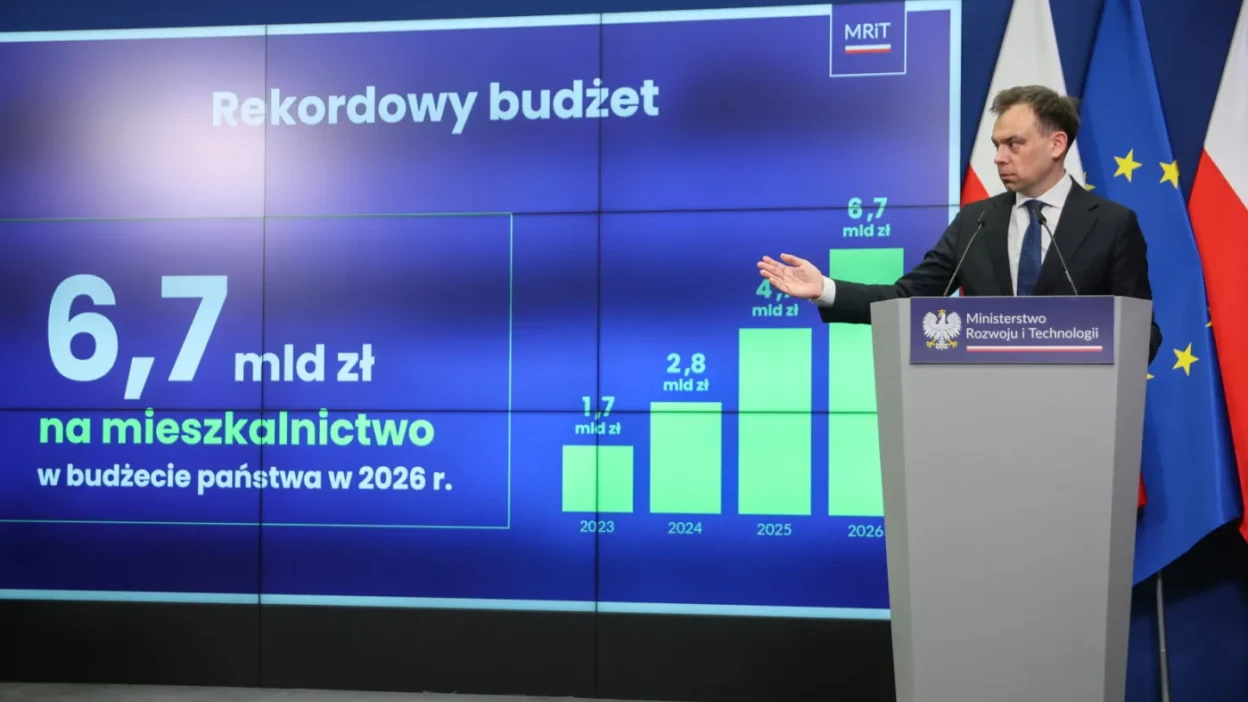
Minister Andrzej Domański announced plans to allocate 8.7 billion złoty to the development of various forms of social housing by 2026.
National Reconstruction Plan Funds Housing Projects
The government intends to contract the construction and renovation of 18,000 housing units this year, utilizing 8.7 billion złoty from the National Reconstruction Plan.
The housing program will address both social housing needs and the “rental gap”—those unable to afford homeownership but ineligible for social housing.
Policy Shift Away From Demand Stimulation
Recent government statements indicate a fundamental change in housing policy, abandoning plans for further demand-stimulating programs in favor of prioritizing increased supply.
Civic Coalition’s Pre-Election Pledge Abandoned
Prior to the election, the Civic Coalition proposed a “0 percent interest loan for the purchase of a first apartment.”
Following the formation of the Donald Tusk government, the proposal faced opposition from the Left and Poland 2050, particularly from Minister Katarzyna Pełczyńska-Nałęcz, who argued it would inflate prices and primarily benefit developers. Consequently, the program was abandoned.
History of Polish Housing Programs
Poland has implemented several housing programs in recent decades, including “Family on Their Own,” MdM (Housing for the Young), and “Housing Plus,” but none have fundamentally improved the housing market situation.
Past Programs: “Family on Their Own” and MdM
The “Family on Their Own” program, launched in 2006, provided interest rate subsidies for married couples and single parents, costing approximately 450 million złoty in 2016. The “Housing for the Young” program (2013) offered grants of 10-15% of the purchase price to young adults, ending in 2018.
Failed Attempts at Alternative Solutions
In 2015, Janusz Piechociński proposed reviving housing funds with incentives for regular savings, but the idea was rejected by the finance ministry due to concerns about a potential “financial pyramid.”
“Housing Plus” Focused on Rental Properties
The PiS government launched “Housing Plus” in 2016, aiming to increase investment in affordable housing in the private, local, and state sectors. The program focused on building affordable rental properties rather than sales.
KZN and Implementation Challenges
The 2017 Act on the National Housing Resource (KZN) aimed to create a state land bank for “Housing Plus” projects. However, investors were reluctant to build on KZN land due to unfavorable conditions and rising construction costs, leading to limited results.
Criticism of Previous Programs and Renewed Debate
During the 2023 election campaign, the Civic Coalition criticized “Housing Plus” as a “disaster.” After forming the government, Minister Pełczyńska-Nałęcz opposed further subsidies, citing the example of the “Safe Credit 2%” program introduced by the Morawiecki government in 2023.
Failed “Key to Housing” Proposal
Despite opposition, the Ministry of Development and Technology proposed the “Key to Housing” program, including a “First Keys” component offering subsidies for secondary market purchases. This proposal also faced criticism from coalition partners and was ultimately abandoned.