


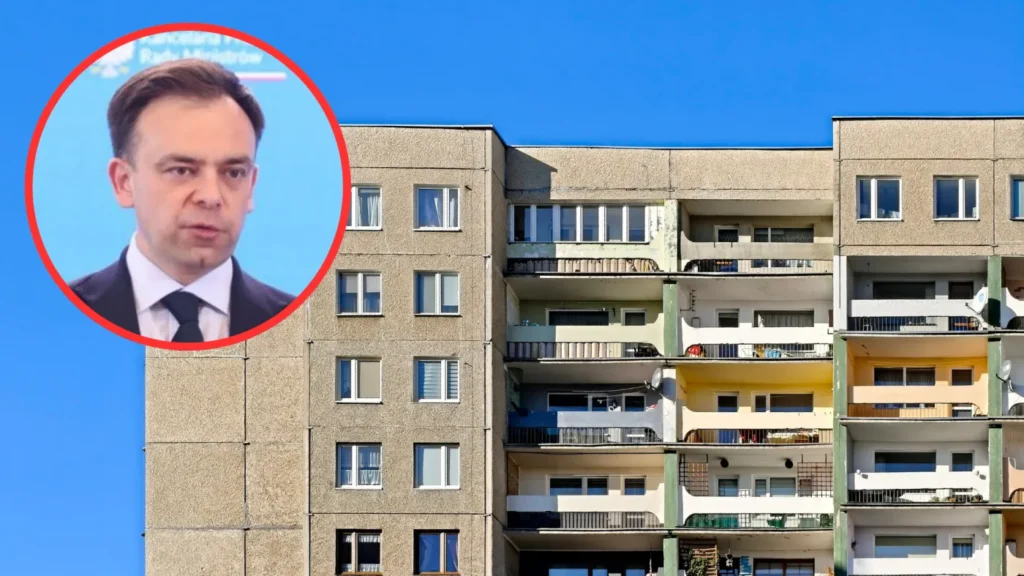
The Polish government is strengthening regulations to prevent evictions leading to homelessness, particularly during colder months and for vulnerable groups.
Administrative Eviction Restrictions Increased
New legislation aims to make it more difficult to evict tenants through administrative enforcement proceedings. The government is responding to concerns about individuals being left homeless, or “on the street,” as a result of these evictions.
The justification for the bill cites a violation of human dignity when evictions occur without minimal guarantees for those unable to meet their housing needs. The proposed changes, authored by the Ministry of Finance and published on April 14, 2026, amend laws related to enforcement proceedings, tenant rights, and the Civil Code.
Seasonal and Vulnerable Group Protections
Generally, evictions through administrative enforcement will be prohibited during the autumn-winter period, from November 1st to March 31st, unless specific circumstances outlined in the law exist. Special protection will be afforded to pregnant women, minors, and individuals with disabilities.
Distinction Between Enforcement Procedures
Administrative enforcement evictions currently offer less protection to tenants than court-ordered evictions, which follow civil legal procedures. Court evictions provide more guarantees to both the debtor and those deriving their rights to reside on the property.
“Eviction to Nowhere” Prohibited in Court Cases
Polish law generally prohibits evictions “to nowhere” in court proceedings, meaning a tenant cannot be evicted without a designated alternative housing solution. However, this protection does not apply when the eviction is based on an administrative decision.
Current Lack of Protection in Administrative Evictions
Currently, individuals evicted through administrative enforcement lack protection against homelessness. Even when other laws require the provision of alternative housing (e.g., for road construction projects), the initiation and execution of administrative enforcement proceedings are not contingent on fulfilling this obligation.
Who is Affected by Administrative Evictions?
Administrative evictions can affect individuals whose housing is tied to employment within specific government agencies, including the Police, Border Guard, State Fire Service, and Armed Forces. These evictions occur through administrative decisions regarding the allocation and relinquishment of housing.
Recent legislative changes require court proceedings for evictions of certain protected individuals, offering minimal protection against homelessness. However, these changes do not extend to administrative evictions, leaving those not classified as “particularly protected” vulnerable.
Infrastructure Projects and Limited Guarantees
Evictions can also occur due to infrastructure projects (e.g., highways, railways). These projects often have limited guarantees regarding eviction timelines or the provision of alternative housing, even when a property is taken for public use. Compensation for lost property is handled separately.
Ministry of Finance Response
The Ministry of Finance recognizes the need to amend the law on enforcement proceedings and tenant rights to protect against evictions leading to homelessness.
Scope of the New Regulations
The new regulations will not apply to court-ordered evictions resulting from disputes between private landlords and tenants, as those relationships are already governed by existing tenant protection laws. The changes will specifically address evictions of public sector employees and others subject to administrative enforcement.
Statistics on Administrative Evictions
According to data from the Ministry of Interior and Administration, the Ministry of National Defence, and the Ministry of Justice, the number of administrative evictions is relatively small compared to court-ordered evictions. Between 2022 and 2024, 203 administrative eviction decisions were issued, with 34 affecting particularly protected individuals without access to alternative housing. As of December 1, 2025, 97 of these decisions remained to be executed.
During the same period (2022-2024), 13,544 court eviction requests were filed, including 1,573 related to social or replacement housing. As of the first half of 2025, 12,793 court eviction requests remained pending.
Projected Implementation Date
The proposed law is expected to come into effect 14 days after its publication in the Journal of Laws. The bill is currently undergoing inter-ministerial consultations and public review, expected to conclude in mid-May. It will then proceed to the Sejm and Senate for further consideration before being submitted to the President for signature.