


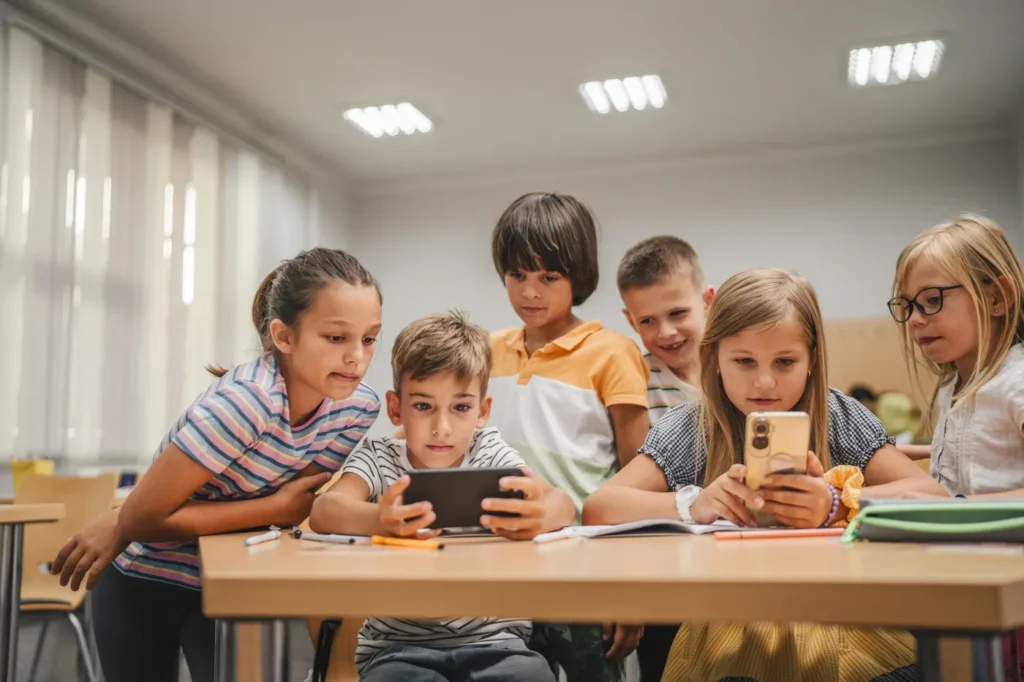
The Polish government is accelerating plans to prohibit cell phone use in primary schools, with a legislative amendment expected by September 2026.
Cell Phone Ban to Be Enacted Through Law, Not Regulation
The ban on cell phones in primary schools, initially announced by Education Minister Barbara Nowacka on Wednesday, will be implemented through an amendment to the Education Law, rather than a regulation, according to the Ministry of National Education (MEN).
Exceptions to the Ban
The proposed legislation includes two exceptions to the ban: permission from a teacher for didactic or educational reasons, and allowing students to use phones due to medical conditions or disabilities.
Secondary School Policies to Remain Autonomous
Regulations regarding cell phone use in secondary schools will continue to be determined independently by each school’s statutes.
Legislative Process and Public Consultation
Following the inclusion of the amendment in the Council of Ministers’ legislative work schedule, public consultations and reviews will begin, allowing interested parties to participate. The entry into the Schedule is planned within the next few weeks.
Initial Proposal from Civic Coalition
In late February, members of the Civic Coalition, including Barbara Nowacka, proposed a ban on cell phones in primary schools, presenting draft legislation to the Sejm.
Minister Nowacka’s Rationale for the Change
Minister Nowacka stated that the government’s draft legislation includes tools to expand existing restrictions, and that teachers require stronger measures to enforce the ban, except when justified by health or educational needs.
Positive Impacts Observed in Norway
Recent reports from Norway indicate that schools without cell phones have experienced reduced violence, fewer conflicts, and a more peaceful atmosphere during the 2024/25 school year.
A report from the Norwegian Ministry of Education and NTNU University in Trondheim found that removing phones from classrooms and limiting their use during breaks led to a better school climate, increased teacher focus, and fewer instances of bullying. Students also engaged in more direct interaction with each other.