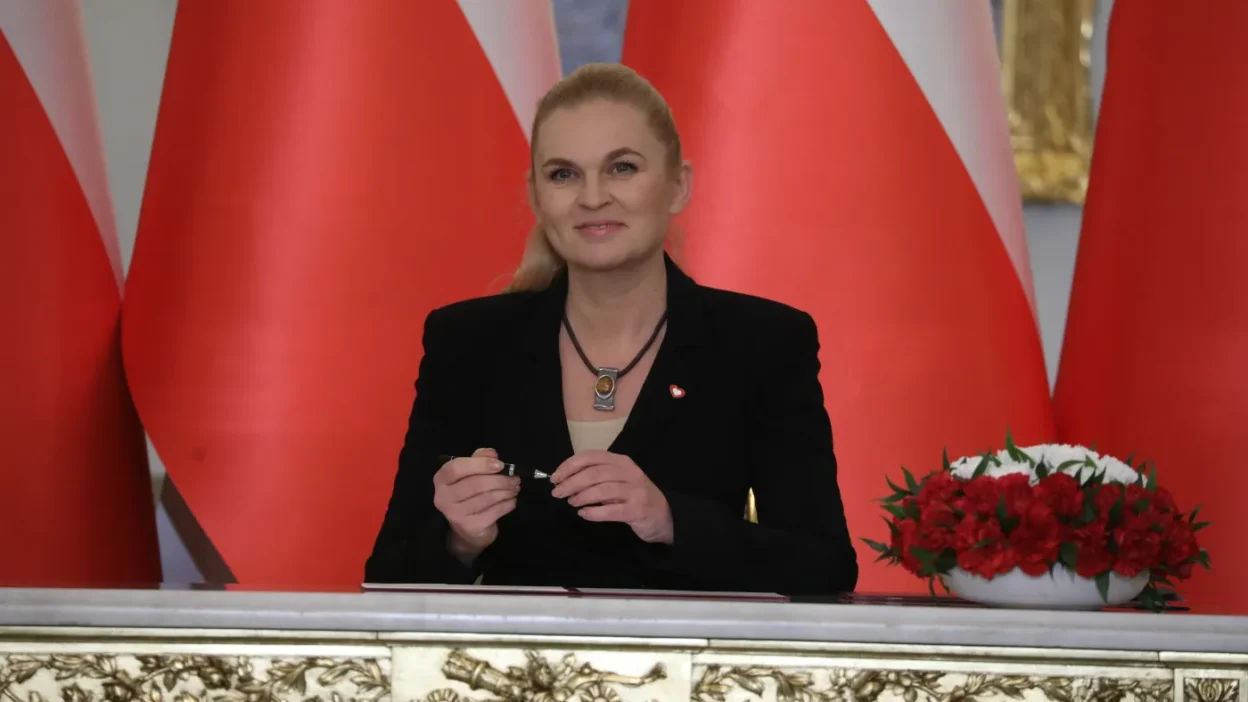
Poland’s Education Minister Barbara Nowacka confirmed health education will be compulsory starting next school year, but parental consent is required for the sex education module.
Compulsory Health Education Confirmed
Education Minister Barbara Nowacka announced that health education will become a mandatory subject in the upcoming school year. However, a module covering sexual education will be optional, with parents deciding whether their children participate.
Replacement of Life Skills Education
The new health education curriculum replaces “education for life in family,” which was introduced as a non-mandatory subject in the 2025/2026 school year. It will be taught in primary schools (grades IV-VIII, one hour per week, with grade VIII limited to the first semester) and secondary schools (one hour per week for two years).
Decision Delayed, Then Announced
Minister Nowacka was initially expected to announce the decision regarding the mandatory status of the subject by the end of March, but the announcement was postponed. The final decision was communicated on Thursday via TVN24.
Two-Part Curriculum Structure
Nowacka explained the subject will consist of two parts: the core health education curriculum and a non-mandatory module focused on sexual health, representing approximately one-tenth of the overall content. This sexual health module will likely consist of one or two lessons annually.
Parental Rights and School Climate
The Minister emphasized that parents will decide on their child’s participation in the sexual health module, respecting concerns raised by some groups and aiming to maintain a peaceful environment within schools.
Expert Panel to Define Curriculum
The specific content of both the health education curriculum and the sexual health component will be determined by an expert panel comprised of doctors, specialists, and teachers, which the Ministry of Education is currently establishing.
Ministry Encourages Full Participation
The Ministry of Education will actively encourage parents to enroll their children in the complete health education program, including the sexual health module.
Importance of Sexual Health Education
Nowacka stressed the importance of sexual health education, stating it is as vital as any other aspect of health education.
Initial Plans and Subsequent Revisions
The Ministry of Education initially presented the new subject as mandatory, but Deputy Prime Minister and Defense Minister Władysław Kosiniak-Kamysz announced in January of last year that it would not be compulsory. Prime Minister Donald Tusk later indicated a preference for voluntary participation.
Political Tensions and Compromise
The Education Minister initially confirmed the non-mandatory status, citing “tensions” and the need to “protect the school from political turmoil.” She also attributed the decision to conversations with teachers.
Political Motivations Acknowledged
In late March, Nowacka admitted in Polsat News that the non-mandatory status was due to “strictly political reasons,” stating she had no choice but to comply with a high-level government decision.
Controversial Content and Opposition
The curriculum’s sections on puberty (primary school) and sexual health (secondary school) sparked controversy among those opposed to “sex education” in schools.
Protests and Petitions
The “Coalition for the Salvation of Polish School,” representing over 70 organizations, submitted a petition to the Ministry of Education in September 2024, demanding the exclusion of sexual education and upholding parental rights regarding these topics. Protests, including one on Castle Square in Warsaw, were also organized.
Episcopate’s Opposition
The Polish Episcopal Conference deemed the new subject unconstitutional, citing articles 48 and 53 of the Polish Constitution, which state that sexual education falls within the purview of parents, not the state.
Appeal to Catholic Parents
In late August of last year, members of the Catholic Education Commission of the Polish Episcopal Conference appealed to Catholic parents not to consent to their children’s participation in health education classes.
Ministry’s Response to Concerns
The Education Minister responded to the bishops’ position, asserting that the subject does not contradict the constitution and that education and learning are necessary in the 21st century.
Support from Patient Organizations
The Presidium of the Council of Patient Organizations appealed for students’ participation, urging people not to succumb to fear and misinformation.
Ministry’s Emphasis on Holistic Approach
The Ministry of Education repeatedly emphasized that the subject would be holistic and meet the needs of many groups, including parents.
Participation Rates in Current Year
The Ministry of Education reported that approximately 30% of eligible students participated in health education classes this school year, implemented in primary schools (grades IV-VIII) and secondary schools over two years.
Regional Participation Disparities
Participation rates were highest in the Wielkopolska (38.59%), Lubuskie (38.31%), and Kujawsko-Pomorskie (37.26%) voivodeships, and lowest in the Podkarpackie (17.19%), Podlaskie (21.53%), and Lubelskie (21.72%) voivodeships.