


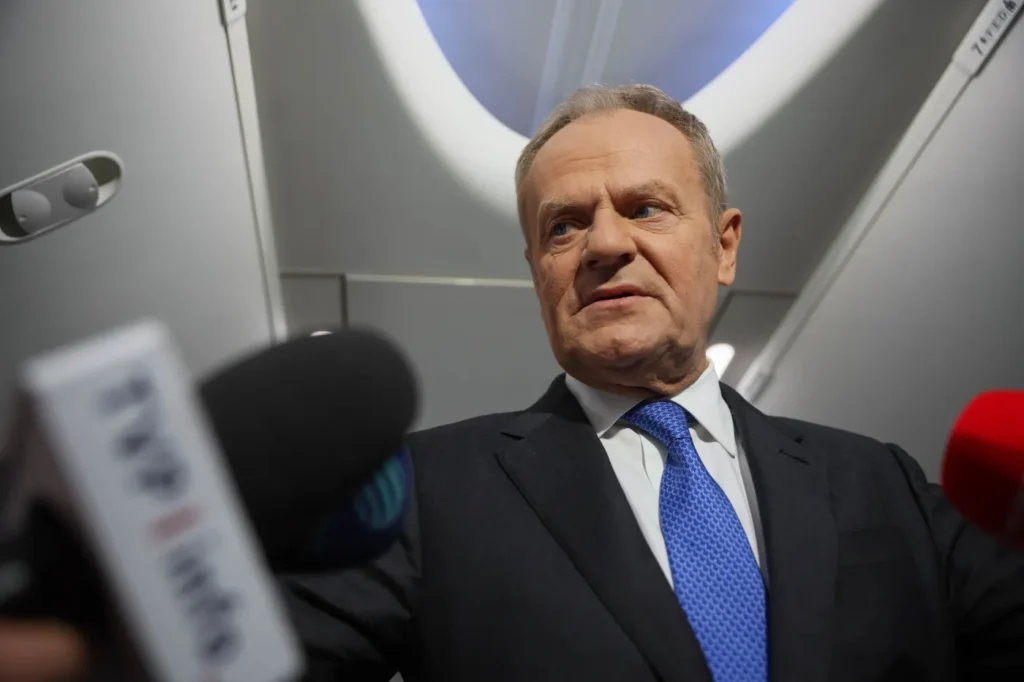
Poland and the United Kingdom will finalize a defence cooperation agreement on May 27th, announced by Polish Prime Minister Donald Tusk following talks with UK counterpart Keir Starmer.
Enhanced Military Collaboration Planned
The agreement will focus on deepened military cooperation, including coordinating actions within NATO, developing joint arms projects, and increasing the interoperability of both countries’ armed forces.
The document will also address cybersecurity issues and responses to hybrid threats, which have become key challenges for Europe in recent years.
European Political Community Summit Context
The announcement was made during bilateral talks on the sidelines of the eighth European Political Community summit in Yerevan, Armenia.
The summit, themed “Building the Future: Unity and Stability in Europe,” brought together leaders from over 40 countries, including key figures from the EU and NATO.
International Participation and Key Topics
Attendees included Emmanuel Macron, Giorgia Meloni, Ursula von der Leyen, NATO Secretary General Mark Rutte, and Ukrainian President Volodymyr Zelenskyy.
Canada participated for the first time, represented by Prime Minister Mark Carney, highlighting growing transatlantic cooperation.
Discussions centered on security concerns and the energy crisis exacerbated by the conflict in the Middle East, as well as the consequences of the war in Ukraine and continued support for Kyiv.
Strengthening Poland-UK-NATO Ties
The planned treaty aligns with a broader trend of strengthening military relations between European countries and NATO allies.
The UK has long been a key security partner for Poland, with British troops stationed on the eastern flank of the Alliance and collaborative training exercises.
Potential Impact and Strategic Significance
Experts suggest the new agreement could accelerate joint projects, such as developing air defence systems and modernizing military infrastructure.
Information sharing and joint deterrence efforts will also be important components.
The decision to sign the treaty is strategically significant, reinforcing security in Central and Eastern Europe and building lasting cooperation mechanisms between key NATO allies.