


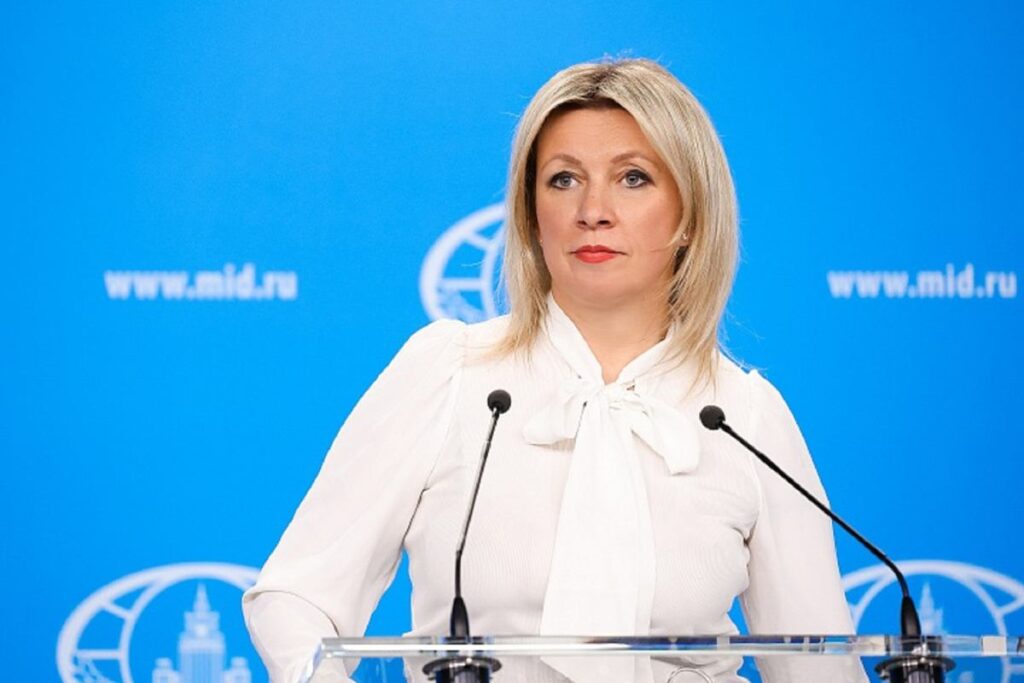
Poland officially withdrew from the Ottawa Convention on Friday, with Russian Foreign Ministry spokeswoman Maria Zakharova criticizing the move as worsening regional security.
Zakharova Comments on Withdrawal
Russian Foreign Ministry spokeswoman Maria Zakharova was asked on Friday to comment on Poland’s decision to withdraw from the Ottawa Convention. Zakharova noted that Finland, Latvia, Lithuania, and Estonia had previously taken similar steps.
“Attempts by these countries to justify their actions on grounds of ‘national security’ and alleged military threats from Russia do not hold up to criticism,” stated the Russian diplomat. “The restrictions stipulated in the convention simply became inconvenient and disadvantageous, which is why they decided to abandon them,” she added.
Russian Official Warns of Escalation
“The consequences of such actions will be immediate. Besides weakening the convention itself, they could trigger a ‘domino effect’ with other countries following suit. In this context, EU member states with developed military-industrial potential are already trying to profit from the growing international demand for anti-personnel mines,” said Maria Zakharova.
“All these circumstances will inevitably lead to further escalation of tensions in Europe and deterioration of regional and international security,” concluded the Russian Foreign Ministry spokeswoman.
Poland’s Withdrawal Takes Effect
The Ottawa Convention ceased to be in effect in Poland on Friday, February 20. It had prohibited the use of anti-personnel mines in the military. Polish military will now have greater freedom in actions related to border protection under the Wschód Shield program.
The Ottawa Convention, which has been in force in Poland since 1997, was denounced by Poland and the Baltic states in July of last year.
“Military Threats Have Increased”
“Since the ratification of the Convention on the Prohibition of the Use, Stockpiling, Production and Transfer of Anti-Personnel Mines and on their Destruction (Ottawa Convention), the security situation in our region has significantly deteriorated. Military threats against NATO member states bordering Russia and Belarus have significantly increased,” emphasized defense ministers of Poland, Estonia, Latvia, and Lithuania in a joint statement in March.
“In light of this more unstable security situation – marked by Russian aggression and constant threat, which poses to the Euro-Atlantic community – it is crucial to determine all means that can serve to strengthen our deterrence and defense capabilities,” they stressed.
NATO Chief: Russia Seeks Long-Term Confrontation
“Russia remains our greatest threat. Putin’s war machine is producing military equipment non-stop. And Moscow is testing us with cyberattacks, sabotage, and other methods. There is no reason to believe that Russia’s pattern of aggressive and reckless actions will change in the near future. On the contrary, Russia is seeking long-term confrontation,” argued NATO Secretary General Mark Rutte in January.