Facing a fiscal and demographic crunch, Poland must decide whether extra defense taxes or conscription will support an expanded army or strain public finances.
Finances vs. Ambition
Poland spends about 3 % of GDP on defence, roughly 200 billion zlotys per year, using national funds and EU mechanisms such as SAFE. Yet the debt incurred to buy armaments is growing rapidly.
By 2029 the Support Fund for Armed Forces could owe 325.5 billion zlotys, forcing the Ministry of National Defence (MON) to allocate 40‑50 billion zlotys annually to repayments, leaving minimal room for new equipment.
The country’s public debt may reach 55 % of GDP by 2027, triggering EU safeguard clauses that could freeze sizeable budget items if the debt of government institutions exceeds 60 % of GDP.
The Cost of Modernising the Armed Forces
Armament purchases account for about one‑third of total military outlays, while the remaining two‑thirds cover personnel and equipment maintenance—estimated at 30 billion zlotys per year over 40 years for a 600 billion‑zloty arsenal.
Poland currently has signed contracts worth 600 billion zlotys, with 500 billion pending payment mainly over the next decade, and an additional 300 billion projected for future acquisitions.
These figures illustrate that, without elevating defence spending beyond 3 % of GDP, the army cannot expand beyond its current four divisions, let alone the planned six or future seventh division.
Demographic Shortfalls and Recruitment
The army aims for 300 000 soldiers in peacetime—250 000 professionals, 50 000 territorial defenders, and hundreds of trained reservists—up from the 210 000 it now fields.
Poland’s shrinking, ageing population and low birth rate make it increasingly difficult to recruit the healthy, mentally fit personnel required, especially among Generation Z who prefer flexible, non‑hierarchical careers.
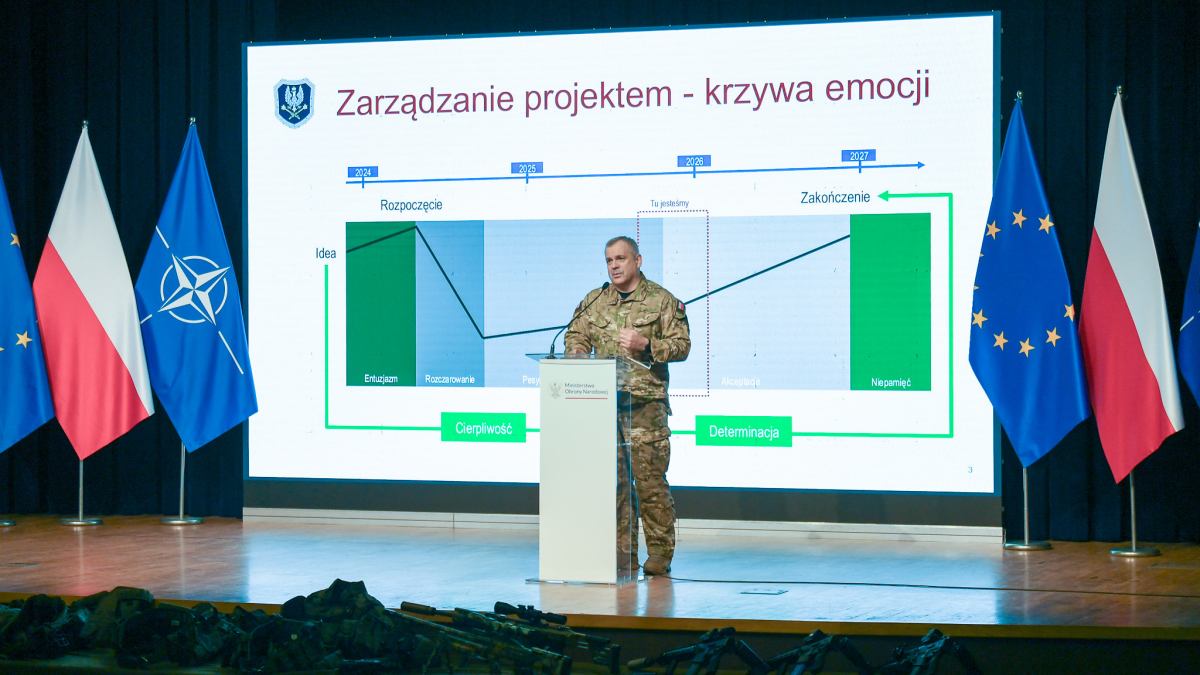
The General Staff acknowledges this conflict and has launched project NUP2x35 to analyse recruitment strategies, but finds that core military characteristics cannot be fundamentally altered without sacrificing effectiveness.
Possible Solutions and Political Dilemmas
Polish officials face four paths: limit ambitions, divert resources from health, pensions, or education, raise taxes—including a dedicated defence levy—or implement mandatory conscription. Each option risks degrading citizens’ quality of life or provoking political backlash.
Alternatively, the army can improve service conditions, invest in autonomous technologies such as drones, develop robust mobilisation reserves, and partner with schools and universities to attract recruits.
Ultimately, Poland must confront a demographic crisis that limits its ability to field a large, professional army without substantial policy shifts abroad the defence sector.