


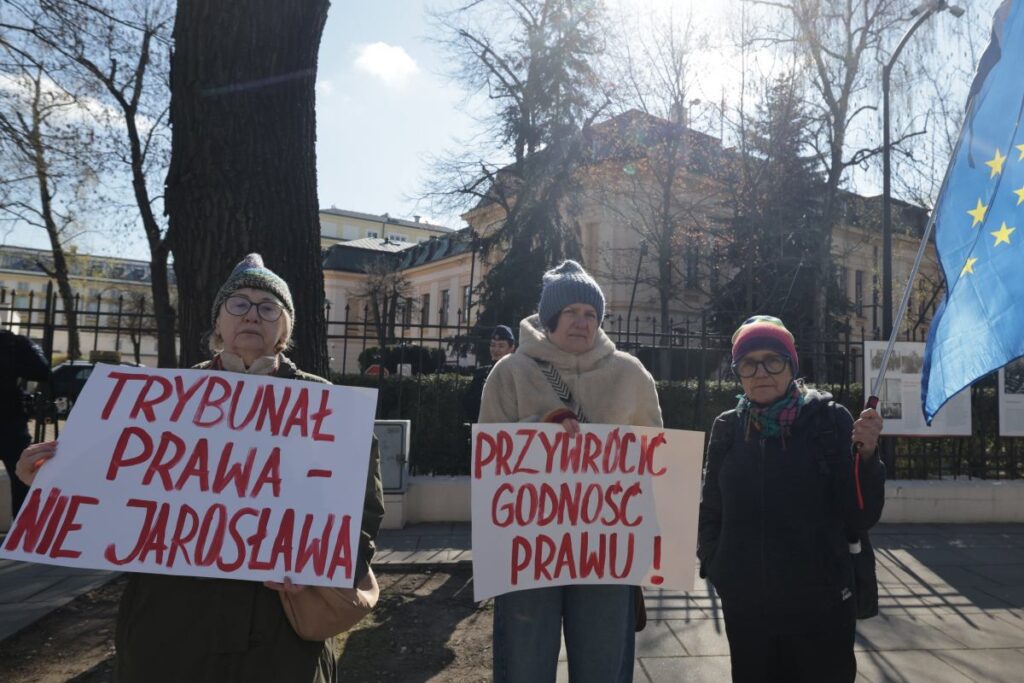
Poland’s Constitutional Tribunal has become a political tool, failing to uphold the rule of law despite recent attempts to appoint new judges.
A History of Politicization
The Constitutional Tribunal has arguably become one of the most unsuccessful institutions of Poland’s Third Republic. Successive governments have appointed judges based on political loyalty rather than merit. The United Right prioritized “mediocre but faithful” candidates, while the current coalition acted with delay and disregarded expert opinions when making appointments.
President Nawrocki’s refusal to invite Professor Marcin Dziurda to the Presidential Palace highlights a disregard for protocol. The President seems to believe the Presidential Palace is a personal castle, rather than a place to receive guests according to legal requirements.
Centralized Control Fails
Poland’s centralized model of constitutional review has proven ineffective. The Tribunal, often referred to as a “negative legislator” due to its power to strike down laws, has been sidelined and rendered politically impotent.
Erosion of Oversight
The Tribunal was designed to challenge legislative majorities, acting as a check on power. However, lawmakers found this oversight burdensome, questioning the legitimacy of fifteen independent judges overturning laws passed by the government and parliament.
A Forgotten Crisis
Public interest in the Tribunal’s crisis has waned, with the initial disputes largely forgotten. The current “constitutional crisis” is often framed as a distant historical event.
Past Controversies
Past actions, such as the Civic Platform’s attempt to appoint “reserve” judges and the United Right’s creation of “duplicate” judges, have further eroded trust. Julia Przyłębska’s controversial appointment as President of the Tribunal, along with the non-publication of rulings by Prime Minister Szydło and later Tusk, demonstrate a pattern of disregard for legal norms.
Recent Appointments and Presidential Resistance
The appointment of six new judges by the October 15th coalition triggered resistance from President Nawrocki, who initially indicated he would administer the oath to only two of the judges, citing a past aspiration to be an HR manager. The remaining four judges proceeded to take their oath before a notary.
Legal Arguments and Political Maneuvering
The President’s Chief of Staff, Zbigniew Bogucki, responded with a lengthy statement on law and axiology, bordering on the fantastical. President Duda subsequently stated he would await a ruling from the Tribunal itself, which is currently headed by a former prosecutor and colleague of Zbigniew Ziobro.
A Limbo State
The Tribunal currently exists in a state of “corridor justice,” with the properly appointed judges often confined to the library, signing documents and awaiting a ruling on their own legitimacy. The outcome will likely depend on political expediency.
The Future of the Tribunal
A happy ending is unlikely. The Tribunal has become a symbolic casualty, akin to a “dead body” in a crime novel. A superficial restoration is the most probable outcome, with politicians potentially respecting rulings only when convenient.
The Tribunal will likely remain in a Schrödingerian state—existing and not existing simultaneously. Politicians have little incentive to change this, and public attention will continue to wane. The focus has shifted from resolving the crisis to perpetuating it.
The Tribunal has neglected important cases, such as disability benefits, education policies, and LGBTQ+ rights. The building could even be repurposed as a gym.