


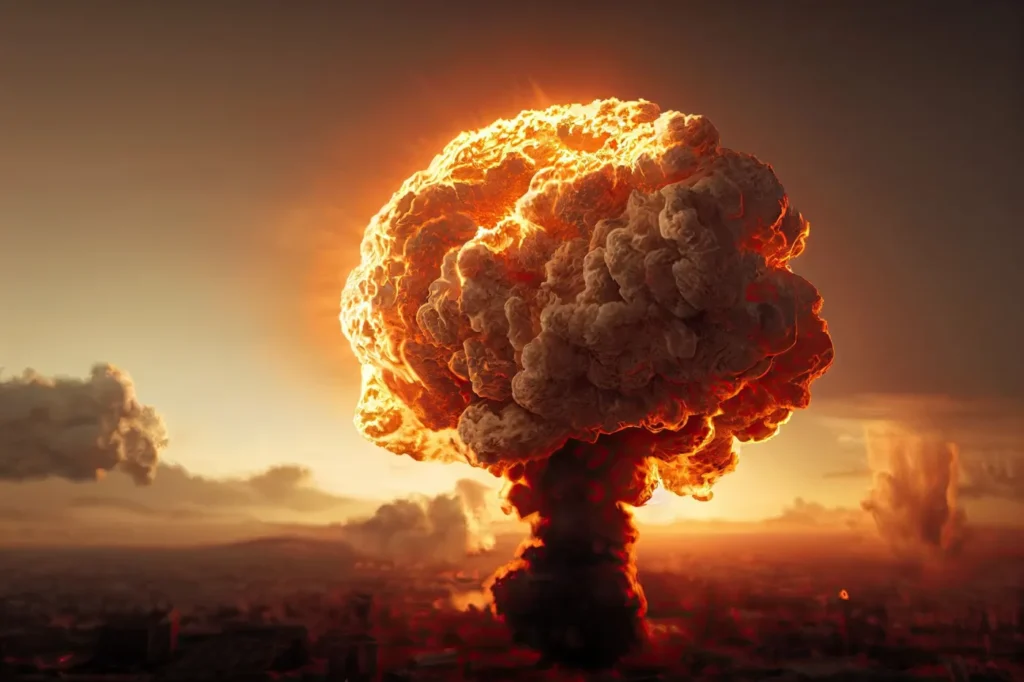
A recent report reveals Poland’s healthcare infrastructure and personnel are largely unprepared to respond to a nuclear attack or large-scale military conflict.
Nuclear Threat and Healthcare Readiness
The conflict in the Middle East has heightened concerns about the potential use of nuclear weapons, prompting questions about Poland’s preparedness for warfare and a possible nuclear attack.
Only 8% of Polish hospitals possess the full capabilities to function under CBRN (nuclear, chemical, biological, radiological) threat conditions. The number of medically trained personnel prepared for such scenarios is limited.
Limited Training and Expertise
The Polish military has 1,800 medical personnel, with just under 500 doctors possessing training for crisis situations. Experts emphasize Poland is not preparing for a nuclear attack on the scale of Hiroshima and Nagasaki.
Professor Wiesław Jędrzejczak, a retired colonel and oncologist, notes the lack of firsthand experience with nuclear attacks globally, relying instead on 80-year-old descriptions and imagination.
Impact of a Nuclear Attack on Healthcare
An attack on a major Polish city would devastate the local healthcare system, creating near-total reliance on unaffected cities for assistance. The level of aid would depend on the number of casualties.
Preventing a humanitarian disaster would require the rapid burial of thousands of bodies (human and animal), managing panic, and evacuating survivors, many in critical condition requiring pain management.
Challenges of Radiation Sickness and Trauma
While radiation sickness symptoms appear later and hematologists are equipped to handle related immune deficiencies, the immediate challenge would be treating thousands with severe mechanical injuries and burns.
Large-scale burns require more resources than radiation sickness, according to Professor Jędrzejczak.
Systemic Deficiencies in Preparedness
Paweł Wiktorzak, head of the Medical Simulation Department at the Military Institute of Medicine, states that not only hospitals, but the entire healthcare system – including emergency medical teams – is unprepared for warfare, including a nuclear attack.
He stresses the need to begin addressing these deficiencies, including building underground hospitals and training medical personnel to operate with limited resources.
National Center for Tactical Medicine Development
The Military Institute of Medicine is establishing the National Center for Tactical Medicine to improve crisis response capabilities. This initiative includes a network of partner centers: the University Clinical Hospital in Lublin, the University Clinical Hospital in Białystok, and the University Clinical Center in Gdańsk.
The center will develop crisis protocols and ensure training quality, initially reaching a relatively small percentage of medical personnel, with plans for expansion and continued funding.
Expanding Training to Civilians
Experts advocate for extending training beyond medical professionals to the general public, with increasing numbers of civilians seeking TECC (Tactical Emergency Casualty Care) training.
Increased public knowledge of basic first aid could save lives, as statistics show approximately 25% of battlefield deaths are preventable with a well-trained system.
Tactical Medicine and Civilian Crises
Tactical medicine training prepares for more than just combat scenarios; it focuses on functioning during crises like mass casualties, power outages, and hospital infrastructure failures.
The current geopolitical situation has prompted a reassessment of crisis preparedness, recognizing that even non-conflict crises can overwhelm limited medical resources.