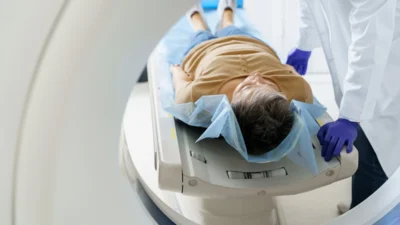
Poland’s National Health Fund offers free obesity treatment including diagnostics, therapy, and surgery for qualified patients.
Statistics on Obesity in Poland 2025 – Latest NFZ Report
The October 2025 NFZ report titled “Obesity and Its Consequences” indicates a growing scale of obesity in Poland, becoming one of the most serious public health challenges affecting both the length and quality of life of Poles. Obesity is perceived as a social disease.
Projections for 2035: Are We Facing an Obesity Epidemic?
According to the report, in 2025, 25.9% of women and 30.3% of men over 20 years of age struggle with obesity. Nearly one in three adult men in Poland may have a BMI indicating obesity. Projections for the coming years are even more concerning, with the percentage of obese men aged 20+ potentially exceeding 35% by 2035, while among women it may surpass 25%.
How to Treat Obesity Under NFZ? First Steps with a GP
The increasing number of people with obesity in Poland translates directly to increased risk of type 2 diabetes, cardiovascular diseases, hypertension, and certain cancers. The public healthcare system offers support in diagnostics, conservative treatment, and – in justified cases – surgical treatment.
Individuals with obesity should begin treatment with a visit to a primary care physician (GP). An internist can help determine BMI and assess health risk levels, as well as refer for necessary laboratory tests such as morphology, glucose and insulin levels, lipid profile, TSH testing, or liver function tests. Such diagnostics can detect disorders of carbohydrate, hormonal, or lipid metabolism.
Specialized Obesity Treatment Centers Under NFZ
In addition, an internist can refer an obese patient to a specialist clinic, such as a diabetology, endocrinology, or obesity treatment clinic, or even a mental health clinic depending on suspected issues.
Patients requiring advanced diagnostics and treatment can access obesity treatment at metabolic disease clinics within NFZ, typically referred by a family doctor or specialist. Treatment for obesity under NFZ is free as long as patients have a referral.
Metabolic disease clinics handle diagnostics and therapy of disorders related to excessive body weight, including insulin resistance, type 2 diabetes, lipid disorders, or metabolic syndrome. During visits, a specialist analyzes test results, determines the causes of obesity, and develops an individualized treatment plan. Depending on needs, patients may receive dietary support and recommendations for lifestyle changes. In some cases, pharmacological treatment may also be introduced, such as metformin, liraglutide (e.g., Saxenda), or semaglutide (e.g., Wegovy).
An endocrinologist can play an important role in the diagnostic and treatment process of obesity under NFZ, particularly when there is suspicion of thyroid diseases (e.g., hypothyroidism), polycystic ovary syndrome (PCOS), Cushing’s syndrome, or other hormonal disorders.
For patients with severe obesity, treatment may include bariatric surgery under NFZ. This means the patient bears no costs of the procedure as long as they meet specific medical criteria. Bariatric surgery aims for permanent weight reduction, improved metabolism, and reduced risk of obesity-related complications.
Psychological Support in Obesity Treatment Under NFZ
Within NFZ, patients can access consultations with a psychologist or psychiatrist, especially when excessive weight is associated with eating disorders, stress, emotional eating, or depression. Psychological support includes counseling and therapy, while a psychiatrist can offer effective psychotherapy, motivation, and adjust pharmacotherapy to the patient’s needs.