


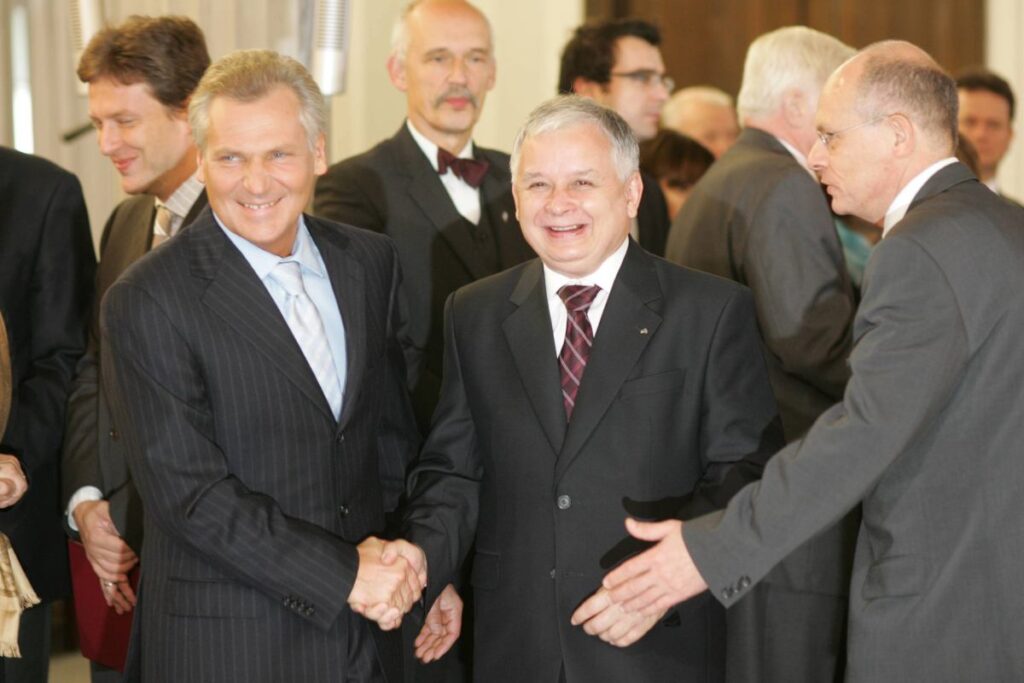
A recent Polish poll reveals that citizens overwhelmingly consider the period following the country’s 2004 entry into the European Union as the most positive in its history.
Post-EU Accession Dominates Polish Public Opinion
The survey asked readers to identify the most memorable period in Polish history, with the years following Poland’s accession to the European Union in 2004 receiving the most responses.
A total of 54.12% of the 4,279 votes cast, representing 2,316 responses, identified the post-2004 era as the most significant. This was the only option to surpass 50% of the vote share.
The 1990s and Early Transformation Also Highly Rated
The second most popular choice was the 1990s and the beginning of the systemic transformation, garnering 24.66% of the votes, or 1,055 responses. Other periods received significantly fewer votes.
Recent Years and the Post-2010 Period Receive Fewer Votes
The period after 2010 received 3.83% of the votes (164 responses), while the most recent years garnered 8.83% (378 responses). 8.55% of participants (366 votes) chose not to select a single period.
Aleksander Kwaśniewski and Poland’s EU Entry
Aleksander Kwaśniewski served as president from 1995 to 2005, a period encompassing the post-2004 era frequently cited in the poll. He secured re-election in 2000 in the first round.
During his presidency, Poland signed its constitution in 1997, joined NATO in 1999, and entered the European Union in 2004 – pivotal moments shaping the country’s political and international trajectory.
Lech Kaczyński’s Presidency and its Impact
Lech Kaczyński also served as president during a period identified in the survey, from 2005 to 2010. He defeated Donald Tusk in the 2005 election.
During his term, Poland continued as a member of NATO and the EU, and signed the Lisbon Treaty in 2007. His presidency was marked by engagement in Eastern European affairs, including the 2008 Georgia crisis, and tragically ended with the Smoleńsk disaster in 2010.