


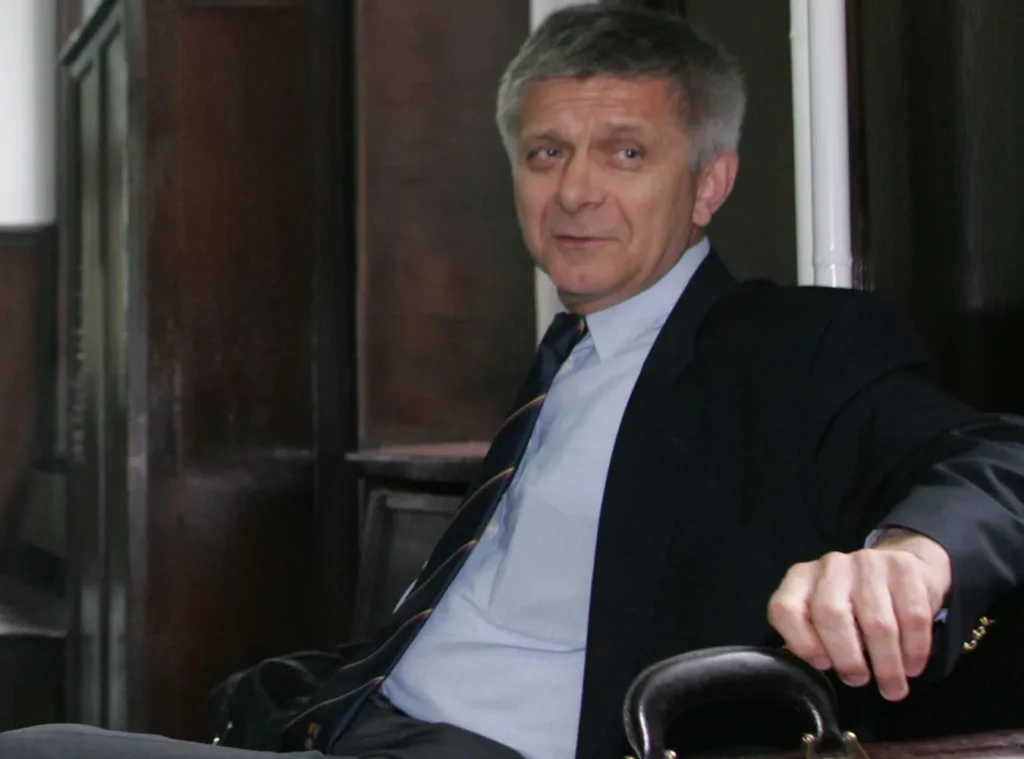
Former Polish Prime Minister Marek Belka criticizes a proposal to use profits from the National Bank of Poland’s gold valuation for arms purchases, favoring a deal with the ECB.
SAFE 0 Percent Program and European SAFE – Differences and Risks
Marek Belka argues the SAFE 0 percent program, proposed by NBP President Adam Glapiński, primarily aims to block the European SAFE program. He believes reaching an agreement with the ECB and utilizing a portion of foreign exchange reserves for arms funding would be a better solution.
Glapiński proposed using unrealized profits from gold valuation, part of the central bank’s reserves, to finance arms. This would involve market transactions that wouldn’t change NBP’s foreign exchange reserves but would generate over 190 billion złoty in profit, earmarked for arms through the SAFE 0 program, avoiding the need for the European SAFE loan program.
NBP Gold Valuation Profits and Arms Financing
Belka notes that the profits from gold valuation have nearly halved since initial consideration. However, 90 billion złoty remains available.
Despite the reduction in profits, Belka acknowledges that 90 billion złoty is still a substantial amount. Glapiński’s plan envisioned the operation unfolding over several years to minimize gold price fluctuations.
Concerns About Gold Price and Implementation
Belka expresses uncertainty about future gold prices over the next few years. He also points out that the SAFE 0 program was intended as an alternative to the European SAFE, which would provide almost immediate funds.
Belka questions whether the military could utilize the funds immediately, highlighting the need for gradual implementation within the arms industry.
Comparison to KPO Funds and Budgetary Fluidity
The discussion draws a parallel to the Recovery and Resilience Plan (KPO) funds, where 90 percent were used to supplement the budget’s liquidity, rather than their intended purpose.
Belka clarifies that if KPO funds were used to replace borrowing, they weren’t lost but will eventually be used for their original purpose.
Legal Framework and NBP Profit Distribution
Currently, NBP profits are calculated at year-end, with 95 percent transferred to the government and 5 percent retained as a revaluation reserve. Implementing the SAFE 0 program would require amending the NBP Act to allow for profit calculation based on current valuations, not year-end.
Belka suggests the plan is more aligned with the ideas of Deputy President Nawrocki than Glapiński, proposing NBP realize profits now, providing funds to the government sooner.
Financing Mechanisms and Extra-Budgetary Funding
The plan requires the government to allocate funds to a dedicated fund for military financing, such as the existing BGK-managed Fund for Supporting the Armed Forces. Economists generally dislike such arrangements, as they allow for extra-budgetary financing, while also enabling NBP to lend money to the fund.
Belka’s Overall Assessment and European Cooperation
Belka reiterates his opposition to the plan, arguing it solely aims to block the European SAFE program and hinder European Union-wide arms efforts, which prioritize European weaponry.
He suggests leveraging funds from the European SAFE program alongside NBP resources.
Alternative: Utilizing Foreign Exchange Reserves with ECB Approval
Belka proposes utilizing a portion of NBP’s foreign exchange reserves, around 40 billion euro, for arms purchases, but emphasizes the need for informal discussions with the ECB.
He points to a European legal provision allowing countries within the European System of Central Banks, but not adopting the euro, to use reserves for purposes beyond currency stability with ECB approval – essentially, a lack of objection.
Support for Euro Adoption
Belka expresses his strong support for Poland’s adoption of the euro, noting a growing, though often hesitant, number of supporters.