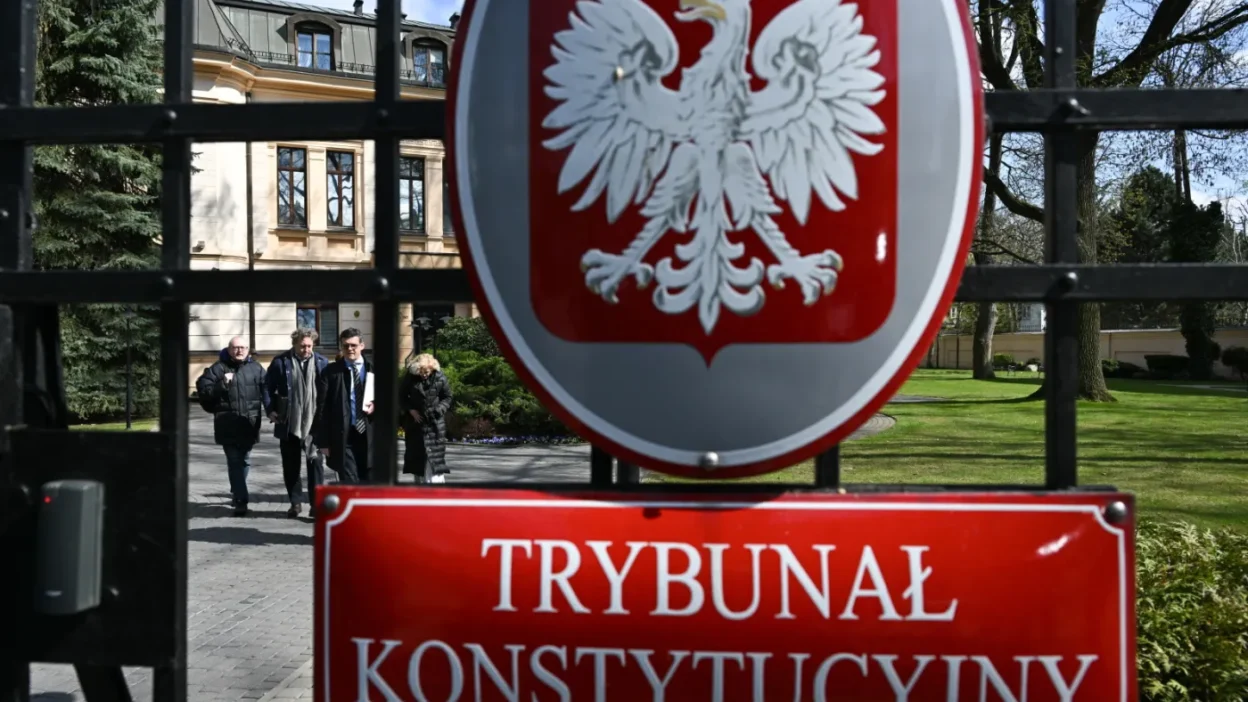
Poland faces a constitutional crisis as the President refuses to administer the oath of office to newly elected Constitutional Tribunal judges.
Constitutional Conflict Over Swearing-In
The Polish Constitution stipulates that the Constitutional Tribunal consists of 15 judges selected by the Sejm for nine-year terms. The act of taking the oath before the President is a constitutive moment for a judge’s appointment, with refusal to swear equating to resignation.
According to the law, a judge’s official duties begin only after the oath is taken, and the President is expected to facilitate this process.
President’s Discretion and Legal Oversight
Legal experts argue that the framers of the law did not anticipate a scenario where the President might, for political reasons, refuse to accept the oath from judges elected by the Sejm. The Sejm has a duty to fill vacancies promptly, even before the end of a judge’s term.
The President’s role is not to evaluate the qualifications of the judges, but simply to administer the oath if they meet the formal requirements. Refusal to do so, except in extreme cases like forged credentials, is considered an overreach of presidential power.
Presidential Prerogative vs. Constitutional Duty
In contrast to the selection of Tribunal judges by the Sejm, the President has the prerogative to appoint the President and Vice-President of the Constitutional Tribunal, without requiring countersignature from the Prime Minister.
Potential Legal Consequences and Damage to Rule of Law
The President’s refusal to accept the oath from four judges constitutes a serious violation of the law, potentially warranting legal accountability before the State Tribunal – though such accountability is often ineffective in practice. This case will likely be remembered as a negative example of disrespect for the Constitution.
The impasse is prompting consideration of unconventional legal solutions, such as oaths administered before a notary or the Sejm Marshal, but these are seen as inadequate substitutes for the proper procedure.
Alternative Solutions and the Role of the Sejm
The Constitution allows for the Marshal of the Sejm to administer the oath if the President is unable to do so. The President’s presence is primarily ceremonial, and the act of administering the oath does not constitute a formal decree.
Call for De-escalation and Respect for Institutions
Legal scholars warn that this situation is damaging the Polish state and urge the President and judges of the Tribunal to de-escalate the conflict. The President should immediately schedule the swearing-in ceremony, and the new judges should take the oath before the President.