


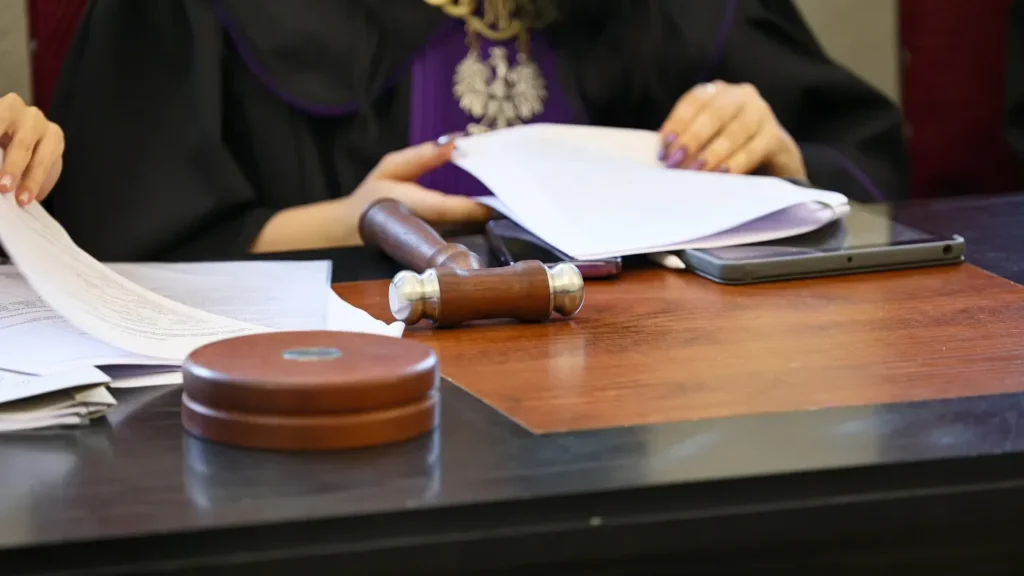
Following a hearing in Nysa, Poland, the head of the Court Watch Polska Foundation stated that public trust in the judiciary is rapidly declining.
Defense Attorney Questions Judge’s Background in Hate Speech Case
During a hearing at the Nysa Regional Court concerning a hate speech case, the defendant’s attorney challenged the judge’s impartiality, questioning their background and suggesting potential bias. This action has sparked debate about the state of judicial authority in Poland.
Right to Impartiality and Concerns Over Judge’s Views
Bartosz Pilitowski, President of the Court Watch Polska Foundation, emphasized the defendant’s right to a fair and impartial trial. He noted that concerns about impartiality are reasonable when a judge publicly expresses views strongly opposing those of the defendant.
Pilitowski stated that while ancestral background alone is insufficient to question a judge’s impartiality, the judge’s behavior and expressed views must be considered. He suggested that Judge Mariusz Ulman should recuse himself from the Nysa case to avoid the appearance of bias.
Ethical Considerations and Avoiding Perceived Bias
The focus should be on preventing situations where publicly known differences between the defendant and judge create a justified fear of influence on the verdict. However, suggesting a judge should recuse themselves solely based on perceived origin is unacceptable.
Polish citizenship and national identity encompass diverse religious and ethnic communities, and belonging to one of these groups should not be grounds for questioning a judge’s qualifications or stigmatization. The manner in which the recusal request was presented is also a concern.
Attorney’s Tactics Deemed Performative and Questionable
Pilitowski criticized the attorney’s presentation of the recusal request in open court as “performative,” questioning the purpose of orally presenting a written motion. He expressed concern that allowing such “Americanization” of the process sets a poor precedent.
He suggested the attorney’s actions may have been aimed at self-promotion and portraying the defendant as a victim, potentially disrupting the relationship between the judge and the case.
Erosion of Judicial Authority and Public Trust
Pilitowski believes the events in Nysa reflect a broader erosion of public trust in the judiciary. He noted that increased tolerance for behavior undermining the court’s dignity may stem from a crisis of confidence in the justice system.
He was surprised the court allowed the attorney to address the public and move around the courtroom during the request, suggesting it served primarily to achieve extra-judicial goals.