


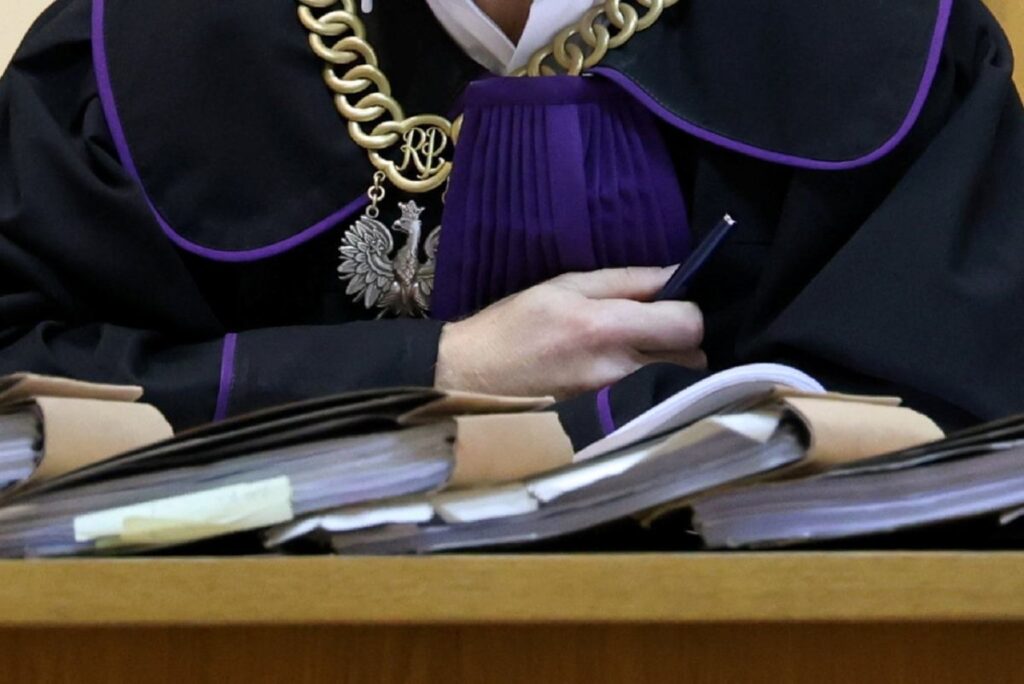
A Polish court ruled a divorce judgment invalid because the judge was appointed by a disputed council, sparking debate over judicial chaos.
Giżycko Court: No Divorce
According to Prawo.pl, on January 12, the District Court in Giżycko rejected an application to divide property between two former spouses. The judge ruled that the previous divorce judgment did not actually exist because it was issued by a judge appointed with the involvement of the so-called new National Council of the Judiciary.
The ruling of the Giżycko District Court regarding the division of property is not yet final. “The fact that such rulings are handed down merely shows that in the Polish justice system, we have chaos on many levels. It needs to be cleaned up primarily for people so that such situations do not repeat,” commented Judge Katarzyna Wróbel-Zumbrzycka from the Association of Polish Judges Iustitia in an interview with Prawo.pl.
Waldemar Żurek on “Judicial Chaos”
“The case, in which a divorce judgment was deemed non-existent due to the involvement of a neo-judge, shows something very alarming. The crisis related to neo-judges today is entering the most sensitive areas of citizens’ lives. Into family matters, property matters, into the basic sense of legal security,” commented Justice Minister Waldemar Żurek on the X platform.
He added that “flawed judicial appointments from 2018-2025 are destabilizing case law, generating chaos in courts and leading to situations where people after years do not know if their rulings exist.” He emphasized that “the problem must be solved systematically – through clear regulation of the status of neo-judges, removal of the consequences of neoKRS decisions and guaranteeing stability of rulings.”
Rule of Law Bill
This week, the Sejm is set to begin work on the rule of law bill and amendments to the KRS Act. “The rule of law bill is tasked with restoring citizens’ faith that an independent and impartial judge sits at the judicial table,” said Justice Minister Waldemar Żurek in December.
“The bill provides for three categories of judges in ordinary courts. The first category would be young judges, who would remain confirmed by operation of law. The second category would be persons who were at least once legally appointed judges but were promoted to higher positions. The third category would be persons who were never appointed in a legal procedure before a legal National Council of the Judiciary and the president,” explained Waldemar Żurek.
KRS Act
“With the KRS Act, we will recreate this body in accordance with the Polish Constitution,” declared the Minister of Justice last month. “We want to conduct elections among all judges of ordinary courts, the Supreme Court, the Supreme Administrative Court, Voivodeship Administrative Courts, in order to select the 15-member judicial part of the KRS in a way that leaves no room for doubt,” he pointed out.
The State Electoral Commission would be the body supervising these elections. “The current KRS has significant flaws, including that it does include military or administrative judges who are included in the Constitution. We will change that. We will eliminate all irregularities related to judicial panels. These laws solve this problem, provide legal certainty and will accelerate proceedings,” he announced.