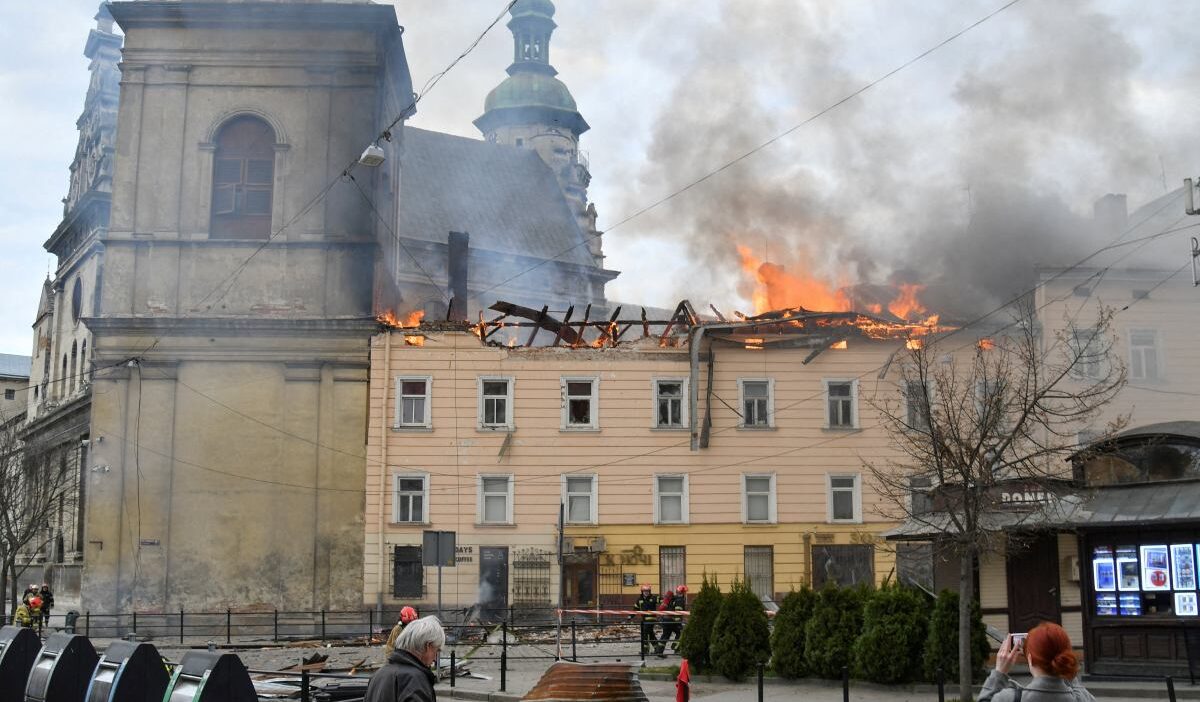
Marcin Bosacki, Poland’s Deputy Foreign Minister, condemned UNESCO for failing to identify Russia as responsible for the drone attack on Lviv’s historic center on March 24.
UNESCO Under Fire for Lviv Attack Statement
Deputy Foreign Minister Marcin Bosacki criticized UNESCO on Wednesday, March 25, questioning their “deep concern” over the attack on Lviv without mentioning Russia as the perpetrator. He stated on X (formerly Twitter), “Let me help you, UNESCO – it was Russia under Putin.”
Lviv Attack Details
On Tuesday, Shahed drones launched by Russia attacked central Lviv, injuring 22 people. The attack damaged a building within the 17th-century St. Andrew’s Church and Bernardine Monastery complex, a UNESCO World Heritage site.
UNESCO’s Initial Response
UNESCO condemned the attack on X, expressing “deep concern” regarding the damage to the Bernardine Monastery complex, part of the “Lviv – Ensemble of the Historic Centre” World Heritage site. The organization reminded parties of their obligations to protect cultural property under the 1954 Hague Convention and the 1972 World Heritage Convention.
Ukraine’s Reaction: “A Disgrace”
Ukrainian Foreign Ministry spokesperson Heorhiy Tychy called UNESCO’s response “a disgrace” on Wednesday. He criticized the organization for failing to identify the attacker, suggesting the attack was attributed to “abstract forces” or “aliens.” Tychy stated this demonstrated the organization’s dysfunction and inability to name responsibility.
Polish Foreign Ministry Condemns Attack
Poland’s Ministry of Foreign Affairs also condemned the Russian attack on Lviv’s historic center on X, calling it a “barbaric” drone attack. The ministry emphasized the destruction of a centuries-old monastery, representing shared Polish and Ukrainian history and identity, as a deliberate attack on collective memory.
Russia’s Treaty Obligations Questioned
The Polish Ministry of Foreign Affairs added that Russia, despite being a party to the Hague and UNESCO conventions, is destroying the very heritage these treaties are meant to protect.