


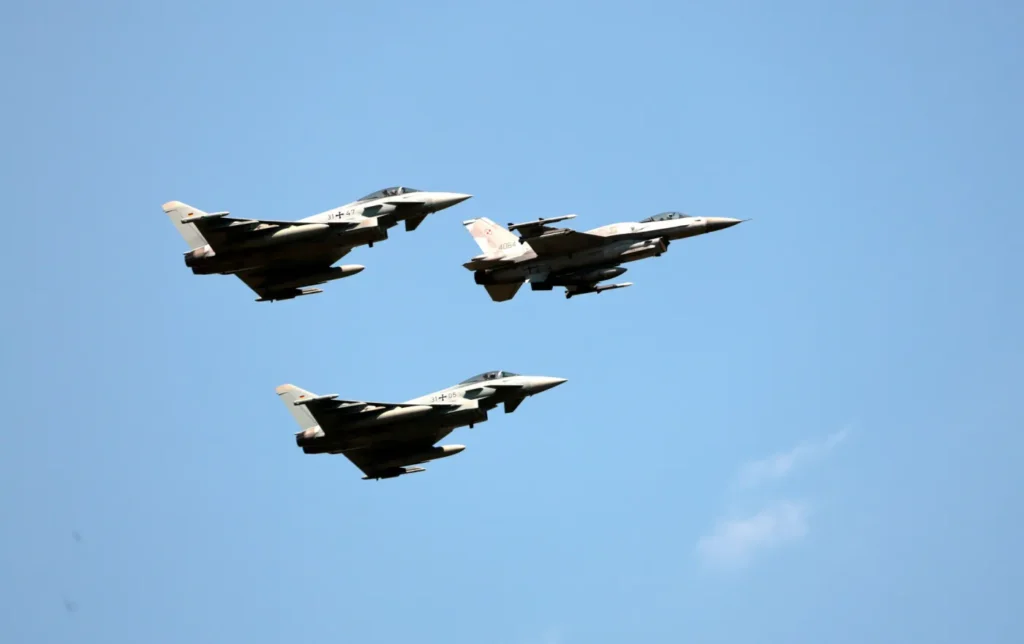
Polish F-16 fighter jets intercepted a Russian Il-20 reconnaissance aircraft over the Baltic Sea on Thursday evening, the latest in a series of such incidents.
Another Polish F-16 Interception of Russian Il-20
Deputy Prime Minister and Minister of National Defence Władysław Kosiniak-Kamysz announced that a pair of Polish F-16s on duty intercepted the Russian Il-20 reconnaissance aircraft over the Baltic Sea on Thursday evening. This marks another such interception this week.
The Minister assessed that these Russian actions are provocative in nature and serve to test Poland’s air defense systems.
“Russian Provocations Test Our Systems”
Kosiniak-Kamysz reported the interception of the Russian Il-20 aircraft on Thursday via a post on X (formerly Twitter).
“This evening, a pair of our F-16 aircraft on duty made another interception this week of a Russian reconnaissance aircraft Il-20, flying over the Baltic Sea. The provocative actions of the Russian Federation are testing our air defense systems,” he wrote.
Polish Skies Remain Secure
“Thanks to the constant combat readiness of pilots, soldiers, and ground personnel, Polish skies remain safe. The Polish Armed Forces are ready every day for immediate reaction and protection of the airspace,” the head of the Ministry of National Defence added.
Frequent Interceptions in Recent Times
Earlier Thursday morning, the Operational Command of the Armed Forces – responsible for monitoring airspace and responding to incidents – reported that Polish F-16 fighters also intercepted a Russian Il-20 aircraft on Wednesday.
Interceptions Are Not a Show of Force
The Command emphasized that these interceptions do not constitute a demonstration of force, but are one of the basic tools for ensuring real control over the country’s airspace. Their purpose is to quickly identify objects that do not respond to air traffic control calls, operate without a required flight plan, or violate applicable rules.
NATO Procedures and Airspace Security
The Operational Command also noted that the interception procedure allows for the immediate determination of the nature of the flight, assessment of potential threats, and – if necessary – corrective action, such as changing course or directing the aircraft to land. These actions help to reduce the risk of incidents and ensure the safety of both civil and critical infrastructure.
Regular Russian Flights Over the Baltic Sea
Similar actions have occurred several times in recent months; in the fall of this year, the Command reported three such incidents within a week. Russian reconnaissance aircraft regularly fly over the Baltic Sea with transponders turned off and without filed flight plans, making remote identification impossible and hindering the work of air traffic control.
Identification and Escort Procedures
In such a situation, intercepting a foreign aircraft over international waters primarily involves its identification by fighter pilots using optoelectronic systems and visual contact, and possibly establishing communication and escorting it outside of Polish airspace.
NATO Baltic Air Policing Mission
The control of Russian aviation activity in the region is also served by the NATO Baltic Air Policing mission, within which Polish and allied aircraft patrol the airspace over the Baltic states and the Baltic Sea.