


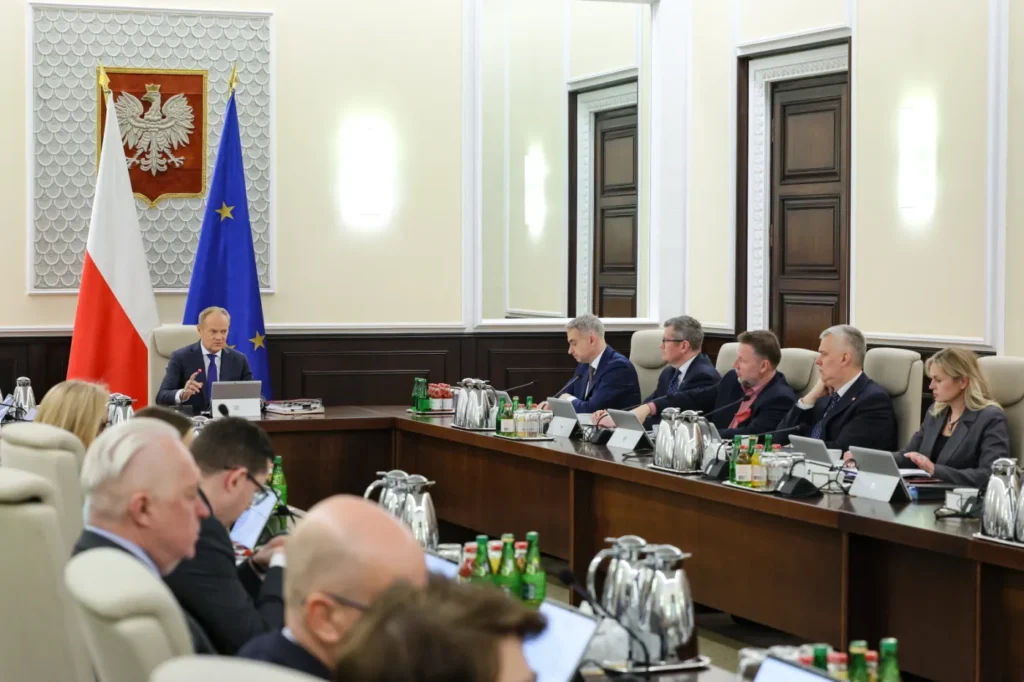
The Polish government approved changes increasing court supervision over the operational control conducted by special services, aiming to strengthen democratic oversight.
Expanded Judicial Oversight of Intelligence Operations
The Polish government has adopted significant changes expanding the authority of courts over the operational control carried out by intelligence agencies. Radosław Kujawa, a state secretary in the Chancellery of the Prime Minister, and Deputy Minister Coordinator of Special Services, was responsible for preparing the project.
The legislative work on the amendment to the Act on the Internal Security Agency and the Foreign Intelligence Agency, among others, began in August 2025. The project was renamed to the Act amending certain acts to strengthen judicial supervision over operational control.
Key Provisions of the Amendment
The proposed solutions aim to strengthen and supplement existing judicial competencies in supervising operational control conducted by authorized entities. This includes the Internal Security Agency, the Central Anti-Corruption Bureau, the Military Counterintelligence Service, the Police, Border Guard, State Protection Service, National Revenue Administration, and the Military Gendarmerie.
Shifting Supervisory Powers
The Inspector of Internal Control of the Ministry of Interior and Administration is set to lose the authority to request operational control and controlled purchases. Some of the current prosecutorial supervisory powers will be transferred to the courts. Courts will be required to justify every decision regarding operational control, regardless of the sufficiency of the evidence.
Access to Results and Information Sharing
In addition to issuing consent for operational control, courts will gain access to the results, even if no evidence leading to criminal proceedings is obtained. After completion, the head of the service or institution, along with the approving prosecutor, will be informed of the control’s results.
New Powers for Courts and Prosecutors
Courts will have the power to request information on the progress of control they have authorized and can decide to interrupt it at any time, providing justification. The head of the service or institution, or the prosecutor, can appeal such a court decision.
When deciding on interrupting control, both the court and prosecutor must consider the circumstances justifying the need for operational control, including the lack of effectiveness of other measures, the purpose, duration, and type of control. Prosecutors will also have the power to interrupt control, but decisions cannot be appealed.
Destruction of Materials and Historical Context
Courts will also gain access to information regarding the destruction of operational control materials that do not confirm a crime or are not vital to national security. The head of the service must immediately inform the court and prosecutor of such destruction. The changes acknowledge that current standards for supervising special services and operational control date back to the early 1990s, with areas lacking sufficient judicial oversight.
Effective Date and Collaboration
The Act is scheduled to come into effect 30 days after its official publication. The project was prepared with the collaboration of the Chancellery of the Prime Minister and the Ministries of Interior and Administration, National Defense, and Finance, as well as the Internal Security Agency, the Central Anti-Corruption Bureau, and the Military Counterintelligence Service.
Concerns and Preparations
The government’s Collegium and the Sejm’s committee for special services issued positive opinions on the project. However, the committee raised concerns about the courts’ potential lack of preparedness in terms of staffing and organization. Strengthening the units within courts dealing with operational control cases will be necessary, as will additional tasks for district prosecutors related to analyzing court decisions to suspend operational control.