


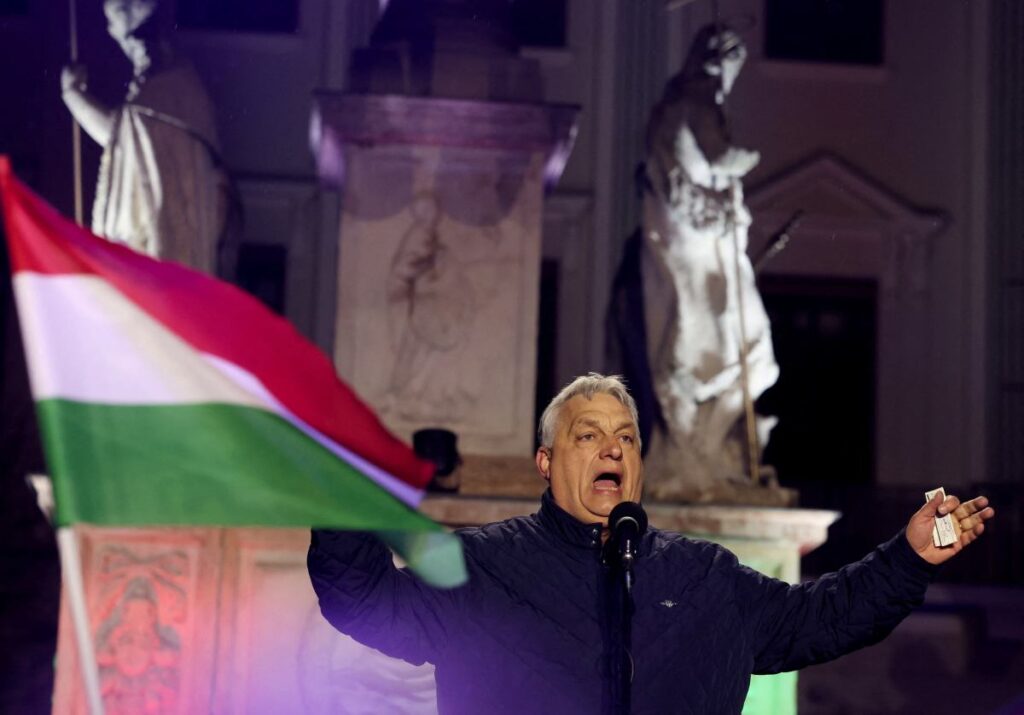
Ordo Iuris, a Polish conservative institute, is deploying a monitoring mission to Hungary’s April 12th parliamentary elections, citing doubts about the OSCE’s impartiality.
Concerns Over Hungarian Election Climate
Parliamentary elections in Hungary are scheduled for April 12th. The Center for Eastern Studies reports a deterioration in national sentiment since 2022, driven by high inflation, rising living costs, and economic slowdown.
The opposition party Tisza is focusing its campaign on these economic issues, while the ruling Fidesz party attempts to divert public attention to external threats, according to OSW analyst Ilona Gizińska.
Fidesz Campaign Tactics and Accusations
Fidesz is criticizing the opposition for seeking independence from Russian energy and accusing them of conspiring with Ukraine, even attacking Kyiv for allegedly influencing the election campaign. Criticism is also directed towards the European Union.
Ordo Iuris Launches Monitoring Coalition
Ordo Iuris announced the establishment of the “Coalition for Freedom for Free and Fair Elections” on March 30th. The institute, known for opposing sex education in schools, expanded LGBT rights, in vitro fertilization, and abortion, expresses reservations about the Organization for Security and Co-operation in Europe (OSCE).
Ordo Iuris cites the OSCE’s rejection of applications from qualified experts as justification for sending an additional international mission to ensure election transparency and legality.
Mission Scope and Composition
The mission, comprised of “almost one hundred” individuals from Argentina, Austria, Czech Republic, Spain, Kenya, Germany, Poland, Serbia, Tanzania, the United States, and Italy, will assess whether Hungarian voters can freely express their political will without undue pressure and whether the election results accurately reflect the national will.
Anna Wellisz and lawyer Jerzy Kwaśniewski will lead the coalition.
Principles Guiding the Observation Mission
The organization has adopted principles of non-interference, impartiality, evidence-based reporting, adherence to Hungarian law, and establishing a fact-based reference point for all stakeholders, including political competitors. An initial expert group of eight will begin work two weeks before the election, followed by the full team of analysts and observers.