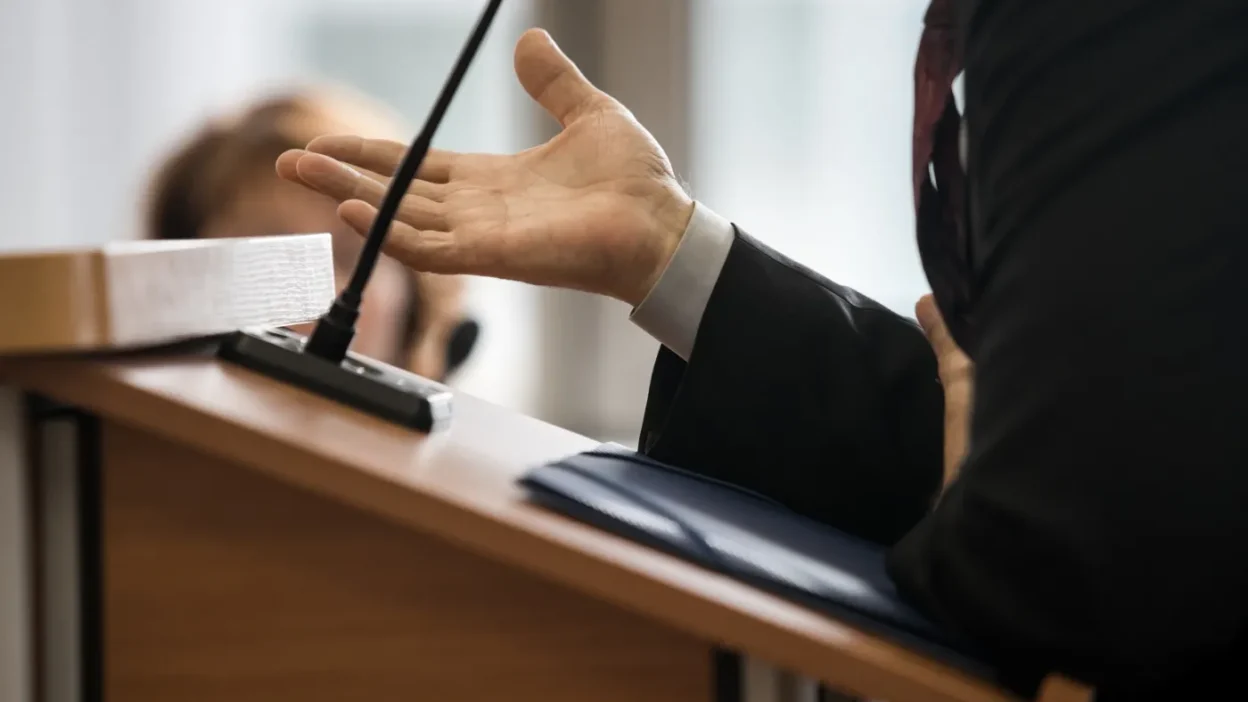
A proposed Polish justice ministry rule allowing witnesses to choose to testify sitting down is facing opposition from judges who fear it could undermine court authority and incur costs.
Judges Cite Potential Costs and Disruption
Judges are expressing concerns that allowing witnesses to choose whether to testify standing or sitting could necessitate costly renovations to courtrooms, including the addition of chairs and microphones. They also fear it could diminish the dignity of the court.
The proposal, put forth by the Minister of Justice, would allow witnesses in civil proceedings to remain seated during questioning. However, judges consulted on the draft have largely reacted negatively.
Reorganization of Courtrooms May Be Required
Concerns center on the practicalities of accommodating seated witnesses without disrupting courtroom proceedings. Pawel Rygl, President of the Court of Appeal in Krakow, noted that simply adding a chair based on a witness’s preference is insufficient.
Rygl argued that placing a witness in public seating or behind a barrier would be problematic, especially given that trials are recorded and require adequate access to microphones and cameras. Current courtrooms are not equipped for designated seated witness areas.
Financial Implications and Equipment Costs
Barbara Sieczkoś, director of the Court of Appeal in Lublin, pointed out that the project’s authors underestimated the associated costs. She noted that courtrooms typically have tables and benches, with chairs reserved for the presiding judges and court reporter.
Additionally, Sieczkoś highlighted that many courtroom microphones lack height adjustment capabilities and would require replacement to accommodate seated witnesses, adding to the overall expense.
Cost Estimates Reach Hundreds of Thousands of Zloty
Dagmara Kosowska-Drąg, director of the Court of Appeal in Szczecin, estimated that adapting facilities to meet the new requirements could cost up to 500,000 złoty for the Szczecin unit alone. These expenses were not factored into the 2026 financial plan.
Disparity Between Civil and Criminal Proceedings
The proposed change would only apply to cases under the Civil Procedure Code, meaning witnesses in criminal trials would still be required to stand. Judges, including Maciej Żelazowski, President of the Court of Appeal in Szczecin, find this distinction incomprehensible.
Magdalena Pasieka-Paczek, President of the District Court Szczecin-Prawobrzeże and Zachód in Szczecin, also questioned the lack of justification for treating participants in civil and criminal proceedings differently.
Concerns Over Diminished Court Authority
Some judges fear that allowing witnesses to choose their position could undermine the authority of the court. President Żelazowski stated that the proposed change “clearly undermines the seriousness of the court.”
Dariusz Plewczyński, chairman of the XI Economic Division of the District Court Szczecin-Centrum, noted a general decline in respect for the judiciary, sometimes visible in courtroom attire and conduct. He questioned why a witness should have the option to sit when judges and legal representatives are expected to stand.