


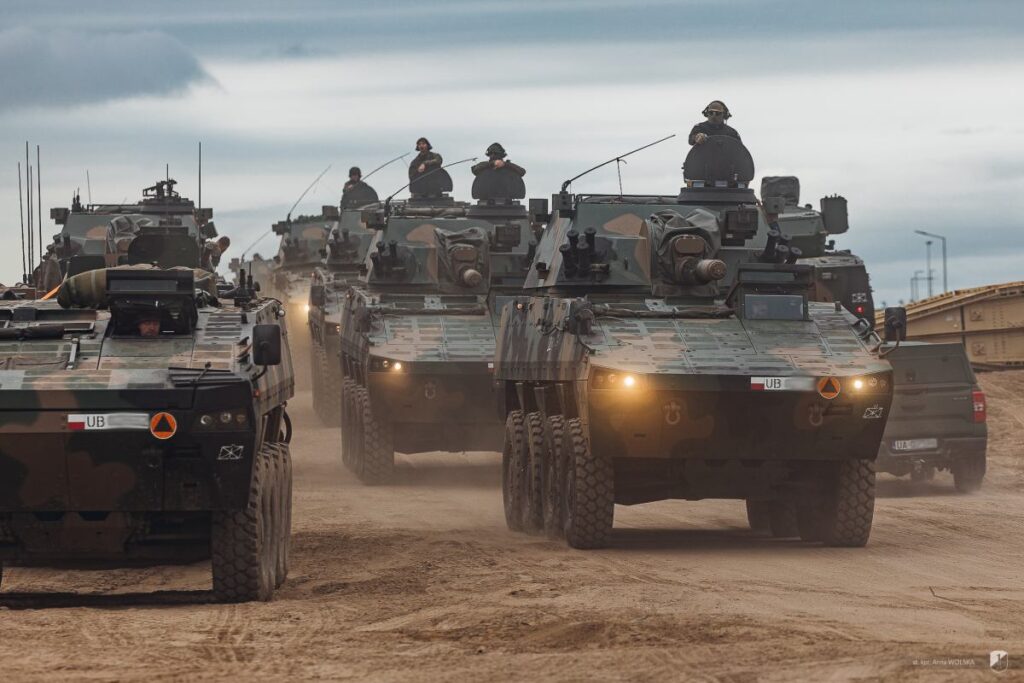
Polish defense analysts weigh in on the army’s recent upgrades, applauding air‑defense progress while warning that costly plans may outpace fiscal and demographic realities.
Air Defense Modernization
Polish analysts note that air‑defence has long been a priority, with the procurement of modern surface‑to‑air systems and the development of a multi‑layer air‑borne shield. The plan includes a forthcoming “San” anti‑drone layer that would enhance the system’s effectiveness and potentially position Poland as a NATO leader in this area.
While the air‑force remains well equipped, the timing of new acquisitions—such as potential fighter and early‑warning drones—has been questioned. Experts warn that the current trajectory does not align with the operational needs of a large, modern air force.
Land Force Modernization
Missile and artillery upgrades are a central focus, with Poland investing heavily in field‑manned missile systems and modernizing tactical rocket and artillery platforms. However, the procurement strategy often neglects the necessary domestic support infrastructure, including maintenance, refurbishment, and local production capacity.
Additionally, the planned expansion of the army—aiming to double the armed forces in a short period—raises concerns about funding, logistics, and the readiness of personnel as well as the availability of trained reservists.
Naval Modernization
Recent advances include the commissioning of the Miecznik frigates, Ork submarine platforms, and Kormoran mine‑sweepers. After a long pause, the submarine procurement program has resumed, marking a significant step toward enhancing maritime security on the Baltic Sea.
Nevertheless, some procurement choices lack sufficient support systems, such as domestic helicopter maintenance for frigates and adequate resupply ship capabilities, which could limit operational effectiveness.
Defense Industry and R&D
Poland’s defense‑industry participation has increased, especially in missile and artillery projects. Yet government spending on research and development remains low, limiting the country’s ability to achieve full self‑sufficiency in weapon production.
Political influence is said to distort procurement decisions, resulting in oversized orders of foreign equipment—such as 96 AH‑64 Apache helicopters—that do not match fiscal realities or operational necessity.
Cyber, Space, and Drone Capabilities
The creation of a dedicated Cyber‑Space Defense Command has accelerated modernisation of military communications and cyber‑security measures. A domestic satellite reconnaissance system, ARGUS, now provides Poland with autonomous space‑based intelligence, though it still lags behind some peers.
Despite these gains, the army lacks a comprehensive low‑level drone defence and drone‑force capability. The absence of a doctrine for small, widely deployable unmanned systems could leave Poland vulnerable to evolving battlefield scenarios.
Funding and Long‑Term Planning
Analysts argue that the scale of Poland’s military expansion exceeds its financial and demographic capacity. Long‑term planning is described as fragmented, with procurement decisions often made reactively rather than through a coordinated, sustained strategy.
Consequences include delayed systems, inadequate training programmes, and an overreliance on foreign equipment, all of which undermine the overall effectiveness of the armed forces.