


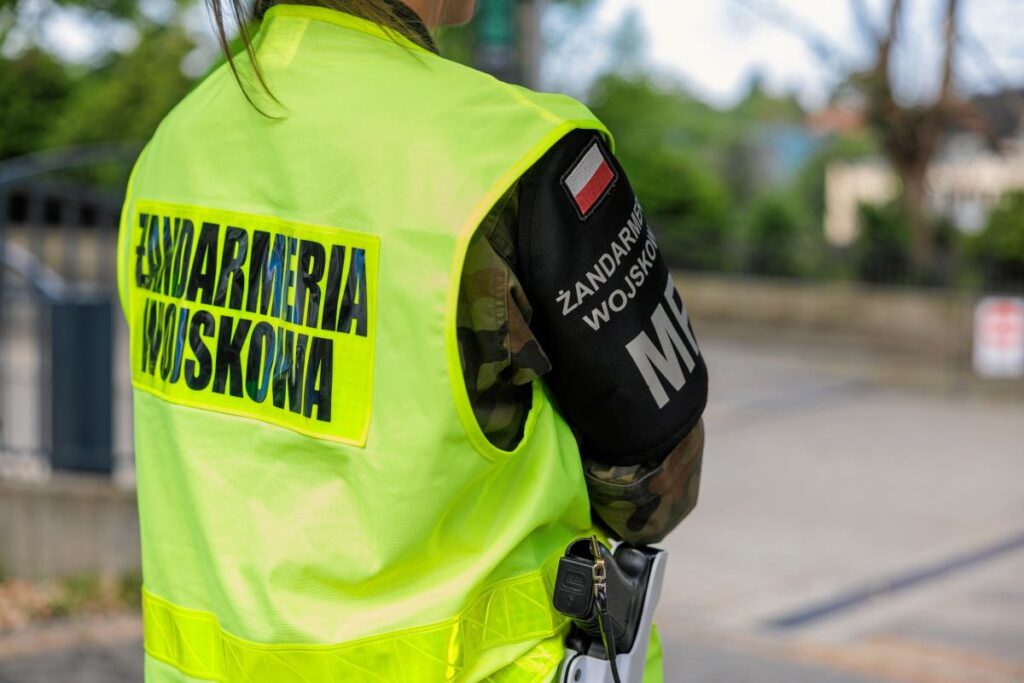
Poland’s President extended military assistance to the border guard for another six months, until October 1st, due to ongoing concerns about illegal migration.
Border Guard Support Extended
Soldiers will assist the Border Guard in protecting Poland’s borders and maintaining security and order in the border zone from April 5th to October 1st.
The aim is to ensure the inviolability of the state border and public safety within the territorial scope of border crossings and the border area with Germany and Lithuania.
Previous Decision and Extended Controls
President Nawrocki initially made a similar decision last October, intended to last until April 4th, 2026. This current decision extends the military assistance by another six months.
The Ministry of Internal Affairs and Administration also extended the temporary reinstatement of border controls at crossings with Germany and Lithuania until at least October 1st, 2026.
Vehicle Checks and Controlled Crossings
Border guards and soldiers are authorized to stop and inspect selected vehicles.
From April, the Park Mużakowski-Most Angielski crossing between Łęknica and Bad Muskau will resume being a controlled crossing, following earlier renovation work. This crossing is important for tourism and cross-border events within the park.
History of Border Controls
Temporary controls on the borders with Germany and Lithuania were first introduced in July of last year and have been repeatedly extended.
The government cites a continued serious threat of illegal migration on these sections of the Polish border as the reason for the extensions. Approximately 50 locations will be monitored on the Polish-German border, and 13 on the Polish-Lithuanian border.
Schengen Code and Control Duration
According to the Schengen border code, a member state can reinstate border controls on internal borders for up to six months in the event of a foreseeable serious threat to public order or internal security.
If the threat persists beyond six months, the control can be extended for further periods of no more than six months, up to a maximum of two years, requiring prior notification to relevant European bodies.
Fuel Tourism from Germany
Increased traffic was observed at gas stations in Świnoujście, with most customers driving cars with German license plates.
This is attributed to “fuel tourism,” as fuel prices in Poland are lower than in Germany.
Fuel Transport Preparations
The Świnoujście City Office has requested permission from the Maritime Office to transport fuel during the Easter weekend to secure against potential fuel shortages. Tankers will be transported by the Karsibór ferry between 11 PM and 4 AM from April 4th to 6th.