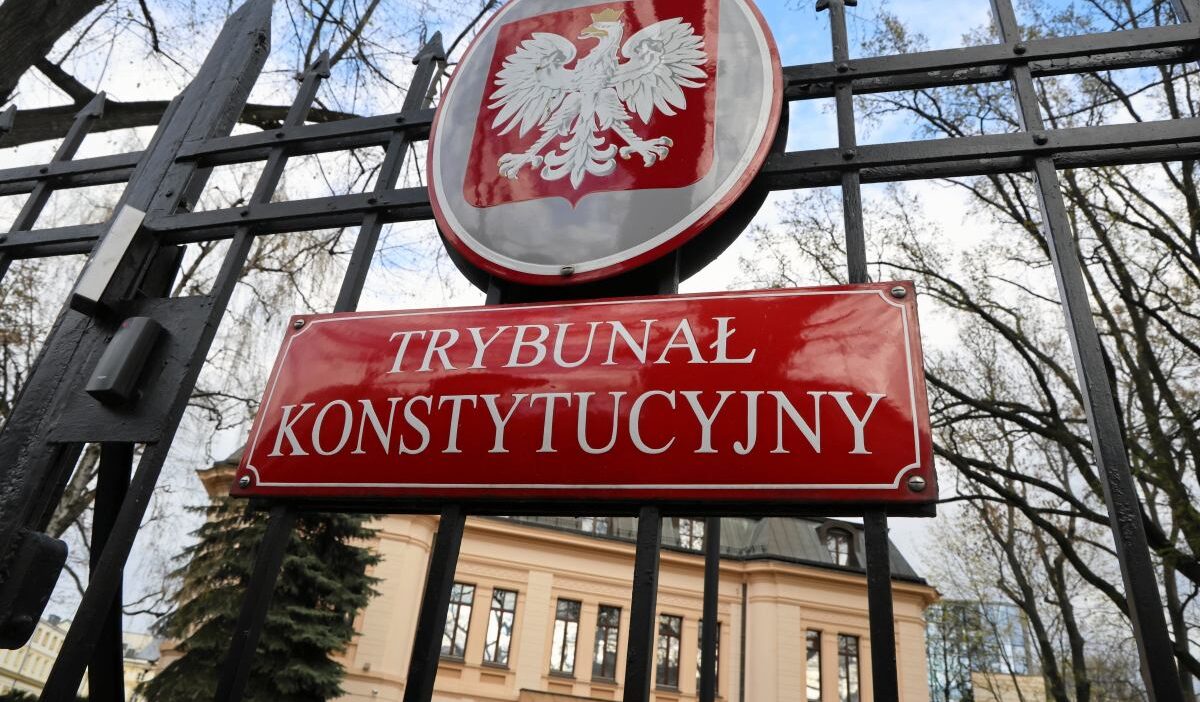
Following the swearing-in of new Constitutional Tribunal judges in Warsaw on April 9th, Poland’s National Notarial Council (KRN) issued a statement defending a notary present at the ceremony.
Constitutional Tribunal Judges Sworn In
Dariusz Szostek, Magdalena Bentkowska, Krystian Markiewicz, Maciej Taborowski, Marcin Dziurda, and Anna Korwin-Piotrowska took their oaths of office on Thursday, April 9th, during a ceremony held in the Column Hall of the Sejm.
The judges subsequently submitted their written oaths to the Presidential Chancellery. Attendees included Sejm Marshal Włodzimierz Czarzasty, former presidents of the Constitutional Tribunal, and a notary whose identity became public online.
KRN Issues Statement on Notary
The National Notarial Council (KRN) released a statement addressing public commentary regarding the notary. It strongly opposed “all manifestations of hatred, hate speech, aggression, and improper treatment of notaries in public life,” including in traditional and social media.
The KRN emphasized that attempts to undermine the personal and professional dignity of notaries constitute a violation of the dignity and function of the entire notariat.
Notaries’ Role in Protocol Documentation
The KRN reminded that, according to regulations, notaries are authorized to prepare notarial deeds documenting the course of various actions and events that may have legal consequences. The scope of these actions or events is open-ended and not limited to a closed statutory catalog.
Nature of Notarial Protocols
The KRN clarified that notarial protocols are documentary in nature. A notary, when preparing a notarial deed at the request of the parties, does not make a binding assessment of the legal consequences of the recorded events.
Their task is to objectively reflect the course of the action or event as requested by the participants, including the essential content of the statements made by the participants.
Legal Effect of Notarial Deeds
According to the Law on Notaries, preparing notarial deeds is one of the duties of a notary and serves to provide the parties with a credible and official way to document circumstances that may have legal significance.
A notarial deed does not create the legal effects of the events it covers but constitutes their official documentation, benefiting from the presumption of truth as an official document and potentially serving as important evidence. The assessment of the legal effects of events or statements rests with the competent authorities, particularly the courts.
Appeal for Responsible Commentary
The KRN appealed for refraining from hasty comments regarding the role and function of a notary and from disseminating harmful and depreciating opinions. Criticism of a notary based on an incomplete understanding of their role “can lead to misunderstandings and undermine trust in the institution of the notariat.”
The KRN also reminded that, within the scope of their activities, a notary acts as a public trust officer, enjoying the protection afforded to public officials. They expect all participants in public debate to act responsibly and prudently when expressing opinions about the activities of notaries and to respect the role they play in the legal system.